As you enter your living room, light pours in through the window, and there it is. That ugly crack in the wall looks like a scar going all the way across. It could be above where everyone sits on the couch. Maybe it’s in your bedroom and greets you every morning.
If you rent, you understand how I feel. You want your space to feel like home, but you sometimes have to deal with the landlord’s paint jobs that aren’t smooth, cracks that won’t go away, and holes left by previous renters.
According to the Texas State Law Library, landlords are required to make a diligent effort to repair problems that materially affect the physical health or safety of an ordinary tenant.
The walls belong to your landlord, and to make sure you keep your security deposit, you might worry about fixing any flaws.
However, according to LegalClarity California, there is no law requiring landlords to repaint between tenants, so you are not obligated to paint, repair, or hire a handyman just for minor imperfections.
How to Hide Wall Cracks Without Renovation?
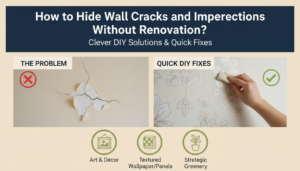
Try self-adhesive wall stickers, clever furniture placement, or temporary spackle to quickly hide wall cracks with little effort. For small cracks, use a light filler like DAP DryDex. Just smooth it with your finger and let it dry.
For larger flaws, try covering them with fabric wall hangings or peel-and-stick wall panels. You can also adjust your lighting so damaged spots are lit from below. These methods are all reusable and great for renters.
7 Proven Methods to Hide Wall Cracks and Imperfections
1. The Magic of Self-Adhesive Wall Stickers and Decals
Wall stickers are perfect for renters. They come in all shapes, sizes, and designs, from geometric patterns to large murals.
How to use them effectively:
For hairline cracks: Place a sticker or decal directly over the crack. Choose patterns that naturally disguise lines, like botanical leaves, abstract shapes, or stripes.
For clusters of imperfections: Use a large removable wallpaper panel. Brands like Tempaper or WallPops offer peel-and-stick wallpaper that removes cleanly.
Tip: Buy repositionable stickers. If you mess up, you can peel them off and try again without damaging the paint.
Wall stickers work well because they attract attention to the design instead of the flaw. They are affordable, easy to use, and fully temporary.
2. Temporary Fillers That Won’t Violate Your Lease
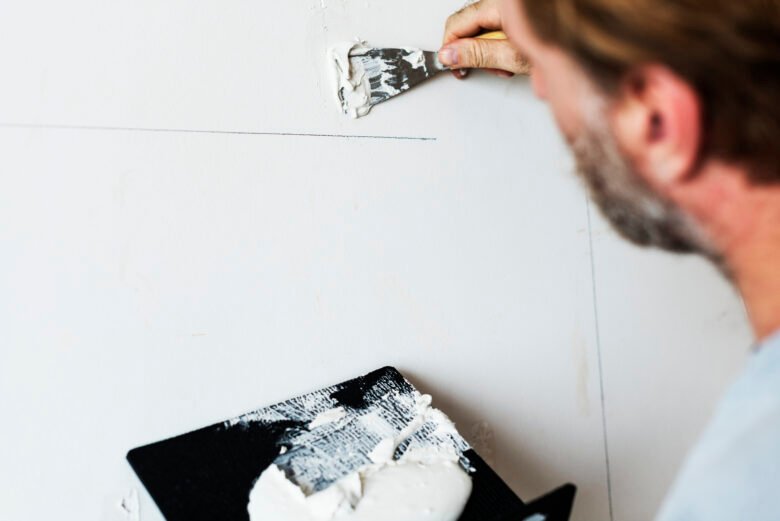
Sometimes, you need to fill a crack instead of hiding it. Traditional spackle can be hard to sand and might leave a visible patch. Lightweight spackle is a better option.
What to buy: DAP Alex Flex or DryDex Spackling. These products are designed for small repairs and dry white, so you can see when they’re ready.
Step-by-step:
- Clean the crack with a dry cloth to remove dust.
- Apply a small amount of filler with your finger or smooth it flat. If you use a thin layer, you usually do not need to sand it. According to engineerfix.com, DryDex is not meant for large repairs or as a skim coat over big areas.
- Let it dry for 1 to 2 hours.o dry for 1 to 2 hours.
- If the crack is deep, apply a second layer.
This method works for nail holes, dents, and thin cracks. According to BuildX, repairing wall holes can cost between $316 and $472 for each one as of 2026.
3. Strategic Furniture Placement (The Art of Hiding)
Sometimes, just moving a piece of furniture a few inches can solve the problem.
Where to place furniture to hide wall imperfections:
Behind the couch: A tall bookshelf or sofa with a high back can completely block a damaged wall section.
Corners with cracks: Use a tall plant, floor lamp, or corner shelf to draw attention away.
Eye-level cracks: Hang a large piece of art or a mirror directly over the problem area.
The goal is to create a natural focal point that draws attention away from the flaw. People will notice the art or plant before they see the crack. In Tricks to Minimise Visibility
Lighting can affect how much you notice wall flaws. Bright overhead lights often create shadows that highlight bumps and cracks.
How to use lighting to your advantage:
Use soft, diffuse lighting: Floor lamps with fabric shades, string lights, or dimmable sconces create even illumination that softens wall texture.
Avoid wall-washing lights: Lights that shine directly across the wall surface will highlight every imperfection. Angle lights downward or use uplighting behind furniture.
Place a lamp near the damaged area: A bright lamp close to the crack will make it more visible—instead, position lighting away from the flaw to reduce contrast.
If you already have lamps, this fix costs nothing. Just rearrange your lights to reduce shadows on damaged walls.
5. Fabric Wall Hangings and Tapestries
Fabric is an underrated hero for renters. According to Emily Rhodes, Command Strips have made it easy to hang decor like a tapestry, quilt, or large woven wall hanging without using any nails, providing a renter-friendly way to cover a large section of a wall.
- For lightweight fabrics, large picture-hanging Command strips are recommended.
- Tension rods: For doorways or alcoves, use a tension rod to hang a curtain or tapestry without damaging the walls.
- Magnetic hooks: If you have metal door frames or a steel beam, magnetic hooks work perfectly.
Pick fabric with a busy pattern or strong texture. The more interesting the fabric, the fewer people will notice the wall behind it.
6. Peel-and-Stick Wall Panels and Molding
For larger areas with multiple imperfections, peel-and-stick wall panels are a game-changer. These are lightweight, adhesive-backed panels that mimic the look of wood, brick, or tile.
Here’s why they work:
- They cover entire sections of wall, hiding everything underneath.
- They install in minutes with no tools.
- They remove cleanly when you move out (use a hair dryer to warm the adhesive).
You can also use peel-and-stick moulding or trim to create a faux accent wall. Place the moulding over cracks to make them look like intentional design details.
7. Creative Decor Hacks: Mirrors, Shelves, and Plants
Sometimes, the best way to hide wall cracks is to make them less important. Use decor to draw attention elsewhere. Attention.
Try these ideas:
Lean a large mirror against the wall: No hanging required. A floor mirror propped against a damaged wall can instantly add elegance while hiding imperfections. According to Home Depot, you can install floating shelves using Command-brand shelf brackets, allowing you to add storage without drilling into the wall.
According to The Decorholic, you can use tall potted plants like a fiddle leaf fig or a bird of paradise to hide wall cracks or other damaged areas, and arranging decorative items or books in front of the spot is another renter-friendly way to conceal imperfections without making permanent changes.
Plus, plants add life to your space.
These ideas are practical, attractive, and easy to undo if needed.
Common Mistakes to Avoid
Even wiEven with good intentions, it’s easy to make mistakes that make wall cracks stand out more. Here are some things to avoid:
1. Using permanent adhesives on painted walls
Some double-sided tapes and adhesives can peel off paint when removed. Always test a small area first or stick to Command-brand products designed for renters.
2. Ignoring moisture damage
If a crack is accompanied by discolouration, bubbling, or a musty smell, it could be water damage. Covering it without addressing the source can lead to mould. Report serious issues to your landlord immediately.
3. Choosing the wrong filler
Heavy-duty spackle requires sanding and often leaves a raised patch. Stick to lightweight spackle for small cracks to avoid creating a more noticeable bump.
4. Placing furniture too close
MovingUP recommends renter-friendly ways to fix wall damage, such as patching holes and covering scuffs, but does not specifically mention whether placing furniture against cracked walls affects the damage.
5. Using bright, direct lighting.
We covered this earlier, but it’s worth repeating: harsh lighting makes imperfections stand out. According to The Decorholic, you should steer clear of track lighting or bare bulbs directed at walls with imperfections.
Instead, professionals recommend using the visual triangle principle to arrange decor and lighting so the eye travels through the room and is drawn away from any wall damage.
Placing three eye-catching items like a bold art piece, a colourful plant, and a unique lamp in a triangular arrangement near a damaged area can help distract attention from the wall and keep the focus on your decor.
Match the filler to the paint. If you do fill a crack, use a small amount of matched paint to blend it in. Most landlords leave touch-up paint in the basement or garage. If not, chip a tiny flake (from behind a switch plate) and bring it to a hardware store for colour matching.
Try layering. Instead of using one big item to cover a crack, use several smaller decor pieces. For example, a leaning mirror with a plant in front and a small shelf above adds depth and helps hide flaws.
Wall Stickers vs. Temporary Wallpaper vs. Fabric Hangings
| Method | Best For | Cost | Removal Ease | Coverage Area |
|---|---|---|---|---|
| Wall Stickers | Small cracks, single spots | $5–$30 | Very easy; peel off | Small to medium |
| Peel-and-Stick Wallpaper | Larger sections, accent walls | $30–$100 per roll | Easy with heat | Large |
| Fabric Wall Hangings | Full wall coverage, texture | $20–$80 | Easy; uses Command strips | Large |
The best option depends on your budget and how big the problem is. Stickers work well for a single crack. If you need to cover a whole damaged wall, try temporary wallpaper or fabric instead.
Conclusion
You don’t have to renovate to have nice-looking walls. If you’re a renter who wants to protect your deposit or a homeowner who wants to avoid a big project, the ideas in this guide make hiding wall cracks and flaws much easier than you might think.
Start with the easiest fix, try changing your lighting or moving a piece of furniture. If that doesn’t work, you can use wall stickers or temporary fillers. For bigger areas, peel-and-stick panels or fabric hangings can cover the whole spot without making any permanent changes.
FAQs
Will my landlord charge me if I use wall stickers or removable wallpaper?
Most landlords are okay with removable products as long as the paint isn’t damaged. It’s a good idea to check your lease, but brands like Command and Tempaper are made for renters.
Can I paint over a crack without renovating?
Yes, but just painting over a crack won’t hide it—you need to fill it first. Use lightweight spackle, then paint over it with a matching color. If you don’t have the exact shade, just cover the spot instead of repainting the whole wall.
What’s the best way to hide a ceiling crack?
Ceiling cracks can be harder to hide. You can use a peel-and-stick ceiling tile or a lightweight medallion to cover them. PacLights suggests that an upward-facing floor lamp is a stylish and practical way to make small ceiling cracks less noticeable.
Are there any cracks I shouldn’t hide?
Yes. If you see horizontal cracks, stair-step cracks in brick, or cracks wider than ¼ inch, these could mean there are structural problems. Let your landlord know right away if you notice any of these.
How do I remove spackle?
You can gently sand lightweight spackle or wipe it off with a damp sponge. If it’s dry and painted over, it’s usually fine to leave it. Most landlords don’t mind small, neat repairs.ll, well-done repairs.
Can I use Command strips on textured walls?
Yes, but they might not stick as well. For best results, clean your wall with rubbing alcohol instead of regular cleaners or water before you put on Command strips. Always follow the manufacturer’s instructions.