
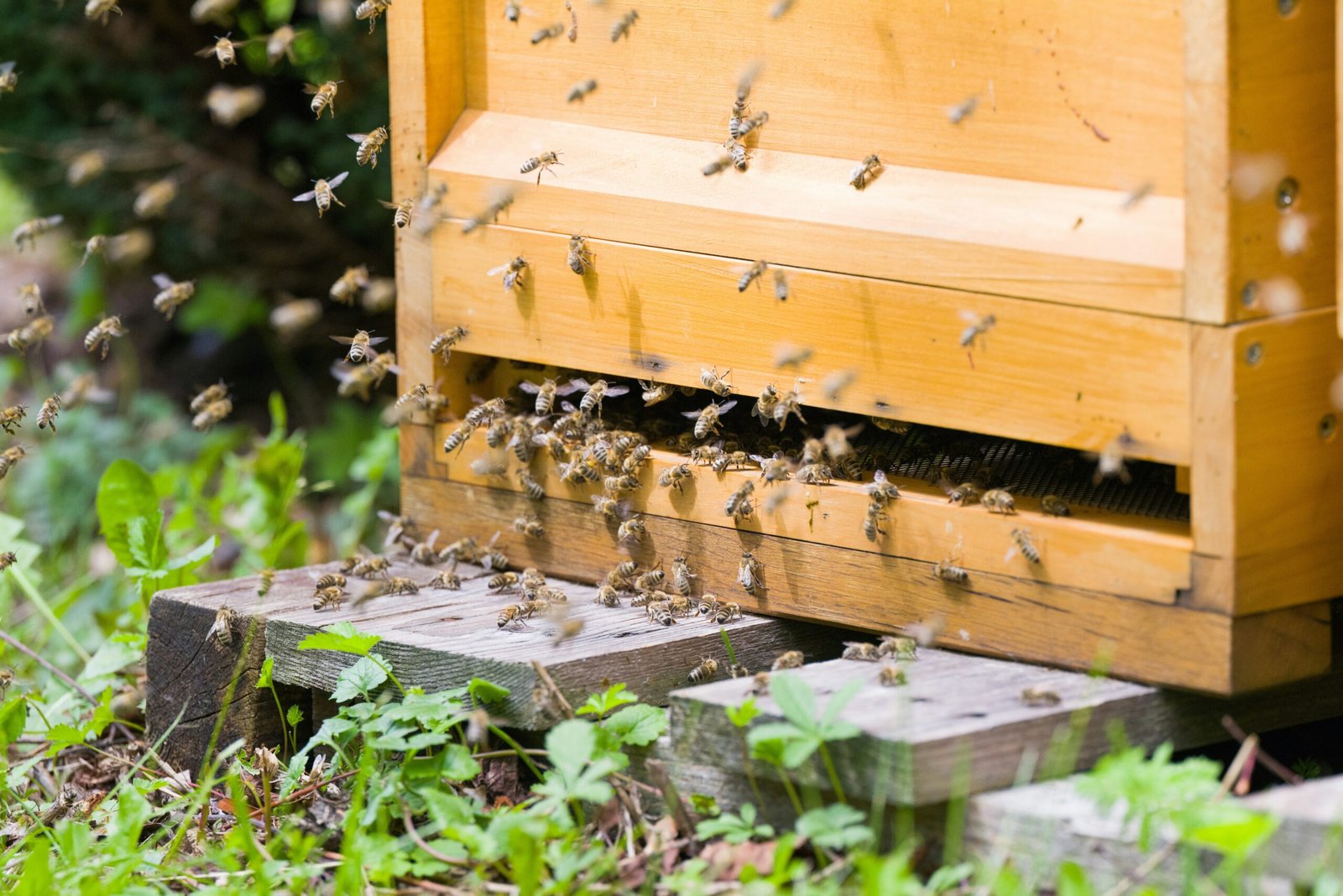
“Why are my bees leaving the hive?” is the most stressful question an apiarist can ask. Finding an empty wooden box where a thriving population once lived indicates a massive breakdown in colony management. Insects abandon their homes for two distinct biological reasons: swarming or absconding.
Swarming represents natural reproduction, while absconding signals a desperate escape from fatal living conditions. We will isolate the exact environmental pressures and biological triggers pushing your pollinators away. Fixing these distinct problems requires immediate adjustments to your apiary management strategy.
Swarming vs. Absconding: What is the Difference?
Before diagnosing the issue, you must identify how the departure happened. The remaining comb tells the entire story.
Signs of Swarming:
- Partial Population Loss: Only half the workforce leaves with the original monarch.
- Resources Left Behind: Frames still contain capped honey, pollen, and developing brood.
- Queen Cells Present: You will find peanut-shaped cells hanging from the bottom of the frames.
- Seasonality: This happens during peak spring nectar flows.
Signs of Absconding:
- Total Abandonment: Every single insect leaves the box simultaneously.
- Empty Frames: Workers consume all the stored honey before taking flight.
- No Brood: The queen stopped laying eggs weeks before the departure.
- Seasonality: This typically occurs in late summer or early fall during a nectar dearth.
Top Reasons Why Bees Abscond
When insects abscond, they decide their current cavity is a death trap. They take their chances in the open air rather than staying.
Severe Pest Infestations
Parasites make the interior environment uninhabitable. Varroa destructor mites are the primary culprits for colony collapse and abandonment. These mites feed on the fat bodies of developing pupae and transmit deadly pathogens, such as Deformed Wing Virus. When the mite population reaches critical mass, the adult workers abandon the sick brood and flee.
Small Hive Beetles (Aethina tumida) also drive colonies away. Adult beetles lay eggs in an unprotected comb. The resulting larvae tunnel through the wax, defecating in the honey and causing it to ferment. The resulting slime repels the workers, forcing an immediate evacuation.
Prolonged Starvation and Nectar Dearth
A colony requires massive amounts of carbohydrates to survive. During late summer, many regions experience a nectar dearth, with floral resources drying up. If the population consumes its stored reserves, starvation sets in rapidly.
Once the honey bands shrink, the queen stops laying eggs. The starving workforce will consume the remaining uncapped larvae to salvage protein. Eventually, the entire group will fly off in a desperate search for better foraging grounds.
Extreme Heat and Poor Ventilation
Apiaries placed in direct, brutal afternoon sun face intense internal heat. The ideal brood rearing temperature sits tightly around 94.5°F (34.7°C). If the box lacks proper ventilation, internal temperatures spike dangerously.
The workforce must abandon foraging to haul water back to the comb. They fan their wings constantly to create evaporative cooling. If they fail to regulate the climate, the wax foundation can melt and collapse. The extreme heat ultimately forces them to relocate to a cooler, shaded cavity.
Toxic Chemical Exposure
Agricultural chemicals pose a severe threat to foraging insects. Pesticide drift from nearby commercial farms coats local pollen sources in lethal toxins. Workers unknowingly bring contaminated pollen back into the food supply, contaminating it.
Chemical contamination also happens from poor beekeeping practices. Applying unapproved, off-label mite treatments inside the box saturates the wax with harsh chemicals. The surviving population will abscond immediately to escape the toxic fumes. For safe chemical practices, consult the EPA guidelines on pollinator protection.
Relentless Predator Harassment
Frequent attacks break the colony’s sense of security. Skunks often visit at night, scratching at the entrance and eating the guard insects that come out to investigate. This nocturnal harassment puts the population in a constant state of defense.
Bears cause catastrophic physical damage by ripping boxes apart to reach the brood. Wasps and yellowjackets execute coordinated raids in the autumn to steal honey and kill larvae. If the defenders cannot repel these constant attacks, they will abandon the location.
Clumsy Beekeeping Disturbance
New apiarists often open their boxes too frequently. Pulling frames every three days disrupts the internal temperature and humidity. It also releases the propolis that the insects worked hard to build.
Excessive smoke use causes panic and damages the workers’ delicate respiratory systems. Dropping frames, crushing insects, and constantly moving the boxes create massive stress. The colony prefers a quiet, undisturbed home and will leave if harassed by their caretaker.
Primary Triggers for Swarming
Swarming is a sign of biological success, but it results in a massive loss of honey production for the apiarist.
Severe Space Congestion
A booming spring population quickly fills every available inch of foundation. Foragers pack incoming nectar into the brood chamber. This creates a condition called “honey bound,” where the queen runs out of space to deposit eggs.
With no room to expand, the reproduction cycle halts. The workers realize the cavity can no longer support their numbers. They initiate preparations for a swarm to secure a secondary home.
Dilution of Pheromones
The ruling monarch secretes the Queen Mandibular Pheromone (QMP) to suppress the workers’ reproductive instincts. In a densely populated area, this chemical signal struggles to reach the box’s outer edges.
Workers on the periphery stop receiving the pheromone. They interpret this as a failing or missing monarch. This triggers the construction of swarm cells to rear a replacement before the original monarch departs.
Aging Leadership
Older queens naturally produce weaker pheromone signatures. Their sperm reserves deplete, leading to spotty, irregular brood patterns. The workforce detects this decline in reproductive viability instantly.
They begin feeding royal jelly to select larvae to rear a successor. Sometimes, this replacement process transitions into a swarm impulse. The old leader is forced out of the box with a portion of the workers before the virgin hatches.
Proven Swarm Prevention Techniques
Managing space and manipulating the population prevent your workforce from splitting.
The Checkerboarding Method
This advanced space management technique prevents the honey-bound condition. In early spring, you alternate fully drawn, capped honey frames with empty, undrawn frames right above the brood nest.
This breaks up the solid honey dome that signals the colony has run out of space. The insects instinctively work to fill the gaps, tricking them into believing they have unlimited storage room. This effectively cancels the swarm impulse.
Performing Artificial Splits
You can mimic a swarm under controlled conditions. When you see swarm cells developing, you remove the old monarch and three frames of capped brood. You place them into a separate nucleus box in a different apiary location.
The original colony retains the developing queen cells and the main workforce. They feel they have successfully swarmed and immediately abandon further departure plans. You double your apiary size while preventing your workforce from being lost to the trees.
Supering Ahead of the Flow
Never wait until the boxes are full to add space. Add honey supers when the top box reaches 70% capacity.
Providing empty supers two weeks before the main nectar flow begins gives the house insects immediate storage space. This pulls the nectar processors out of the lower chamber, relieving congestion around the nursery area.
Actionable Steps to Stop Absconding
Preventing total abandonment requires strict environmental management and proactive health monitoring.
Implement Monthly Parasite Checks
Visual inspections fail to detect heavy mite loads until it is too late. You must perform an alcohol wash on a sample of 300 nurse insects every single month during the active season.
Count the dislodged mites to determine your precise infestation percentage. If the count exceeds 3 mites per 100 insects, apply an approved organic acid or synthetic treatment immediately. Keeping the parasite load near zero guarantees the insects will not abandon sick offspring. You can review treatment thresholds on the Honey Bee Health Coalition website.
Execute Supplemental Feeding Protocols
Never assume your apiary has enough food during late summer. Lift the bottom board to check the equipment’s physical weight. If the box feels light, initiate feeding immediately.
- Spring Feeding: Provide a 1:1 ratio of granulated sugar to water by weight to simulate a nectar flow and stimulate wax production.
- Fall Feeding: Provide a 2:1 ratio of sugar to water to help them pack away dense winter weight quickly.
- Protein: Add pollen substitute patties directly above the cluster if natural pollen is scarce, ensuring they can rear winter fat insects.
Optimize the Apiary Location
Microclimates dictate the success of your apiary. Position your equipment to receive early morning sun to stimulate early foraging flights. Ensure they have dappled shade during the hottest part of the afternoon.
Install entrance reducers in late summer to help keep insects from defending yellowjackets and robbers. Install physical windbreaks, such as snow fencing, to block harsh winter gusts. If the physical location is secure and comfortable, they will stay.
Control Ventilation Properly
Moisture kills faster than cold. In humid climates, use screened bottom boards to increase airflow through the vertical column.
During extreme summer heatwaves, slide a small shim or a popsicle stick under the outer cover. This allows hot, stagnant air to escape the top of the box. A well-ventilated cavity prevents comb collapse and reduces the stress of internal climate control.
How to Salvage Abandoned Equipment?
If you arrive to find an empty box, you must act quickly to protect the woodenware for future use.
Inspect for Contagious Pathogens
Before reusing any foundation, check the vacant cells. Look for sunken, perforated cappings that indicate American Foulbrood (AFB). Insert a toothpick into a suspect cell; if it pulls out a brown, ropy thread, you have AFB.
Foulbrood spores remain highly infectious for decades. You must burn the infected frames and boxes immediately to prevent the disease from spreading to neighboring apiaries. Contact your local state agricultural inspector to report the outbreak.
Freeze and Store Usable Comb
If the foundation is clean and free of disease, protect it from scavengers. Wax moths will locate undefended foundations within hours and lay thousands of eggs.
Place the empty frames in a deep freezer for 48 hours to kill all hidden moth eggs and larvae. Afterward, store the equipment in tightly sealed plastic bins. You can use this drawn comb to give a massive head start to a new package of pollinators next spring.
Conclusion
Solving the mystery of “why are my bees leaving the hive?” demands strict attention to biological cues and environmental stressors. Colonies flee when parasites overrun the brood, starvation sets in, or the physical cavity becomes uninhabitable. Alternatively, they split and swarm when your apiary management fails to provide adequate space during a heavy nectar flow.
By executing monthly alcohol washes, feeding during floral droughts, and implementing proactive space management like checkerboarding, you remove their motivation to leave. Keep the foundation pest-free, well-ventilated, and heavily provisioned with carbohydrates.
Frequently Asked Questions
Understanding specific behaviors helps narrow down your management strategy.
Will absconding bees ever return?
No, an absconded colony completely rejects the previous location. They have deemed the environment fatally flawed and will permanently relocate to a distant cavity. You must capture a new swarm or buy a fresh package to repopulate the box.
Do bees leave if the queen dies?
A sudden monarch’s death does not trigger an evacuation. The workforce will immediately attempt to raise an emergency replacement using eggs laid within the last three days. If they fail to raise a virgin, the population slowly ages out and dies in place over several months.
How far do they fly when leaving?
A reproductive swarm usually lands on a nearby branch within 100 feet of the original stand. Scout insects then search for a permanent home up to three miles away. An absconding colony usually flies several miles immediately to escape the localized dearth or heavy predator pressure entirely.