
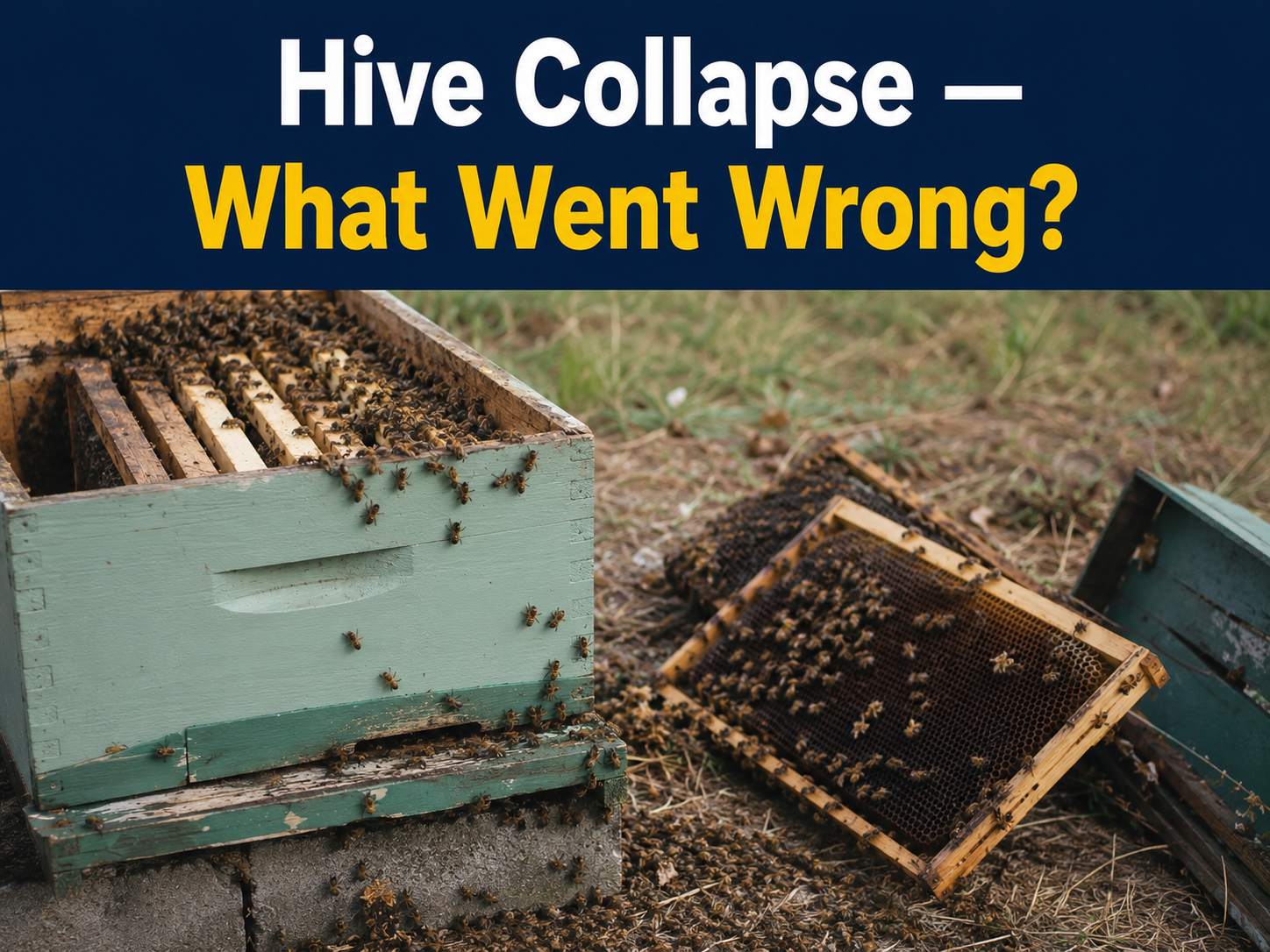
What exactly caused the massive hive collapse? What went wrong with millions of honey bee colonies across the country? The simple answer comes down to a lethal combination of biological threats.
Recent scientific data confirms that virus-infected parasitic mites drove the devastating honey bee die-off. These specific Varroa mites developed a strong resistance to common treatments. Once the mites multiplied, they spread deadly diseases, such as Deformed Wing Virus and Acute Bee Paralysis Virus, throughout the colonies.
While viruses are the final blow, other severe stressors set the stage for this disaster. Poor nutrition, shrinking habitats, and constant exposure to harsh agricultural chemicals severely weakened the bees’ immune systems.
Understanding the Recent Hive Collapse Crisis
The beekeeping industry recently faced its most severe challenge in modern history. Between early 2024 and 2025, commercial operators reported losing over 60 percent of their managed colonies. This staggering loss represented roughly 1.7 million hives, according to reports from Project Apis m.
The Scope of the Honey Bee Die-Off
This was not a normal winter loss. Beekeepers expect some mortality during cold months, usually around 15 to 20 percent. However, recent winter mortality rates spiked well past 40 percent.
Entire commercial yards went silent in a matter of weeks. Beekeepers opened their boxes in early spring only to find empty frames and handfuls of dead workers. The queen and the brood were often left to freeze to death.
Why This Collapse Is Different from Past Years?
In the early 2000s, experts attributed the disappearance of bees to unknown environmental factors. Today, the science is much clearer. We are no longer guessing about mysterious disappearances.
The U.S. Department of Agriculture (USDA) conducted extensive sampling across affected states. Their researchers pinpointed a clear, measurable cause rather than a vague syndrome. The current crisis is a direct result of pest adaptation outpacing our chemical treatments.
What Went Wrong? The Primary Causes of Hive Collapse?
Understanding the collapse requires looking inside the hive. Multiple layers of stress weakened the honey bee’s natural defenses. Here is exactly what went wrong.
Miticide-Resistant Varroa Mites (The Main Culprit)
The Varroa destructor mite is the ultimate enemy of the honey bee. These tiny parasites attach to the bees and feed on their fat bodies. This feeding process drains the bee of essential proteins and energy.
For decades, beekeepers have controlled these mites with the chemical amitraz. It was the industry standard for keeping mite numbers low. However, biology always adapts.
USDA screenings recently showed that almost all sampled mites from the collapsed colonies survived amitraz treatments. The mites became completely resistant to the chemical. Beekeepers applied the treatment, but the mites continued to multiply and destroy the hives.
Deadly Viral Infections
Mites do not just weaken bees by feeding on them. They act as dirty needles, injecting viruses directly into the bees’ bloodlines. When mite populations explode due to chemical resistance, viral loads do too.
Researchers found incredibly high levels of Deformed Wing Virus in the dead colonies. They also detected Acute Bee Paralysis Virus. These viruses cripple young bees before they even emerge from their cells.
A bee born with deformed wings cannot fly, forage, or contribute to the colony. When a virus spreads unchecked, the population of healthy worker bees drops too fast. The colony’s social structure rapidly falls apart.
Nutritional Stress and Habitat Loss
A healthy bee can fight off minor infections. A starving bee cannot. Nutritional stress played a massive role in the recent die-offs.
Bees need a diverse diet of pollen from many different types of flowers to build strong immune systems. Urban development and industrial farming have erased millions of acres of wild forage. Bees are often forced to gather pollen from a single crop type, which lacks a complete amino acid profile.
Without proper nutrition, the fat bodies of the bees shrink. Since Varroa mites feed on these fat bodies, a malnourished bee dies much faster from a mite attack.
The Impact of Agrochemicals and Pesticides
Exposure to farm chemicals is a constant battle for commercial pollinators. Even when pesticides do not kill bees immediately, they cause long-term damage. These sub-lethal doses affect the bees’ ability to navigate and reproduce.
Neonicotinoids are a widely discussed class of pesticides in agriculture. Research from environmental science journals shows that these chemicals disrupt the bees’ central nervous system. A disoriented forager cannot find her way back home.
When you combine pesticide exposure with viral infections and poor nutrition, the colony faces an impossible survival situation. The chemicals strip away the last of the bees’ resilience.
How Modern Agricultural Practices Contribute to the Problem?
The way we grow food heavily impacts the insects that pollinate it. Commercial beekeeping is deeply tied to modern farming methods. This relationship creates unique pressure points for the hives.
Monoculture Farming Limits Diet Diversity
Vast stretches of farmland are often dedicated to a single crop, like corn, soybeans, or almonds. This practice is known as monoculture farming. While efficient for harvesting, it creates a massive food desert for pollinators.
When bees sit in an almond orchard for a month, they only eat almond pollen. Imagine eating nothing but potatoes for a month. Your body would lack vitamins, and you would eventually get sick.
This lack of floral diversity weakens the bees right before they face the stress of seasonal changes. Beekeepers often have to feed their hives artificial pollen patties to keep them alive.
The Stress of Commercial Pollination Routes
Millions of hives spend their lives on the back of semi-trucks. Commercial operators move their bees across the country to pollinate different crops throughout the year. This constant transportation is highly stressful for the insects.
The vibration, temperature changes, and tight confinement take a physical toll. Packing millions of hives from different states into the same holding yards creates a super-spreader event. Mites and viruses easily jump from one commercial operation to another.
The Economic Impact of Losing Bees
The death of these colonies reaches far beyond the bee yard. The financial shockwaves hit both farmers and normal families.
Rising Costs for Beekeepers
Replacing dead hives is incredibly expensive. Buying new bee packages or nucleus colonies costs hundreds of dollars per unit. When a commercial operation loses thousands of hives, the financial damage runs into the millions.
Many small-scale commercial beekeepers face bankruptcy after a severe winter loss. They spend money feeding and treating bees all year, only to lose their investment. This constant cycle of rebuilding is not sustainable.
Higher Prices at the Grocery Store
When bees die, food gets more expensive. Farmers rely on managed hives to pollinate everything from apples to blueberries. If beekeepers have fewer hives to rent out, the rental price for a single colony skyrockets.
Farmers pass these increased pollination costs directly to the consumer. A crisis in the bee yard eventually shows up on your grocery receipt. Keeping the colonies healthy keeps food prices stable.
Actionable Steps to Prevent Future Colony Losses
We know what went wrong. Now, the agricultural community must pivot to new strategies. Beekeepers cannot rely on old methods to solve new biological threats.
Implementing Integrated Pest Management (IPM)
Relying on a single chemical is no longer a smart choice. Beekeepers must adopt Integrated Pest Management strategies. This means using a combination of different tools to keep mite numbers low.
Operators need to rotate their treatments. Using organic acids, such as oxalic acid or formic acid, can kill mites without developing rapid chemical resistance. Beekeepers must also use mechanical methods, such as drone brood removal, to physically trap mites.
Restoring Diverse Forage Habitats
If we want strong bees, we have to plant better food for them. Rebuilding natural habitats is needed for long-term survival. Farmers, landowners, and local governments can all play a huge part in this recovery.
Planting cover crops like clover and buckwheat provides excellent nutrition between main harvests. Leaving field margins wild with native wildflowers gives bees a varied diet. Stronger, well-fed bees naturally fight off viruses better than starving ones.
Monitoring and Treating Hives Early
You cannot fix a problem if you do not track it. Guessing mite levels is a fast way to lose an entire apiary. Frequent testing is absolutely required for modern beekeepers.
Beekeepers must perform alcohol washes every month to count the exact number of mites per 100 bees. If the count goes above the safety line, immediate action is needed. Waiting even two weeks to apply a treatment can mean the difference between life and death.
Final Thoughts on the Future of Beekeeping
The recent massive losses forced the industry to take a hard look at current practices. When asking about the hive collapse—what went wrong —the answer points directly to our failure to adapt. The Varroa mite outsmarted our chemical defenses, bringing deadly viruses along with it.
The path forward requires strict attention to detail and better farming practices. We need smart pest-control rotation, strong nutritional support, and cleaner environments free of heavy pesticide loads.