
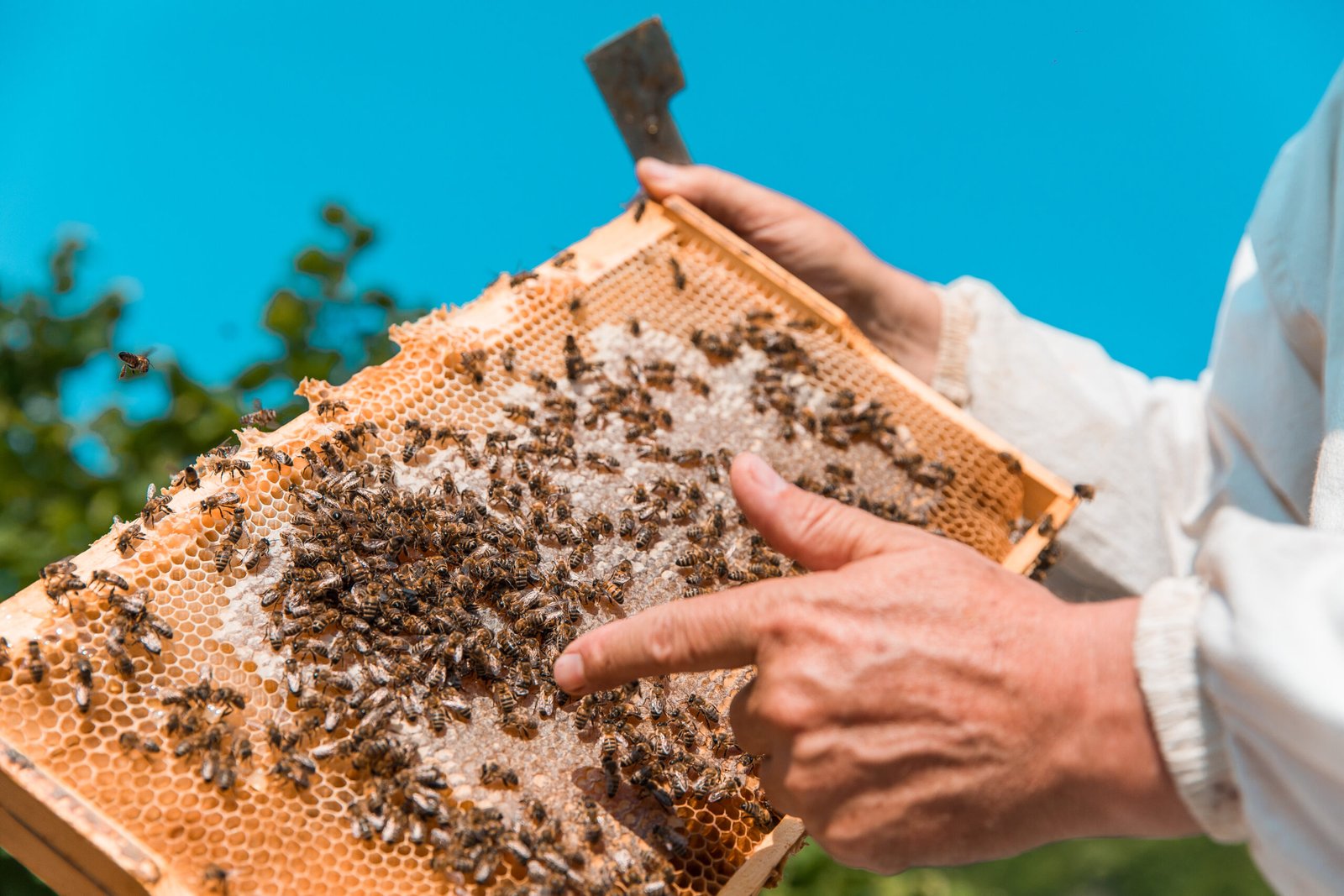
Every beekeeper fears the moment they open a lid and find a silent, empty box. Recognizing the signs your hive is failing early enough can be the difference between a total loss and a successful rescue mission. Honeybee colonies are complex superorganisms, and when one part of the system breaks down, the decline can happen faster than most beginners realize.
A failing hive doesn’t just “quit” overnight. Usually, the bees send out distress signals weeks before the colony collapses. Whether you are dealing with a failing queen, a heavy parasite load, or environmental stress, knowing what to look for is your primary job during every inspection.
What Does a Healthy Hive Look Like?
Before you can identify a problem, you must understand the “normal” baseline. A thriving colony shows high activity at the entrance, with foragers bringing in colorful pollen baskets. Inside, you should see a solid wall of bees covering the frames and a distinct “hum” that sounds steady and purposeful.
Healthy brood patterns are tight and concentric, looking like a solid carpet of tan cappings. If your hive deviates significantly from this picture, you need to investigate further.
7 Critical Signs Your Hive Is Failing
If you notice any of the following symptoms during your weekly or bi-weekly inspections, your colony is likely in a state of decline.
1. The Absence of a Queen or Fresh Brood
The most common reason a hive starts to fail is “queenlessness.” Without a queen laying eggs, there are no new workers to replace the ones dying of old age.
- Look for eggs: If you cannot find the queen, look for eggs. They look like tiny grains of rice at the bottom of the cells.
- The “Queenless Roar”: When a colony loses its queen, the bees often emit a high-pitched, mourning whine instead of a low hum.
- Emergency Cells: If the bees realize they are queenless, they will build peanut-shaped emergency cells on the face of the comb.
2. Spotty or “Shotgun” Brood Patterns
A high-quality queen lays eggs in a tight, organized pattern. A failing queen, however, leaves gaps. This is often referred to as a “shotgun” pattern because it resembles someone firing a pellet gun at the comb.
A spotty pattern indicates either a failing queen running out of sperm or a brood disease such as American Foulbrood (AFB). According to Scientific Beekeeping, monitoring brood health is the most reliable way to gauge the long-term viability of the colony.
3. A Rapid Drop in Bee Population
If you notice that a hive that was once “boiling over” with bees now only covers two or three frames, you have a major problem. This population crash usually happens for three reasons:
- Swarming: Half the colony left with the old queen (a natural process, but it weakens the hive).
- Pesticide Kill: You will see piles of dead bees at the entrance with their tongues sticking out.
- Varroa Mites: The leading cause of hive collapse in modern beekeeping.
4. Excessive Varroa Mite Levels
Varroa mites are the “vampires” of the bee world. They suck the fat bodies from bees and transmit deadly viruses. If you see bees with shriveled, stunted wings (Deformed Wing Virus), your mite load is likely at a terminal level.
You should perform a sugar roll or alcohol wash regularly. If your mite count is above 3% (3 mites per 100 bees), your hive is on a fast track to failure. Refer to the Honey Bee Health Coalition for updated treatment thresholds.
5. Foul Odors Coming from the Hive
A healthy hive smells like honey, wax, and old gym socks (propolis). It should never smell like rotting meat or vinegar.
- Rotting Smell: This is a classic sign of American Foulbrood, a highly contagious and terminal bacterial disease.
- Fermenting Smell: This could indicate that your honey stores are fermenting due to high moisture or Small Hive Beetle infestations.
6. The Presence of Laying Workers
When a hive has been queenless for too long (usually 2-3 weeks), the workers’ ovaries may start to develop. Because workers cannot mate, they lay unfertilized eggs, which produce drones (males).
- How to tell: You will see multiple eggs in a single cell, often stuck to the sides rather than centered at the bottom.
- The Result: A “drone-laying” hive will eventually die out because no new female workers are being born to do the chores.
7. Lack of Food Stores (Starvation)
Sometimes, the signs your hive is failing are as simple as an empty pantry. If the bees have no capped honey or nectar, they will begin to starve.
- Head-first bees: If you see bees dead inside the cells with only their butts sticking out, they died trying to find the last drop of nectar.
- Lethargy: Starving bees move slowly and may appear “frozen” on the comb.
Why Is My Bee Colony Dying?
Understanding the why helps you prevent future failures. Most hive collapses are caused by a combination of the “Four Ps”:
- Parasites: Specifically, Varroa mites and Tracheal mites.
- Pathogens: Viruses, bacteria (Foulbrood), and fungi (Nosema).
- Pesticides: Chemicals from neighboring farms or gardens.
- Poor Nutrition: A lack of diverse pollen and nectar sources.
Environmental factors, such as a “nectar dearth” (a period when no flowers are blooming), can also trigger a decline if the beekeeper doesn’t provide supplemental syrup.
How to Tell if a Hive is Queenless?
Determining queen status is the first step in any rescue plan. Ask yourself these questions:
- Are there eggs or young larvae (1-3 days old)? If yes, you have a queen.
- Is the colony unusually aggressive? Queenless bees are often jumpy and defensive.
- Are they building queen cells? This is their attempt to fix the problem themselves.
- Does the box “roar” when you tap its side? A queen-right hive settles quickly; a queenless one continues to buzz loudly.
Steps to Take When You Notice a Failing Hive
If you catch the signs your hive is failing in time, you can often save the colony. Here is a tactical plan:
1. Combine It with a Strong Colony
If the population is very low but the bees are disease-free, it is better to have one strong hive than two dead ones. Use the “newspaper method” to merge a weak colony with a strong one. This gives the surviving bees a chance to live through the winter under a better queen.
2. Re-Queen Immediately
If the hive is queenless but still has a decent population, buy a mated queen from a local breeder. Do not wait for them to raise their own if the hive is already failing; they need the “jump start” of a queen who is ready to lay eggs today.
3. Feed, Feed, Feed
A failing hive is often a hungry hive. Provide a 1:1 sugar syrup (in spring/summer) or a 2:1 syrup (in autumn). This provides the energy the bees need to defend the hive and nurse the remaining brood.
4. Treat for Mites
If mites are the culprit, use an approved treatment like Apivar, Formic Pro, or Oxalic acid. Be sure to follow the label instructions strictly, as some treatments are temperature-sensitive.
When is it Too Late to Save the Hive?
There is a point of no return. If you see the following, it might be time to cut your losses:
- Sliming: If Small Hive Beetles have taken over and the honey is fermenting and running out of the entrance, the colony is likely gone.
- Robbing Frenzy: If other bees are attacking the hive and tearing the comb apart, the defense has collapsed.
- No Bees Left: If the hive is empty (Colony Collapse Disorder style), you should focus on cleaning the equipment and figuring out what went wrong.
Important Note: If you suspect American Foulbrood, do not move the frames or combine the hive. AFB is a reportable disease. Contact your local apiary inspector immediately. You can find your local inspector through the Apiary Inspectors of America website.
Common Myths About Failing Hives
Myth: “The bees will figure it out on their own.” In the wild, some colonies survive, but in a managed setting, the stresses of mites and habitat loss mean the bees usually need help. Ignoring the signs often leads to a “dead out.”
Myth: “If I see bees, the hive is fine.” You might see thousands of bees, but if they are all old foragers and there is no brood, the hive will be dead in three weeks. Always consider the age distribution of your bees.
Final Thoughts on Colony Survival
Maintaining a watchful eye for the signs your hive is failing is a skill that develops with time. The most important thing you can do is stay consistent with your inspections. A hive can go from thriving to terminal in less than a month if Varroa mites or queen failure go unnoticed.
By keeping your mite counts low, ensuring your queen is prolific, and providing supplemental feed during lean times, you give your honeybees the best possible chance to flourish. Remember, every beekeeper loses a hive eventually—the goal is to learn from the loss so your next colony is even stronger.