
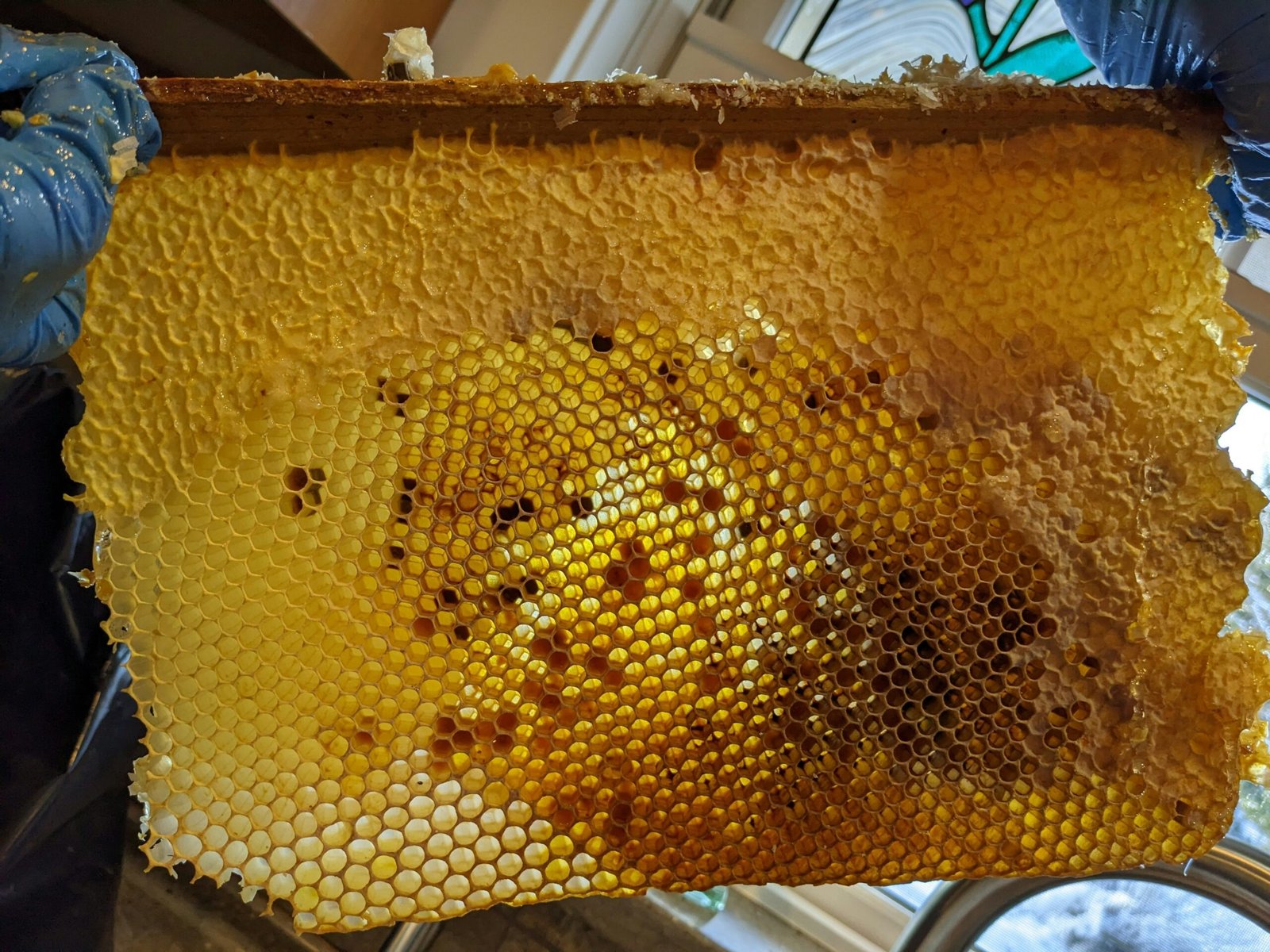
Opening your hive and finding empty frames is frustrating for any beekeeper. Why are my bees not building comb? This common issue happens to both beginners and seasoned beekeepers. Without a drawn comb, your colony cannot store honey, raise brood, or grow its population.
Bees need specific conditions to secrete wax and shape it into cells. If even one element is missing, production stops completely. In this guide, we will break down exactly what triggers wax production. You will learn the main reasons your colony is stalling and the exact steps to get them back on track.
The Basics of How Honey Bees Produce Wax
Before fixing the problem, it helps to know how bees actually make wax. Wax production is a physically demanding task for a colony. Worker bees have special glands on their abdomens that secrete tiny wax scales.
However, not all bees can do this. Only young worker bees, typically between 12 and 21 days old, have active wax glands. As bees age and become foragers, these glands shrink and stop working. Therefore, a hive must have a healthy population of young nurse bees to create new frames.
The energy cost is also massive. Bees must consume around eight pounds of honey or heavy sugar syrup to produce just one pound of beeswax. If the colony lacks incoming resources, it will not waste energy building a new foundation. They wait for ideal conditions before committing to the heavy labor of construction.
7 Reasons Why My Bees Are Not Building Comb
If you notice a sudden halt in progress, check for these seven common issues. Identifying the root cause is the first step toward getting your colony back up and running.
1. Lack of a Strong Nectar Flow
A strong nectar flow is the number one trigger for comb construction. Bees only build storage space when they actually have something to store. If flowers are not blooming in your area, nectar stops coming in. This is known as a nectar dearth.
During a dearth, bees conserve their energy and protect their existing stores. They will completely ignore empty frames, even if the brood nest feels crowded. You can check local bloom calendars to see if a dearth is happening in your region. The University of Missouri Extension notes that bees need a strong nectar flow or active feeding before they will draw out foundation.
2. The Colony Lacks Young Bees
As mentioned earlier, only young bees secrete wax. A newly caught swarm excels at building because it contains a perfect mix of bee ages ready to build a new home. In contrast, an older colony or a struggling package might lack these young workers.
If your hive suffered a recent population drop, wax production will stall. This often happens if the queen stops laying for a few weeks. A break in the brood cycle means no new nurse bees hatch to replace the older ones. You must wait for the population to balance out before construction resumes.
3. Queenlessness or a Failing Queen
A queenless hive loses its motivation to grow. The presence of a healthy, laying queen releases pheromones that dictate colony behavior. These pheromones tell the workers to prepare cells for new eggs.
If your queen dies, gets sick, or runs out of sperm, the workers recognize the problem immediately. They will stop drawing out frames because they do not need space for a failing queen. Always check for eggs and young larvae if you notice a sudden work stoppage. Replacing an old queen often jumpstarts the entire hive.
4. Temperatures Are Too Cold
Beeswax is difficult to work with unless the hive is warm. The inside of the hive must stay around 93 to 95 degrees Fahrenheit for the wax to remain soft and pliable. If the weather drops, the bees focus entirely on keeping the brood warm.
Cold nights and chilly spring days force the bees into a tight cluster. They physically cannot leave the cluster to work on empty frames on the outer edges of the box. You have to wait for the weather to warm up. Trying to force them during cold snaps will stress the colony.
5. Giving the Bees Too Much Room
Beekeepers often make the mistake of adding extra boxes too soon. Bees prefer to work in a compact, protected space. If you add a second deep or a honey super before they finish the first box, they feel overwhelmed.
Instead of building, they might cluster in the center and ignore the outer frames. A good rule of thumb is to wait until the bees have drawn out eight of the ten frames in a box. Only then should you add the next layer. Giving them too much space disrupts the hive’s heat regulation.
6. Issues with Plastic Foundation
Many modern beekeepers use plastic foundation instead of pure wax sheets. While plastic is durable, bees do not always like it. If the plastic is bare or poorly coated, the workers will walk over it without doing any work.
Sometimes they even build a wonky, cross-comb between the plastic frames. To prevent this, the plastic foundation must be coated with a thick layer of natural beeswax. You can buy pre-coated frames, but some brands skimp on the wax.
Many beekeepers melt their own wax and roll an extra layer onto the plastic to encourage acceptance. A Sustainable Agriculture Research and Education (SARE) project highlights that wild bees prefer natural wax over artificial alternatives, making heavy waxing necessary for managed hives.
7. It is the Wrong Time of Year
Timing matters in beekeeping. The urge to build peaks during the spring swarm season. Their instinct is to secure a home and build as fast as possible before summer hits.
By late summer and fall, this instinct completely shuts down. Even if you feed them heavily in September, they might refuse to build. Instead, they will store the syrup in whatever cells they already have. Do not expect rapid construction late in the year.
How to Encourage Bees to Draw Out the Comb?
If you want to know how to fix the “why are my bees not building comb” issue, follow these exact steps. These methods trigger the instincts needed for wax production.
- Feed Heavy Sugar Syrup: Mix a 1:1 ratio of white sugar and water. This mimics a strong spring nectar flow. Keep the feeders full constantly to give them the energy needed for the wax glands to activate.
- Compress the Hive: Remove extra boxes if the colony is too small. Keep the bees crowded so they feel the need to expand. They build faster when space feels slightly tight.
- Move Drawn Frames: Take one fully drawn frame of brood and place it directly next to an empty foundation frame. This technique, called “baiting,” pulls nurse bees over to the empty area. Once they are on the empty frame, they usually start working on it.
- Add Extra Wax to Plastic: Melt some capping wax in a slow cooker. Use a small foam paint roller to apply a fresh, thick coat to your plastic foundation. The smell of fresh wax strongly encourages them to start building.
- Requeen if Necessary: Inspect the brood pattern. If you see no eggs, spotty brood, or drone cells in the worker comb, order a new queen. A vigorous new queen will restore the hive’s drive to expand.
Final Thoughts
Figuring out why your bees are not building comb comes down to observing their environment. They need warmth, a strong food source, young workers, and a healthy queen. If you provide these elements, they will do the heavy lifting.
Remember to be patient. You cannot force a colony to work faster than its biology allows. Fix any underlying issues, provide a 1:1 sugar syrup feed, and give them time. By applying these steps, your bees will start drawing out straight, usable space in no time. Keep monitoring your hive, and make sure to respect their natural space and timing to answer the question, ‘Why are my bees not building comb?’ once and for all.
Frequently Asked Questions
When do bees naturally build the most comb?
Bees build the most comb during spring. This lines up with the main nectar flows and their natural swarming season. April, May, and June are the peak months for wax production in most regions.
Do bees build a comb without a queen?
A queenless hive will rarely build new comb. Without the queen’s pheromones and the need for new brood space, workers shut down construction. They will instead focus on making emergency queen cells or simply on surviving.
Will bees draw comb on a bare foundation in the fall?
It is very rare for a colony to draw out its foundation in the fall. Their biological focus shifts to storing food and raising winter bees. Even with heavy feeding, they usually refuse to pull out new frames late in the season.