

The best daily hive management routine for beekeepers involves quick visual inspections, monitoring bee activity at the entrance, checking water sources, and maintaining detailed records. Most daily tasks take 5-10 minutes per hive and focus on spotting problems early rather than opening the hive every day.
What Should You Check During Daily Hive Inspections?
Daily hive inspections focus on external observations that don’t disturb the colony. Check bee activity levels at the entrance, looking for normal traffic patterns of forager bees coming and going. Healthy hives show steady activity with bees carrying pollen on their legs during good weather.
Essential daily observation points:
- Entrance activity and bee behavior patterns.
- Dead bees around the hive (a few are normal, many indicate problems).
- Unusual sounds from inside the hive.
- Signs of pests like ants, wasps, or mice.
- Hive box alignment and structural integrity.
- Water source levels and cleanliness.
Watch for warning signs like bees fighting at the entrance, which suggests robbing behavior. Excessive dead bees, strange odors, or a complete lack of activity during warm weather need immediate attention. Choose this inspection method if you’re managing multiple hives efficiently – it takes 2-3 minutes per hive versus 15-20 minutes for full internal inspections.
When Is the Best Time for Daily Hive Management?
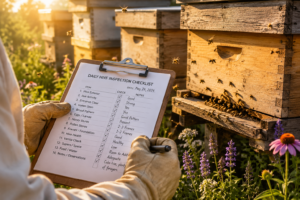
The optimal time for daily hive management is mid-morning, typically between 10 AM and noon, when forager bees are most active. This timing allows you to observe normal bee behavior patterns and assess colony strength based on traffic levels.
Ideal daily inspection schedule:
- 10-11 AM: Peak activity observation window.
- Sunny, calm days: Best conditions for accurate assessments.
- Temperature above 60°F: Bees are active enough to evaluate.
- Avoid rainy or windy conditions: Bees stay inside, skewing observations.
Morning inspections also help you spot overnight problems like fallen equipment, pest intrusion, or weather damage. Evening checks work as a backup option, but show different activity patterns since forager bees return to the hive. Skip daily inspections during storms, extreme cold, or when bees are clustering due to weather – these conditions make normal behavior assessment impossible.
What Equipment Do You Need for Daily Hive Checks?
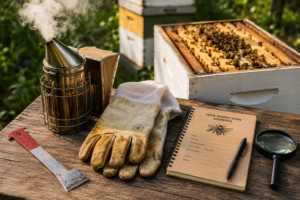
Daily hive management requires minimal equipment since most tasks involve external observation. A notebook or smartphone app for record keeping, basic protective gear, and a few simple tools handle most daily needs without the full inspection equipment required for hive openings.
Essential daily management tools:
- Notebook or digital app for tracking observations and patterns.
- Basic veil or hat for protection during close observation.The
- Hive tool for minor adjustments to equipment alignment.
- Smoker (optional for daily use, essential for emergencies).
- Camera or phone to document unusual conditions.
- Small brush to clear debris from entrances.
Keep a dedicated daily inspection kit separate from your full hive examination tools. This prevents over-handling equipment and makes quick rounds more efficient. Choose lightweight options since you’ll carry tools between multiple hives – a small shoulder bag or tool belt works better than heavy boxes for daily rounds.
How Often Should You Open Hives for Full Inspections?
Full hive inspections should happen every 7-14 days during the active season, not daily. Opening hives too frequently disrupts the colony, breaks propolis seals that bees work to maintain, and can trigger defensive behavior that makes future inspections more difficult.
Inspection frequency guidelines:
- Spring buildup: Every 7-10 days to monitor growth and prevent swarming.
- Summer flow: Every 10-14 days unless problems are suspected.
- Fall preparation: Every 14 days to assess winter readiness.
- Winter: Monthly at most, only during warm spells above 50°F.
Daily management focuses on external signs that indicate when full inspections are needed. If daily observations show reduced activity, unusual bee behavior, or other warning signs, schedule a full inspection within 1-2 days. This approach catches problems early while avoiding the stress of constant hive opening. Emergency situations like suspected queen loss or disease symptoms require immediate full inspection regardless of the normal schedule.
What Records Should You Keep During Daily Management?
Effective daily hive management depends on consistent record keeping that tracks patterns over time. Simple notes about weather, bee activity levels, and observations help identify problems before they become serious and guide decisions about when full inspections are needed.
Essential daily record categories:
- Date and weather conditions (temperature, wind, precipitation).
- Activity level (high, normal, low, none).
- Entrance observations (traffic patterns, pollen loads, dead bees).
- Unusual behaviors (fighting, clustering, strange sounds).
- Equipment status (alignment, damage, needed repairs).
- Action items (schedule inspection, check water, repair equipment).
Use a simple rating system like 1-5 for activity levels to spot trends quickly. Digital apps designed for beekeepers offer weather integration and photo storage, but a basic notebook works just as well. The key is consistency – brief daily notes prove more valuable than detailed weekly records because patterns emerge that single observations miss.
How Do Seasonal Changes Affect Daily Hive Routines?
Daily hive management routines must adapt to seasonal changes in bee behavior, weather patterns, and colony needs. Spring requires more frequent monitoring due to rapid population growth, while winter daily checks focus mainly on equipment integrity and emergencies.
Seasonal daily routine adjustments:
Spring (March-May):
- Check for swarm preparations during peak activity.
- Monitor rapid population growth and space needs.
- Watch for early pest activity and entrance congestion.
Summer (June-August):
- Focus on water source maintenance during hot weather.
- Observe for robbing behavior during nectar dearth periods.
- Check ventilation and shade needs for hive comfort.
Fall (September-November):
- Monitor winter preparation activities and food stores.
- Watch for increased wasp and hornet pressure.
- Reduce inspection frequency as activity naturally decreases.
Winter (December-February):
- Limit checks to warm days above 40°F.
- Focus on equipment stability and entrance clearing.
- Look for signs of moisture problems or pest intrusion.
Adjust timing based on local climate patterns rather than calendar dates. Choose seasonal modifications that match your region’s bee activity cycles – southern areas may have year-round active periods while northern climates require extended winter precautions.
What Are Common Mistakes in Daily Hive Management?
The most common mistake in daily hive management is over-inspection – opening hives too frequently or spending too much time disturbing colonies during routine checks. This creates stress for bees and can actually mask problems by causing abnormal defensive behavior.
Frequent daily management errors:
- Opening hives daily instead of using external observation methods.
- Ignoring weather conditions and checking during poor bee flying weather.
- Inconsistent record keeping that misses important pattern recognition.
- Rushing through multiple hives without proper attention to each colony.
- Forgetting water source maintenance during hot or dry periods.
- Skipping equipment checks that prevent minor problems from becoming major issues.
Another major mistake is failing to adjust routines seasonally – using the same daily approach year-round when bees’ needs change dramatically with weather and colony cycles. Avoid the temptation to “help” too much by constantly adjusting hive components that bees have positioned intentionally. Choose a hands-off approach for daily management, saving interventions for scheduled full inspections when you can properly assess the situation.
Summary
Successful daily hive management centers on consistent external observation rather than frequent hive opening. The best routine involves 3-5 minute morning checks focusing on bee activity, entrance behavior, and equipment status while maintaining detailed records to spot patterns over time.
FAQ
How long should daily hive inspections take?
Daily hive inspections should take 3-5 minutes per hive for external observations only. If you’re opening hives daily, you’re over-managing and should switch to weekly full inspections with daily external checks.
Can you do daily hive management in bad weather?
Skip daily inspections during rain, strong winds, or temperatures below 50°F. Bees cluster inside during poor weather, making activity assessment inaccurate and potentially dangerous for both bees and beekeepers.
What time of day is worst for hive checks?
Early morning, before 9 AM, and late afternoon after 4 PM show reduced bee activity that can mask problems. Very hot midday periods may show artificially low activity as bees focus on cooling the hive.
Should new beekeepers do daily hive management?
New beekeepers benefit from daily observation routines to learn normal bee behavior patterns, but should avoid daily hive opening. Focus on external observation skills first, then graduate to proper inspection scheduling.
How do you know when daily observations require full inspection?
Schedule a full inspection within 24-48 hours if daily checks reveal: no activity during good weather, excessive dead bees, fighting at the entrance, unusual sounds, or sudden behavior changes.
What’s the minimum equipment needed for daily checks?
You need only a notebook, basic head protection, and, optionally, a hive tool for minor adjustments. Full protective gear and smokers are unnecessary for external observation routines.
How many hives can you check daily?
An experienced beekeeper can complete daily external checks on 20-30 hives in one hour. New beekeepers should start with fewer hives to develop proper observation skills and record-keeping habits.
Do you need to check hives every single day?
Daily checks work best, but aren’t mandatory – every other day works for experienced beekeepers with stable colonies. During critical periods like swarm season or disease treatment, daily observation becomes more important.
What weather conditions are ideal for daily hive management?
Sunny, calm conditions with temperatures between 60-80°F provide the most accurate picture of colony health and normal bee behavior patterns for assessment purposes.
Should you wear full protective gear for daily checks?
Basic head protection suffices for external daily observations. Full suits are unnecessary and may actually increase bee defensiveness during quick, non-intrusive daily management routines.