
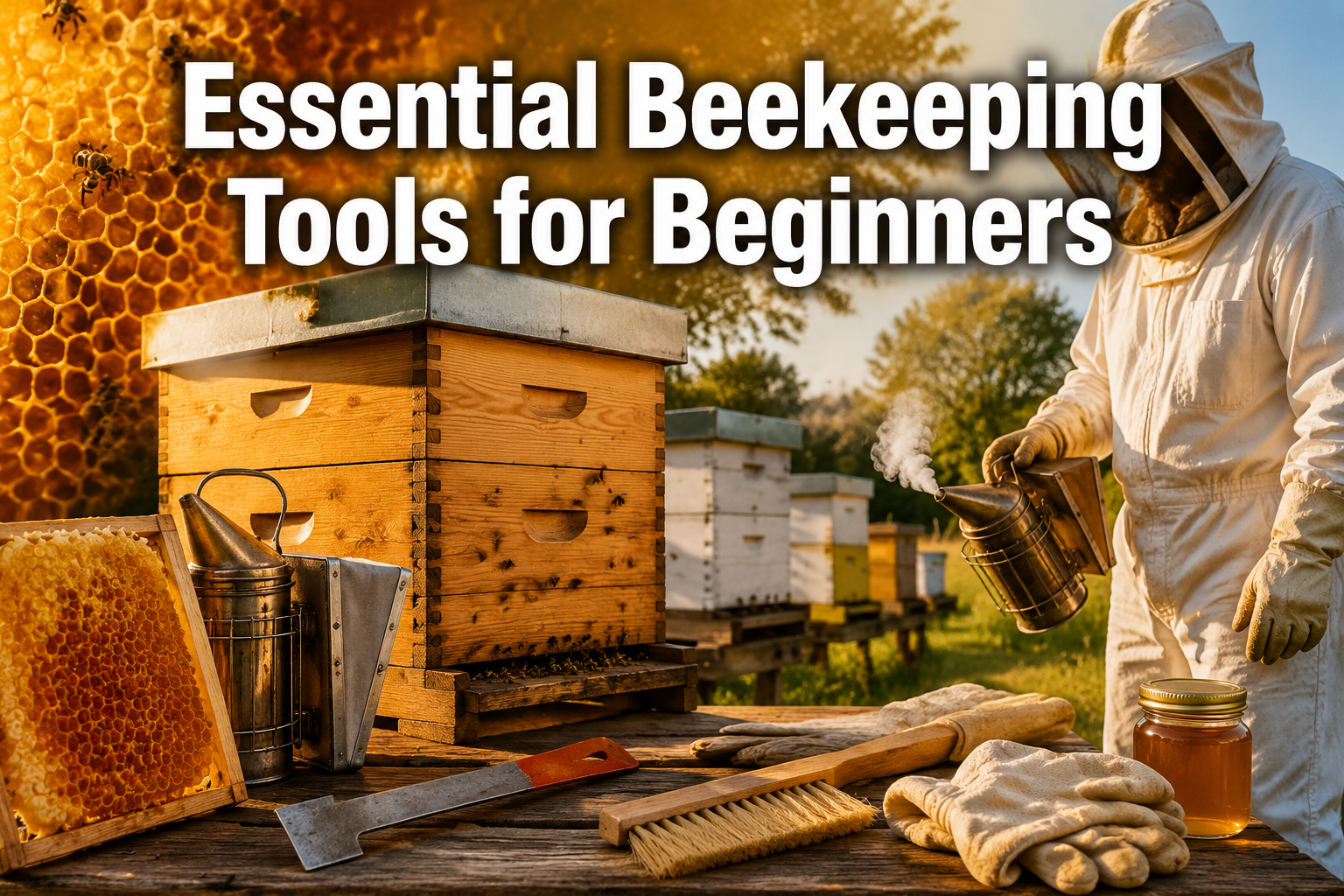
New beekeepers need five essential tool categories: protective gear (bee suit, gloves, veil), a smoker to calm bees, hive tools for opening boxes, a bee brush for gentle bee removal, and basic hive equipment like wooden frames. These beekeeping tools cost between $200-400 for a complete starter kit and provide safety and functionality for managing bee colonies.
What Protective Beekeeping Tools Do You Need?
A complete bee suit, leather gloves, and attached veil form the foundation of safe beekeeping. These protective beekeeping tools prevent bee stings during hive inspections and honey harvesting.
Bee Suit Requirements:
- Ventilated white fabric – Keeps you cool and bees calm (bees dislike dark colors).
- Full-length zippers – Easy entry and exit without gaps.
- Elastic cuffs – Seal wrists and ankles against bee entry.
- Attached or detachable veil – Protects face and neck area.
Glove Selection:
- Leather beekeeping gloves – Thick enough to prevent stings, flexible enough for detailed work.
- Ventilated options – Reduce hand sweating during long inspections.
- Proper fit – Too loose allows bee entry, too tight reduces dexterity.
Common mistake: Buying cheap canvas suits that tear easily. Quality bee suits cost $80-150 but last for years with proper care.
Choose ventilated suits if you live in hot climates or plan frequent summer inspections. Standard cotton suits work fine for cooler regions or occasional beekeeping.
Which Hive Management Beekeeping Tools Are Essential?
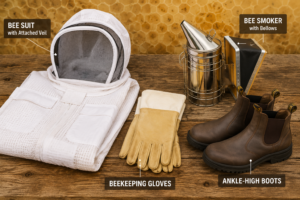
A smoker and hive tool are the two most critical tools for opening and inspecting bee colonies. Every hive inspection requires these beekeeping tools to work safely around defensive bees.
Smoker Essentials:
- Stainless steel construction – Resists rust and handles high heat.
- Bellows system – Creates steady airflow to keep fuel burning.
- 4-inch diameter minimum – Holds enough fuel for multiple hive inspections.
- Fuel options – Pine needles, burlap, wood shavings, or commercial pellets.
Hive Tool Types:
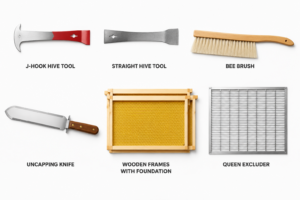
- J-hook hive tool – Best for prying apart frames and scraping propolis.
- Straight hive tool – Good for lifting frames and general prying.
- Multi-tool options – Include frame pullers and nail removal features.
Bee Brush Features:
- Soft natural bristles – Remove bees without injury.
- 8-10 inch length – Keeps hands away from defensive bees.
- Angled head – Reaches into hive corners easily.
Edge case: Some beekeepers prefer using a feather or grass instead of brushes, but dedicated bee brushes work more efficiently for regular inspections.
What Basic Hive Equipment Do New Beekeepers Need?
Wooden frames, foundation sheets, and a queen excluder complete the essential beekeeping tools for hive management. These components organize the colony and separate the brood from the honey storage areas.
Frame Requirements:
- Pre-assembled wooden frames – Save time compared to building from scratch.
- Plastic or wax foundation – Gives bees a template for building comb.
- Deep frames for brood – 9⅝ inch boxes where the queen lays eggs.
- Medium frames for honey – 6⅝ inch boxes for honey storage.
Queen Excluder Purpose:
- Keeps queen in brood area – Prevents eggs in honey supers.
- Metal or plastic construction – Allows worker bees through but blocks larger queens.
- Optional but recommended – Makes honey harvesting cleaner.
Additional Starter Tools:
- Uncapping knife – Removes wax caps from honey cells.
- Extractor (manual) – Spins honey from frames without destroying comb.
- Strainer – Filters wax particles from extracted honey.
Choose a plastic foundation if you want durability and easy cleaning. Select a natural wax foundation if you prefer traditional methods and don’t mind occasional replacement.
How Much Do Beekeeping Tools Cost?
A complete set of essential beekeeping tools costs $200-400 for new beekeepers, with protective gear representing the largest expense. Quality tools last for decades with proper maintenance.
Cost Breakdown:
- Bee suit and veil: $80-150
- Leather gloves: $25-40
- Smoker: $30-50
- Hive tool set: $20-35
- Bee brush: $15-25
- Frames and foundation (10 frames): $40-60
Money-saving tips:
- Buy starter kits – Often 20-30% cheaper than individual items
- Check local clubs – Members sometimes sell quality used equipment
- Start small – Buy tools as you add more hives, rather than everything upfront
Avoid cheap imports that break quickly. American-made stainless steel tools cost more initially but provide better value long-term.
What Advanced Beekeeping Tools Can Wait?
Electric uncapping knives, refractometers, and hive scales are useful but not essential for beginning beekeepers. Focus the budget on basic safety and inspection tools first.
Advanced Tools to Consider Later:
- Electric uncapping knife – Faster honey processing for multiple hives.
- Refractometer – Tests honey’s moisture content for quality control.
- Hive scale – Monitors colony weight and honey production remotely.
- Queen marking kit – Helps identify and track queen bees.
Add advanced tools when you manage 3+ hives or want to sell honey commercially. Most hobbyist beekeepers never need specialized equipment.
Where Should You Buy Beekeeping Tools?
Local beekeeping supply stores offer the best combination of quality products, expert advice, and ongoing support for new beekeepers. Online retailers work for experienced beekeepers who know exactly what they need.
Local Store Advantages:
- Try before buying – Test suit fit and tool weight.
- Expert guidance – Staff can recommend tools for your climate and goals.
- Quick replacement – No shipping delays for broken equipment.
- Community connections – Meet other local beekeepers.
Online Options:
- Dadant & Sons – Largest beekeeping supplier with a comprehensive selection.
- Mann Lake – Competitive prices and frequent sales.
- Brushy Mountain – Good starter kits and educational resources.
Timing matters: Order equipment 4-6 weeks before bee arrival to allow for shipping delays and size exchanges.
Conclusion
Starting with the right beekeeping tools makes the difference between successful, enjoyable beekeeping and frustrating, dangerous experiences. Focus your initial investment on quality protective gear, a reliable smoker, and basic hive tools rather than trying to buy everything at once.
Visit a local beekeeping supply store to try on protective gear, join a regional beekeeping association for hands-on learning, and start with one hive to practice using your new tools. Quality beekeeping tools are an investment that will serve you well for decades of honey production and bee stewardship.
FAQ
Can I use regular work gloves instead of beekeeping gloves?
Regular work gloves are too thin and allow bee stings to penetrate. Leather beekeeping gloves have special thickness and design to prevent stings while maintaining dexterity.
How often do I need to replace beekeeping tools?
Quality stainless steel tools last 20+ years with proper care. Bee suits typically last 5-10 years, depending on use frequency. Gloves need replacement every 2-3 years as leather softens.
What’s the difference between deep and medium hive boxes?
Deep boxes (9⅝ inches) are used for brood rearing where the queen lays eggs. Medium boxes (6⅝ inches) are lighter and easier to handle for honey storage.
Do I need different tools for different bee breeds?
Basic tools work for all honeybee breeds, but gentler breeds like Italian bees may require less smoking, while defensive breeds like Carniolan bees need more protective gear.
Can I make my own beekeeping tools?
Experienced woodworkers can build hive boxes and frames, but safety equipment like suits and veils should be purchased from reputable suppliers to ensure proper protection.
What fuel works best in bee smokers?
Pine needles, burlap, and wood shavings burn cleanly and produce cool, white smoke. Avoid treated materials, paper, or anything that creates hot, acrid smoke.
How do I know if my protective gear fits properly?
Bee suits should allow full arm movement without binding, gloves should cover wrist gaps completely, and veils should maintain distance from your face when zipped.