
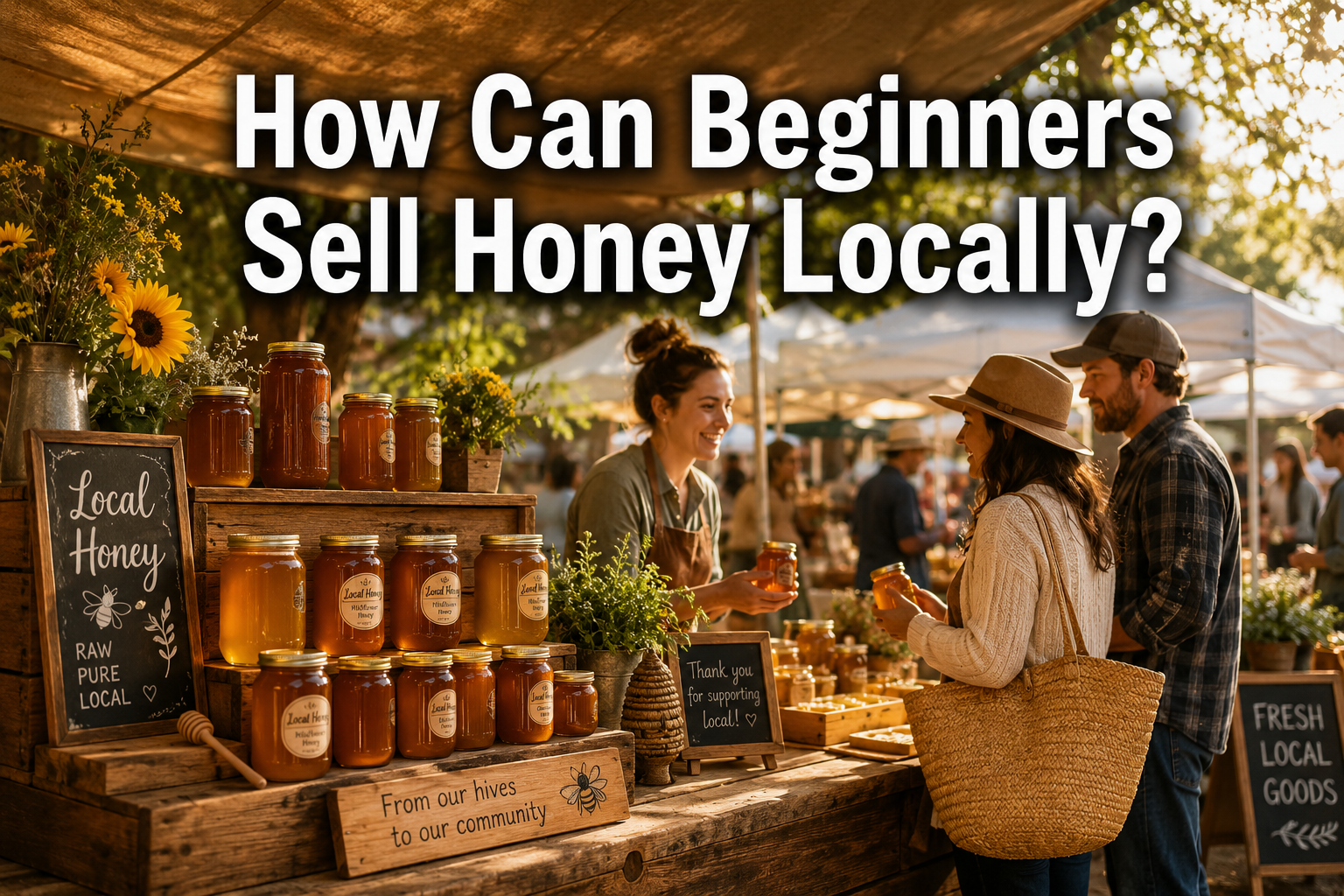
Beginners can sell honey locally by starting with proper licensing, setting competitive prices based on local market rates, and choosing the right sales channels like farmers’ markets, local stores, or direct-to-consumer sales. Success depends on understanding local regulations, building customer relationships, and maintaining consistent quality standards.
What Licenses Do You Need to Sell Honey Locally?
Most areas require specific permits to sell honey, even from small-scale operations. Food handler permits, business licenses, and sometimes cottage food licenses are standard requirements that vary by state and county.
Essential permits typically include:
- Business license from your city or county.
- Food handler’s permit or cottage food license.
- Sales tax permit if your state requires it.
- Liability insurance (highly recommended).
- Apiary registration in most states.
Contact your local health department first. They can explain which permits apply to honey sales in your area. Some states have simplified rules for “cottage food” operations that make small-scale honey sales easier to start.
Common mistake: Assuming honey sales don’t need permits because it’s a “natural” product. Raw honey still falls under food safety regulations in most jurisdictions.
How Should Beginners Price Their Honey?
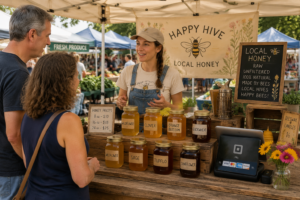
Local honey typically sells for $8-15 per pound, but pricing depends on your area’s market conditions, honey type, and packaging quality. Research what other local producers charge before setting your prices.
Pricing factors to consider:
- Production costs: Equipment, jars, labels, permits.
- Local competition: Visit farmers’ markets to see current prices.
- Honey variety: Specialty honeys (wildflower, clover) often command higher prices.
- Packaging quality: Professional labels and attractive jars justify premium pricing.
- Sales channel: Direct sales typically allow higher margins than wholesale.
Start by calculating your total costs per pound, then add a reasonable profit margin. New beekeepers often underprice their honey, which hurts both their profits and the local market.
Decision rule: If your honey costs $5 per pound to produce and package, price it at $10-12 for direct sales to maintain healthy margins while staying competitive.
Where Can You Sell Honey Locally?
Farmers’ markets offer the best starting point for new honey sellers because they provide direct customer contact and immediate feedback. Local stores, restaurants, and online platforms expand your reach as you grow.
Top sales channels for beginners:
Farmers Markets
- Direct customer interaction builds loyalty.
- No middleman means higher profit margins.
- Weekly commitment helps establish routine sales.
- Typically costs $25-75 per market day for booth space.
Local Retail Stores
- Health food stores often welcome local honey.
- Gift shops appreciate locally-made products.
- Grocery stores may buy wholesale for local sections.
- Expect 40-50% wholesale margins.
Direct Sales
- Sell from your home (check local regulations).
- Social media marketing to neighbors and friends.
- Word-of-mouth referrals from satisfied customers.
- Highest profit margins, but requires more marketing effort.
Restaurants and Cafes
- Many chefs prefer local honey for menu items.
- Steady wholesale orders once relationships are established.
- May request specific honey varieties or packaging sizes.
How Much Honey Can Beginners Realistically Sell?
New beekeepers with 2-5 hives typically harvest 60-150 pounds of honey in their first successful season. Local market demand and your marketing efforts determine how quickly you can sell this quantity.
Realistic first-year expectations:
- Small operation (2-3 hives): 60-90 pounds harvestable honey.
- Medium start (4-5 hives): 100-150 pounds potential harvest.
- Sales timeline: 3-6 months to sell the initial harvest with active marketing.
- Customer base: 20-50 regular customers by the end of the first year.
Weather, hive health, and local nectar sources significantly impact honey production. Plan conservatively and focus on selling quality over quantity while building your reputation.
Edge case: Some areas have limited local honey demand. Research your market before expanding beyond 2-3 hives to avoid oversupply issues.
What Marketing Strategies Work Best for Local Honey Sales?
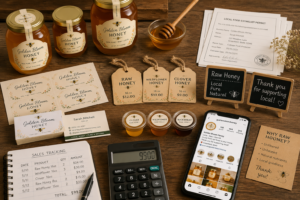
Word-of-mouth marketing and social media presence drive most successful local honey sales. Focus on building relationships rather than mass advertising for the best return on marketing efforts.
Effective marketing approaches:
Social Media Marketing
- Post photos of your hives and honey harvest process.
- Share beekeeping tips and honey recipes.
- Announce market locations and availability.
- Facebook and Instagram work best for local food products.
Customer Education
- Explain the benefits of raw, local honey.
- Offer tastings at farmers’ markets.
- Share information about your beekeeping practices.
- Create simple flyers about honey’s health benefits.
Relationship Building
- Remember regular customers’ preferences.
- Offer loyalty discounts for repeat buyers.
- Partner with other local food producers for cross-promotion.
- Participate in community events beyond just farmers’ markets.
Seasonal Promotions
- Holiday gift packaging during the winter months.
- Spring allergy season marketing for local honey benefits.
- Summer farmers market specials.
- Fall harvest festival participation.
What Common Mistakes Should New Honey Sellers Avoid?
Underpricing products and neglecting proper labeling are the most costly mistakes new honey sellers make. These errors can hurt profitability and create legal compliance issues.
Critical mistakes to avoid:
Pricing Errors
- Selling too cheaply to “get started” damages long-term profitability.
- Not tracking all production costs leads to selling at a loss.
- Copying online prices instead of researching local market rates.
Legal and Safety Issues
- Selling without proper permits risks fines and business closure.
- Inadequate labeling violates food safety regulations.
- Missing liability insurance creates financial risk.
Quality Control Problems
- Inconsistent moisture content affects honey’s shelf life.
- Poor packaging makes products look unprofessional.
- Not filtering honey properly leaves debris that turns off customers.
Marketing Missteps
- Relying on only one sales channel limits growth potential.
- Not building customer relationships reduces repeat sales.
- Overcommitting to markets before having an adequate honey supply.
Conclusion
Successfully selling honey locally requires proper preparation, realistic expectations, and consistent quality standards. Start by obtaining necessary permits and researching your local market to set appropriate prices. Focus on farmers’ markets for direct sales while building relationships that can lead to wholesale opportunities with local businesses.
FAQ
How much money can beginners make selling honey locally?
New beekeepers typically earn $300-800 in their first year from 2-3 hives, depending on harvest success and local pricing. This covers basic equipment costs while building a customer base.
Do I need special insurance to sell honey?
Most areas don’t legally require insurance, but liability coverage protects against potential lawsuits. Many farmers’ market vendors carry $1-2 million liability policies costing $200-400 annually.
How long does local honey stay fresh for customers?
Properly stored raw honey lasts indefinitely, but most sellers recommend using it within 2 years for the best flavor. Store in sealed containers away from direct sunlight and moisture.
Can I sell honey from my backyard beehives?
Yes, if local zoning allows beekeeping and you obtain proper food sales permits. Check both beekeeping regulations and cottage food laws in your area.
What’s the difference between wholesale and retail honey pricing?
Retail prices are typically 50-100% higher than wholesale. If you sell retail for $12/pound, expect wholesale buyers to pay $6-8/pound for the same product.
How do I know if my honey quality is good enough to sell?
Test moisture content (should be under 18.5%), ensure proper filtering removes debris, and verify no off-flavors or crystallization issues. Consider having experienced beekeepers taste-test initially.
What size jars work best for local honey sales?
8oz and 12-oz jars are most popular for retail sales. Offer 1-2 size options initially rather than confusing customers with too many choices.
Should I sell creamed honey or liquid honey?
Start with liquid honey since it’s easier to produce and package. Add creamed honey later, once you establish regular sales and understand customer preferences.
How do I handle customers who want to return honey?
Establish a clear return policy upfront. Most honey sellers replace defective products but don’t accept returns for taste preferences since honey flavor varies naturally.
When is the best time of year to start selling honey?
Late summer through fall aligns with harvest season and holiday gift-giving. This timing allows you to build customer relationships before the slower winter months.