
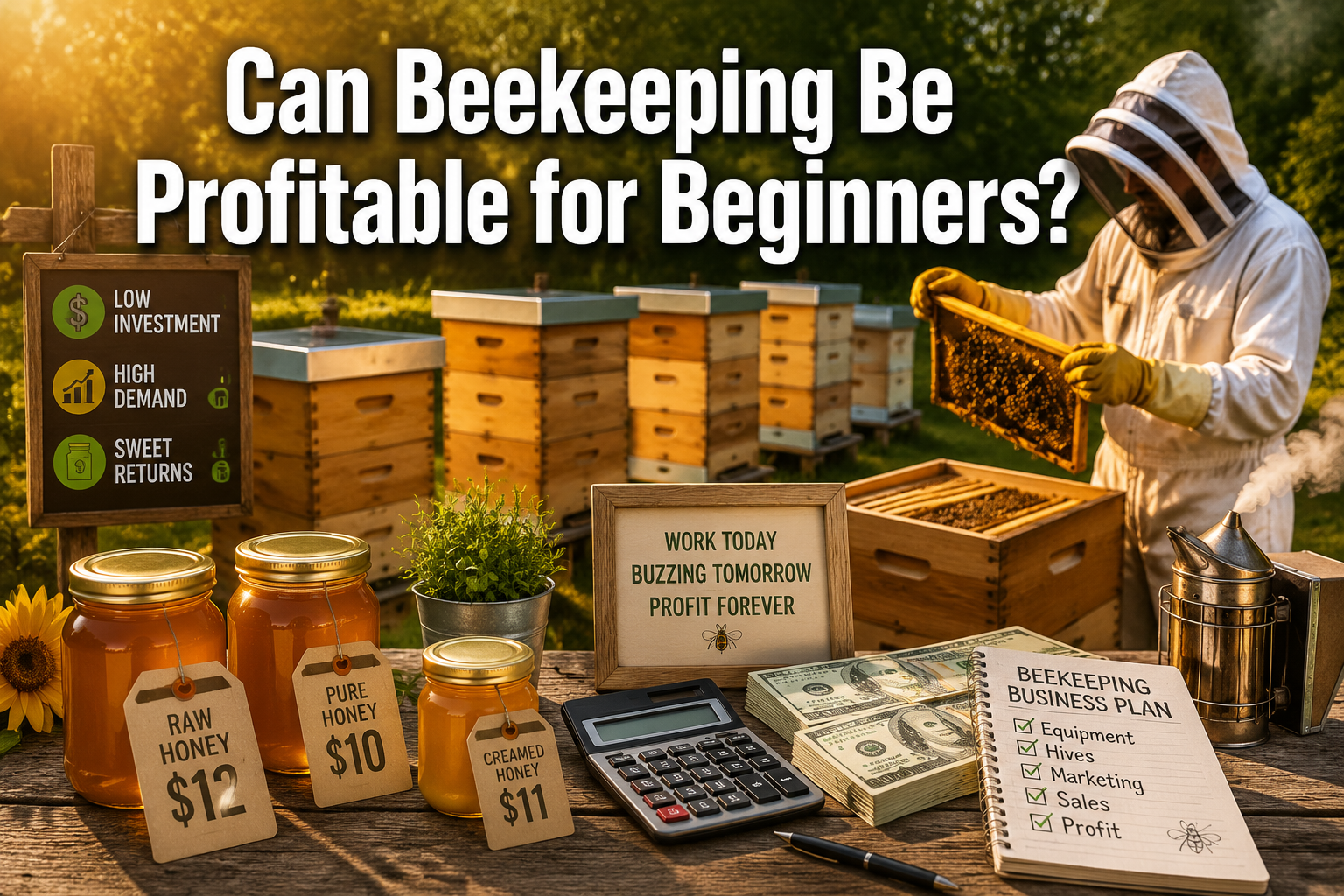
Yes, beekeeping can be profitable for beginners, but it typically takes 2-3 years to break even and requires an initial investment of $500-$1,500 per hive. Most beginner beekeepers earn $200-$600 profit per hive annually once established, though success depends on local honey prices, hive health, and weather conditions.
Key Takeaways
- Initial beekeeping costs range from $500-$1,500 per hive for equipment and bees.
- The break-even point typically occurs in years 2-3 for most beginners.
- Established hives can generate $200-$600 annual profit per hive.
- Honey sales provide the main income, with prices ranging from $8 to $15 per pound.
- Multiple income streams include beeswax, propolis, and hive rental services.
- Success requires learning proper hive management and disease prevention.
- Local regulations and zoning laws may limit beekeeping operations.
- Weather and seasonal factors significantly impact honey production.
- Starting with 2-3 hives allows better learning while managing costs.
- Joining local beekeeping associations provides valuable mentorship.
What Are the Startup Costs for Profitable Beekeeping?
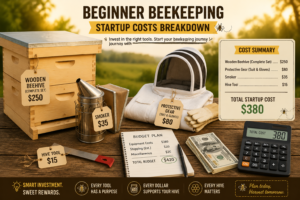
Beginner beekeepers need $500-$1,500 per hive to get started, with most spending around $800-$1,000 for quality equipment. This investment covers essential items needed for safe and effective hive management.
Essential Equipment Costs:
- Hive boxes and frames: $150-$300.
- Protective gear (suit, gloves, veil): $100-$200.
- Smoker and hive tool: $30-$50.
- Package of bees or nucleus colony: $150-$200.
- Extractor (manual): $200-$400.
- Miscellaneous supplies: $50-$100.
Money-Saving Tips for Beginners:
- Buy used equipment from experienced beekeepers.
- Join group orders through local beekeeping clubs.
- Build your own hive boxes if you have woodworking skills.
- Start with manual extractors instead of electric models.
Choose quality equipment over cheap alternatives because bees are sensitive to poor materials. Plastic hives may seem cheaper, but wooden hives last longer and provide better insulation.
Common Beginner Mistake: Don’t buy everything at once. Start with 1-2 hives to learn before expanding your operation.
How Much Money Can Beekeeping Be Profitable in the First Year?
Most beginners lose money in year one but can expect to recover 30-50% of their initial investment through honey sales and other products. First-year hives typically produce 30-60 pounds of surplus honey.
Realistic First-Year Income Expectations:
- Honey production: 30-60 pounds per hive.
- Honey price: $8-$15 per pound retail.
- Gross income: $240-$900 per hive.
- Net profit after expenses: Usually negative due to startup costs.
Additional Income Sources:
- Beeswax sales: $3-$5 per pound.
- Propolis: $15-$25 per ounce.
- Pollen: $8-$12 per pound.
- Hive inspections for others: $50-$100 per visit.
The key to making beekeeping profitable is understanding that it’s a long-term investment. Most successful beekeepers focus on learning proper hive management in year one rather than maximizing profits.
Edge Case: Exceptional first-year results can occur in areas with strong nectar flows and mild winters, but don’t count on this outcome.
When Does Beekeeping Become Consistently Profitable?
Beekeeping typically becomes profitable in years 2-3 when hives reach full strength, and beekeepers develop essential skills. Established hives can produce 60-100 pounds of honey annually with proper management.
Profitability Timeline:
- Year 1: Focus on learning, expect losses.
- Year 2: Break-even or small profit possible.
- Year 3+: Consistent profits of $200-$600 per hive.
Factors That Accelerate Profitability:
- Strong local honey market with premium prices.
- Multiple hives to spread fixed costs.
- Value-added products like creamed honey or infused varieties.
- Direct sales to consumers instead of wholesale.
Choose Direct Sales If: You live near farmers’ markets, have good people skills, and can commit time to marketing. Wholesale is better if you prefer hands-off sales but accept lower prices.
Scaling Considerations: Each additional hive reduces per-unit costs for equipment like extractors and reduces labor per hive through efficiency gains.
What Income Streams Make Beekeeping Most Profitable?
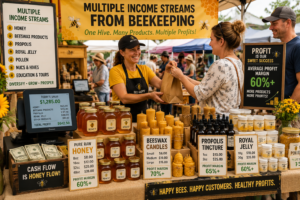
Honey sales generate 70-80% of income for most beekeepers, but diversifying into multiple products significantly increases profitability per hive. Smart beekeepers develop 3-5 income streams from their hives.
Primary Income Sources:
- Raw honey: $8-$15 per pound retail, $4-$7 wholesale.
- Specialty honey varieties: $12-$20 per pound.
- Beeswax products: Candles, lip balm, wood polish.
- Propolis tinctures: High-value health products.
- Pollen and royal jelly: Nutritional supplements.
Service-Based Income:
- Hive management for others: $100-$200 per hive per season.
- Bee removal services: $150-$400 per removal.
- Pollination services: $50-$200 per hive rental.
- Beekeeping education: Classes and workshops.
Value-Added Products:
- Creamed honey sells for 25-50% more than liquid honey.
- Infused honey (lavender, cinnamon) commands premium prices.
- Gift sets and seasonal packaging increase margins.
Decision Rule: Focus on honey first, then add one new product stream per year to avoid overwhelming yourself while learning.
What Challenges Affect Beekeeping Profitability for Beginners?
Weather conditions, diseases, and seasonal variations can reduce honey production by 50-80% in bad years, making consistent profits challenging for new beekeepers. Understanding these risks helps set realistic expectations.
Major Profitability Challenges:
Weather and Climate:
- Drought reduces nectar production significantly.
- Cold, wet springs delay hive development.
- Late frosts can kill fruit tree blossoms that bees depend on.
Hive Health Issues:
- Varroa mites can destroy untreated hives.
- American foulbrood requires hive destruction.
- Nosema and other diseases reduce honey production.
Market Factors:
- Local honey market saturation.
- Competition from cheap imported honey.
- Seasonal demand fluctuations.
Beginner-Specific Challenges:
- Learning curve leads to management mistakes.
- Improper timing of honey harvests.
- Inadequate disease prevention knowledge.
Risk Management Strategies:
- Start with disease-resistant bee stocks.
- Join mentorship programs through local associations.
- Keep detailed records to identify patterns.
- Maintain an emergency fund for hive treatments.
Common Mistake: New beekeepers often harvest honey too early or leave too little for winter, weakening hives for the following year.
How Many Hives Do You Need for Profitable Beekeeping?
Most beekeepers need 5-10 hives to generate a meaningful part-time income, though 2-3 hives work well for beginners learning the basics. Each additional hive increases efficiency and spreads fixed costs.
Hive Count Guidelines:
- 1-2 hives: Learning phase, minimal profit expected.
- 3-5 hives: Hobby level, $500-$2,000 annual profit potential.
- 6-15 hives: Serious side business, $2,000-$8,000 potential.
- 20+ hives: Part-time to full-time operation.
Economies of Scale Benefits:
- Shared equipment costs (extractor, uncapping knife).
- Bulk purchasing discounts on supplies.
- More efficient harvest and processing time.
- Better ability to split strong hives.
Start Small Rule: Begin with 2-3 hives maximum. This allows comparison between hives while keeping costs manageable during the learning phase.
Space Requirements: Each hive needs about 10 square feet, but consider flight paths and neighbor relations when planning expansion.
Summary
Beekeeping can definitely be profitable for beginners, but success requires realistic expectations and proper planning. While most new beekeepers lose money in year one, those who stick with it typically see profits of $200-$600 per hive by year three.
The key to profitable beekeeping lies in starting small with 2-3 hives, focusing on learning proper management techniques, and gradually expanding as skills develop. Diversifying income through multiple products like beeswax, propolis, and value-added honey products significantly increases profitability potential.
FAQ
How long does it take for beekeeping to be profitable?
Most beekeepers break even in 2-3 years and see consistent profits by year 3-4, depending on local conditions and management skills.
Can you make a living from beekeeping?
Full-time income requires 100+ hives in most markets, though some beekeepers succeed with fewer hives by focusing on high-value products and services.
What’s the biggest expense in beekeeping?
Initial hive setup costs $500-$1,500 per hive, followed by ongoing costs for treatments, feeding, and equipment replacement.
How much honey does one hive produce per year?
Established hives typically produce 30-100 pounds of surplus honey annually, varying by location, weather, and management practices.
Do you need special licenses for profitable beekeeping?
Most areas require registration with state agriculture departments, and some locations have zoning restrictions or require permits.
What’s the best location for profitable beekeeping?
Areas with diverse flowering plants, mild winters, and strong local honey markets offer the best profit potential for beginners.
How do weather conditions affect beekeeping profits?
Drought, excessive rain, or late frosts can reduce honey production by 50-80%, making weather the biggest variable in annual profits.
Should beginners buy bees or equipment first?
Always have equipment ready before ordering bees, as packages and nucleus colonies arrive on specific dates and need immediate housing.
What’s the failure rate for new beekeepers?
About 30-40% of beginners quit within two years, usually due to hive losses from diseases or unrealistic profit expectations.
Can urban beekeeping be profitable?
Urban areas often have strong honey markets and diverse nectar sources, but check local zoning laws and neighbor agreements first.
How do you price honey for maximum profit?
Research local market prices, consider your costs, and position slightly below premium brands while emphasizing local production benefits.
What insurance do profitable beekeepers need?
Liability insurance protects against bee sting incidents, while some beekeepers add coverage for hive theft or weather damage.