
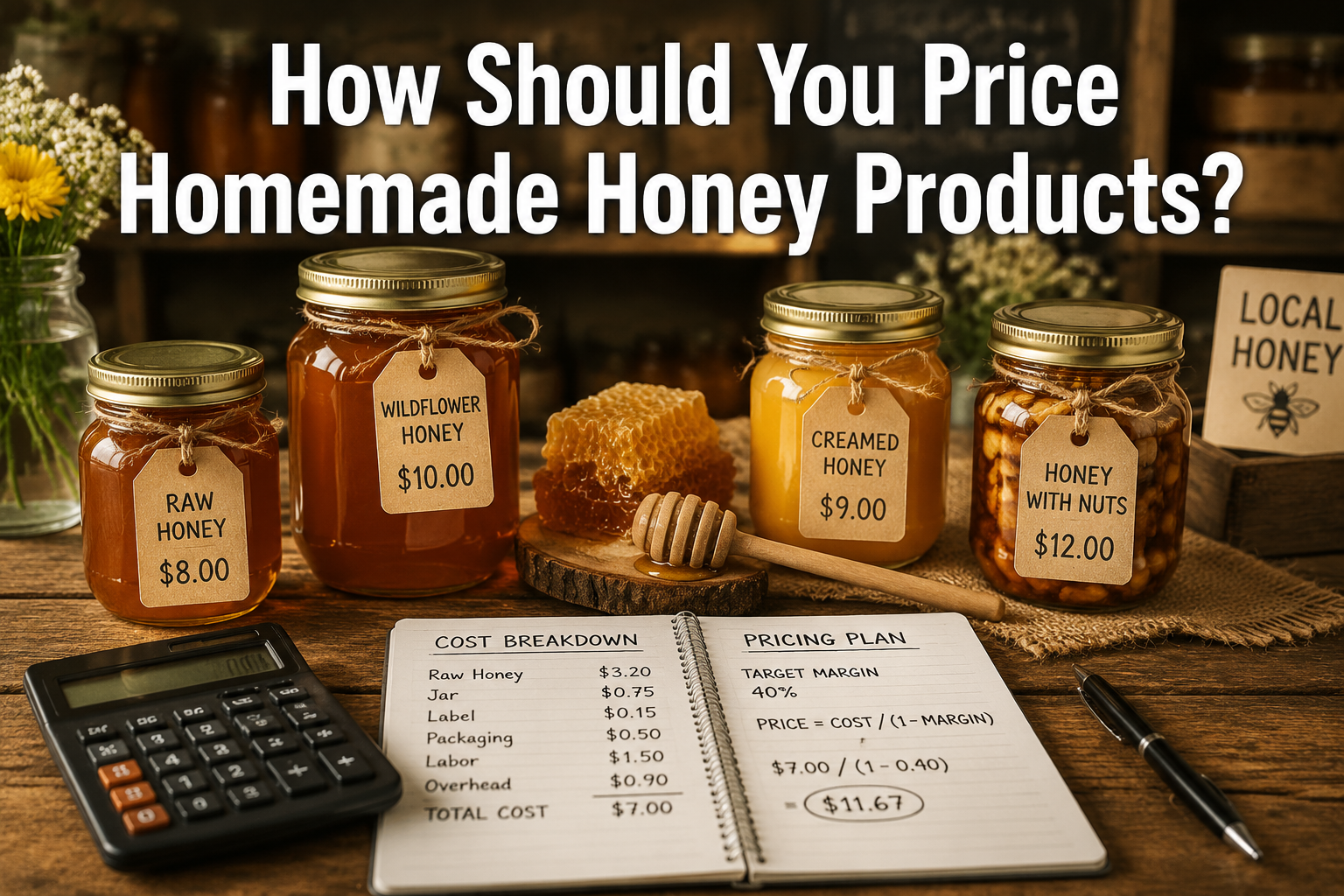
To price homemade honey products correctly, calculate all costs (ingredients, packaging, labor, overhead) and add a 50-100% markup for profit. Small honey jars typically sell for $8-15, while specialty flavored varieties can command $12-20 per jar at farmers’ markets and online.
What Costs Should You Include When You Price Homemade Honey Products?
Accurate cost calculation forms the foundation of profitable honey pricing. Include every expense that goes into making and selling your honey products, not just the obvious ingredients.
Direct Material Costs:
- Raw honey (wholesale or your own production costs).
- Packaging materials (jars, lids, labels, boxes).
- Additional ingredients for flavored varieties (herbs, spices, extracts).
- Shipping materials for online orders.
Labor and Time Costs:
- Time spent harvesting, processing, and filtering honey.
- Packaging and labeling time.
- Marketing and customer service hours.
- Travel time to markets or delivery locations.
Overhead Expenses:
- Equipment depreciation (extractors, filters, heating equipment).
- Kitchen or workspace rental costs.
- Business licenses and permits.
- Insurance costs.
- Website and marketing expenses.
Selling Venue Costs:
- Farmers market booth fees ($25-75 per day).
- Online platform commissions (3-8% of sales).
- Credit card processing fees (2.9% + $0.30 per transaction).
- Shipping costs for mail orders.
Track these costs monthly and divide by your production volume to get accurate per-unit costs. Many honey makers underestimate labor time, which leads to unprofitable pricing.
How Much Markup Should You Add to the Price of Homemade Honey Products?
A 50-100% markup over total costs ensures healthy profit margins for homemade honey products. This markup covers business growth, unexpected expenses, and fair compensation for your entrepreneurial efforts.
Standard Markup Guidelines:
- Basic honey varieties: 50-75% markup.
- Specialty or flavored honey: 75-100% markup.
- Gift sets or premium packaging: 100-150% markup.
- Seasonal or limited editions: 100-200% markup.
Example Pricing Calculation:
- Total cost per 8oz jar: $4.50.
- Target markup: 75%.
- Selling price: $4.50 × 1.75 = $7.88 (round to $8.00).
Choose higher markups if you offer unique varieties, exceptional quality, or serve premium markets. Farmers market customers often pay more for artisanal products than grocery store shoppers.
Common Markup Mistakes:
- Using markup based only on ingredient costs (ignoring labor and overhead).
- Setting prices too low to “be competitive” without considering profit needs.
- Failing to adjust markup for different sales channels and their associated costs.
What Are Typical Market Prices for Homemade Honey Products?
Understanding market pricing helps you position your honey products competitively while maximizing profit potential. Prices vary significantly by location, quality, and selling venue.
Standard Honey Pricing Ranges (2026):
- 4oz jar: $4-8.
- 8oz jar: $8-15.
- 12oz jar: $12-20.
- 1lb jar: $15-25.
- 2lb jar: $25-40.
Premium Honey Varieties:
- Raw unfiltered honey: 20-30% price premium.
- Single-source floral varieties: 25-40% premium.
- Infused honey (lavender, cinnamon): 30-50% premium.
- Creamed or whipped honey: 20-35% premium.
Regional Price Factors:
- Urban markets typically support 15-25% higher prices.
- Tourist areas can command 25-50% premiums.
- Rural areas may require more competitive pricing.
- Organic certification adds 20-40% to acceptable pricing.
Research your local competition by visiting farmers’ markets, checking online listings, and calling specialty food stores. Price your products within the local range while highlighting unique value propositions.
How Do Different Sales Channels Affect How You Price Homemade Honey Products?
Each sales channel has different cost structures and customer expectations that impact your optimal pricing strategy. Factor in channel-specific expenses and adjust prices accordingly.
Farmers Market Pricing:
- Customers expect premium quality and personal interaction.
- Can support 10-20% higher prices than retail stores.
- Factor in booth fees ($25-75 per market day).
- Build relationships for repeat customers and word-of-mouth marketing.
Online Sales Pricing:
- Include shipping costs in the product price or charge separately.
- Account for platform fees (Etsy 6.5%, Amazon 15-20%).
- Consider packaging for safe shipping (adds $1-3 per order).
- Offer free shipping on orders over $50 to increase average order value.
Wholesale to Stores:
- Expect a 40-50% wholesale discount from retail prices.
- Minimum order quantities reduce per-unit packaging costs.
- Consistent volume allows for better ingredient purchasing.
- Less marketing effort is required once accounts are established.
Direct Farm Sales:
- Lower overhead allows for competitive pricing.
- Build customer loyalty through farm visits and education.
- Offer bulk discounts for repeat customers.
- Bundle with other farm products for higher total sales.
Match your pricing strategy to each channel’s strengths while maintaining profitable margins across all sales venues.
What Pricing Strategies Work Best for Seasonal Honey Sales?
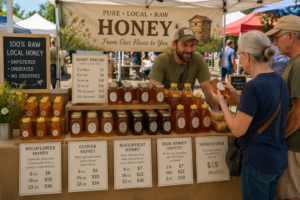
Seasonal demand patterns create opportunities to optimize honey pricing throughout the year. Adjust prices based on supply availability, gift-giving seasons, and customer buying patterns.
Peak Season Pricing (Fall/Winter):
- October-December: Holiday gift demand supports 15-25% price increases.
- Market honey products as natural, local gifts.
- Create gift sets with premium packaging at higher margins.
- Limited seasonal flavors (pumpkin spice, winter herbs) command premium prices.
Off-Season Strategies (Spring/Summer):
- Maintain steady pricing to build a customer base.
- Offer early-bird discounts for next season’s orders.
- Focus on bulk sales to restaurants and food manufacturers.
- Develop summer-specific products (honey sticks, travel sizes).
Inventory Management Pricing:
- Raise prices as inventory decreases to extend the selling season.
- Offer discounts on overstocked varieties to clear space.
- Pre-sell next season’s harvest at current prices for cash flow.
Weather-Related Adjustments:
- Poor harvest years justify 20-30% price increases.
- Abundant harvests may require competitive pricing to move inventory.
- Communicate weather impacts to customers to justify price changes.
Frequently Asked Questions
How often should I review and adjust my honey prices?
Review prices quarterly and adjust when costs change by more than 10% or when market conditions shift significantly. Annual price increases of 3-5% help maintain profit margins against inflation.
Should I charge more for raw, unfiltered honey?
Yes, raw, unfiltered honey typically commands 20-30% higher prices due to perceived health benefits and artisanal processing methods that customers value.
How do I price honey gift sets and bundles?
Price bundles at 10-15% less than individual item totals to encourage larger purchases while maintaining higher overall margins through increased average order values.
What’s the best jar size for maximizing profit?
8oz and 12oz jars typically offer the best profit margins, as customers perceive them as reasonably sized while allowing for premium per-ounce pricing compared to larger containers.
Should I offer volume discounts for bulk purchases?
Offer 10-15% discounts for purchases of 6+ jars to encourage larger orders while maintaining profitable margins through reduced per-order processing costs.
How do I compete with cheap store-bought honey?
Focus on quality, local sourcing, and unique varieties rather than competing on price. Educate customers about the differences between mass-produced and artisanal honey products.
In Short
Successful honey pricing requires careful cost calculation, market research, and strategic thinking about your target customers and sales channels. Start by tracking all production costs, add appropriate markup for profit, and research local market prices to ensure competitiveness.