
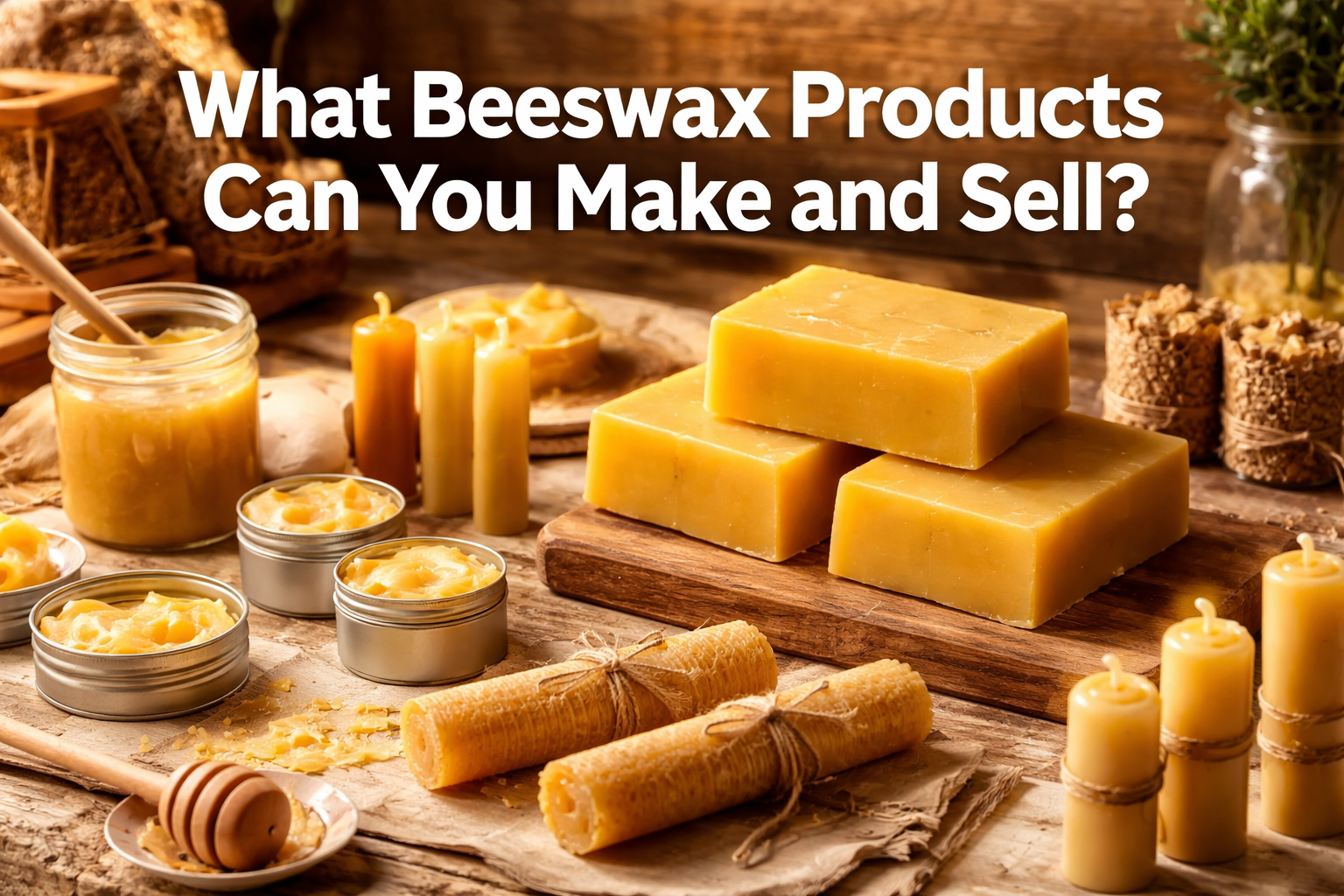
Beeswax products offer entrepreneurs a profitable path into handmade goods with items like candles, lip balms, and skincare products that cost $2-5 to make but sell for $8-25 each. The most popular beeswax products include candles, lip balms, lotion bars, furniture polish, and food wraps, all of which require minimal startup costs and basic crafting skills.
Key Takeaways
- Candles are the top seller – Easy to make, high profit margins of 60-80%.
- Skincare products like lip balms and lotion bars have repeat customers.
- Food wraps tap into the eco-friendly market trend.
- Startup costs range from $100-500 for basic supplies.
- Profit margins typically run 60-85% on finished products.
- Local markets and online platforms offer multiple sales channels.
- No special licenses needed for most beeswax products.
- Seasonal demand peaks during holidays and winter months.
- Quality beeswax costs $3-8 per pound wholesale.
What Are the Most Profitable Beeswax Products to Make?
Candles generate the highest profits because they use inexpensive materials but command premium prices. A basic beeswax candle costs $2-3 to make but sells for $12-20.
The top money-makers include:
Pillar Candles
- Cost: $2-4 each
- Selling price: $12-25
- Profit margin: 70-85%
Tea Light Sets
- Cost: $0.50 per candle
- Selling price: $2-3 each
- Best sold in sets of 6-12
Votive Candles
- Cost: $1-2 each
- Selling price: $6-12
- Popular for gifts and home decor
Specialty Shaped Candles
- Cost: $3-6 each
- Selling price: $15-35
- Higher margins for unique designs
Choose candles if you want quick sales and high volume. The market stays strong year-round, with peaks during fall and winter months.
Which Beeswax Skincare Products Sell Best?
Lip balms top the skincare category because they’re simple to make, have low material costs, and customers reorder frequently.
Top-Selling Skincare Items:
Lip Balms
- Cost: $0.75-1.25 per tube
- Selling price: $4-8
- Customers buy multiple flavors
Lotion Bars
- Cost: $2-3 each
- Selling price: $8-15
- Long-lasting appeal to customers
Healing Salves
- Cost: $1.50-2.50 per tin
- Selling price: $8-18
- Market to parents and athletes
Hand Creams
- Cost: $2-4 per jar
- Selling price: $12-22
- Premium positioning works well
Skincare products work best if you enjoy experimenting with scents and ingredients. Build customer loyalty by offering sample sizes and seasonal collections.
What Household Beeswax Products Are in Demand?
Food wraps lead the household category as consumers seek plastic alternatives. These eco-friendly products tap into growing environmental awareness.
Popular Household Items:
Beeswax Food Wraps
- Cost: $1-2 per wrap
- Selling price: $6-12
- Eco-conscious market growing
Furniture Polish
- Cost: $2-3 per jar
- Selling price: $8-15
- Appeals to antique lovers
Leather Conditioner
- Cost: $1.50-2.50 per tin
- Selling price: $8-16
- Targets boot and bag owners
Wood Cutting Board Oil
- Cost: $2-4 per bottle
- Selling price: $10-18
- Kitchen essential positioning
Focus on household products if you want to target environmentally conscious customers. Market these items to zero-waste communities and farmers markets.
How Much Does It Cost to Start Making Beeswax Products?
Basic startup costs range from $150-400 for essential equipment and initial beeswax supply. This covers enough materials to make 50-100 products for testing the market.
Essential Startup Supplies:
| Item | Cost Range | Purpose |
|---|---|---|
| Beeswax (5 lbs) | $25-40 | Base material |
| Double boiler | $20-35 | Melting wax safely |
| Molds/containers | $30-60 | Shaping products |
| Wicks (candles) | $15-25 | Candle making |
| Essential oils | $40-80 | Scenting products |
| Labels/packaging | $20-40 | Professional presentation |
Optional Equipment (Year 2):
- Professional melting pot: $100-200
- Wick trimmer and centering tools: $25-40
- Heat gun for finishing: $30-50
Start small with basic equipment. Reinvest profits into better tools as sales grow. Many successful beeswax businesses started with under $200.
Where Can You Sell Beeswax Products?
Local farmers markets provide the best starting point because customers can see and smell products before buying. Face-to-face sales build trust and allow for immediate feedback.
Top Sales Channels:
Farmers Markets
- Low booth fees ($25-75 per day).
- Direct customer feedback.
- Build local following.
Online Platforms
- Etsy: Built-in craft audience.
- Facebook Marketplace: Local sales.
- Your own website: Higher margins.
Retail Partnerships
- Local gift shops: 50% wholesale pricing.
- Spas and salons: Focus on skincare items.
- Farm stores: Natural product fit.
Craft Fairs and Events
- Holiday markets: Seasonal boost.
- Wedding shows: Candle favors.
- Health fairs: Skincare focus.
Choose 1-2 channels initially. Master those before expanding. Online sales work well once you’ve tested products locally and refined your offerings.
What Equipment Do You Need for Beeswax Product Making?
A double boiler and thermometer cover basic needs for melting beeswax safely. Most other equipment can be improvised initially using kitchen items.
Must-Have Equipment:
Melting Setup
- Double boiler or slow cooker.
- Candy thermometer (beeswax melts at 145°F).
- Silicone spatula for stirring.
Measuring Tools
- Kitchen scale (accuracy matters).
- Measuring cups for oils.
- Graduated cylinders for precision.
Safety Gear
- Oven mitts or heat-resistant gloves.
- Apron to protect clothing.
- Well-ventilated workspace.
Product-Specific Tools
- Candle molds or containers.
- Wick holders and centering devices.
- Lip balm tubes or small tins.
- Pouring pitcher with spout.
Avoid aluminum containers as they react with beeswax. Stainless steel or glass works best. Clean all equipment immediately after use while wax is still warm.
How Do You Price Beeswax Products Competitively?
Multiply material costs by 3-4 for retail pricing to ensure healthy margins while staying competitive. Research local and online prices before setting your rates.
Pricing Formula:
- Calculate material costs per item.
- Add labor time at $15-25 per hour.
- Include packaging and overhead (10-15%).
- Multiply total by 3-4 for final price.
Market Research Steps:
- Check Etsy prices for similar items.
- Visit local craft fairs and gift shops.
- Factor in your unique selling points.
- Test prices at farmers markets.
Price Adjustment Factors:
- Premium ingredients justify higher prices.
- Unique designs command more money.
- Local handmade products often get 20-30% premium.
- Bulk discounts encourage larger orders.
Start with competitive pricing, then raise prices as you build reputation and customer base. Track which products sell fastest to identify sweet spots.
FAQ
What’s the shelf life of beeswax products?
Pure beeswax products last 2-3 years when stored properly. Products with added oils or botanicals should be used within 12-18 months.
Do you need special licenses to sell beeswax products?
Most areas only require a basic business license. Skincare products may need cosmetic labeling compliance but rarely special permits.
How much beeswax do you need to start?
Five pounds of beeswax makes approximately 40-50 candles or 100-150 lip balms, enough to test market demand.
Can you make beeswax products without beekeeping?
Yes, buy refined beeswax from suppliers. Wholesale prices range from $3-8 per pound depending on quality and quantity.
What’s the biggest mistake new makers face?
Overheating beeswax damages its natural properties. Keep temperatures below 185°F and melt slowly for best results.
Which products have the fastest turnover?
Lip balms and small candles sell quickest because of lower price points and gift appeal.
How do you prevent candles from cracking?
Cool candles slowly at room temperature. Rapid cooling causes surface cracks and poor appearance.
What’s the best beeswax grade for beginners?
Filtered, refined beeswax works best for consistent results. Raw beeswax requires additional processing skills.
Can you add colors to beeswax products?
Use candle-safe dyes sparingly. Natural beeswax color appeals to many customers seeking authentic products.
How long does it take to make a batch of products?
Candles take 2-3 hours, including cooling time. Lip balms can be made in 30-45 minutes for a batch of 50.
What’s the profit margin on beeswax food wraps?
Food wraps typically yield 70-80% profit margins with material costs around $1-2 per wrap.
Should you focus on one product type initially?
Yes, master 2-3 products before expanding. This builds expertise and streamlines your production process.
Conclusion
Beeswax products offer an accessible entry into profitable handmade goods with minimal startup costs and strong profit margins. Focus on candles and lip balms initially, as these items sell consistently and help build customer relationships. Start at local farmers’ markets to test products and gather feedback before expanding to online sales.
Success comes from consistent quality, competitive pricing, and understanding your local market. Begin with $200-300 in basic supplies, master a few core products, then reinvest profits into expanding your product line and improving equipment.