

Growing from one hive to a small apiary requires splitting your original colony when it becomes strong enough, typically after one full season. Most beekeepers can expand to 3-5 hives within their second year by making splits in spring when colonies are at peak strength and queen cells are present.
Key Takeaways
- Wait until your first hive survives a full winter before expanding.
- Spring splits work best when colonies have 8+ frames of brood and bees.
- Budget $200-300 per new hive for equipment and setup costs.
- Start with 3-5 hives maximum to avoid overwhelming yourself.
- Each split needs either a new queen or queen cells to succeed.
- Space new hives at least 3 feet apart to prevent drift.
- Strong parent colonies can produce 2-3 splits per season.
- Local regulations may limit the number of hives you can keep.
When Should You Start Expanding Your Apiary?
The best time to grow from one hive to a small apiary is after your original colony survives its first winter successfully. This typically means waiting 12-18 months from when you started beekeeping.
Your first hive should meet these criteria before splitting:
- Population: 8 or more frames covered with bees.
- Brood pattern: Solid brood pattern across 6+ frames.
- Food stores: At least 2 frames of honey and pollen.
- Queen performance: Laying 1,000+ eggs per day.
- Season timing: Early spring through early summer.
Rushing expansion too early often results in weak colonies that struggle to survive. A strong parent hive can recover from splits quickly, while weak hives may collapse entirely.
Common mistake: New beekeepers often want to expand immediately after installing their first package or nuc. Wait until you have a proven, thriving colony first.
What Equipment Do You Need to Grow From One Hive to a Small Apiary?
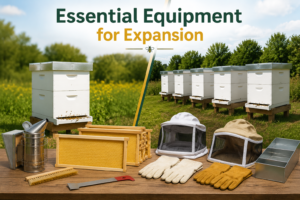
Each new hive requires the same basic equipment as your original setup. For a 3-hive apiary, budget approximately $600-900 in additional equipment costs.
Essential equipment per new hive:
- Deep hive body: $25-35
- 10 deep frames with foundation: $30-40
- Bottom board: $20-30
- Inner cover: $15-20
- Telescoping cover: $25-35
- Hive stand or blocks: $15-25
Additional tools for multiple hives:
- Extra smoker fuel (burlap, pine needles): $10-15
- Hive records or notebook: $5-10
- Marking paint for queens: $8-12
- Extra protective gear: $50-100
Money-saving tip: Many beekeepers build their own equipment or buy unassembled hive bodies to reduce costs by 30-40%.
You can also start with just deep hive bodies and add supers later as colonies grow stronger.
How Do You Make Splits to Expand Your Colony?
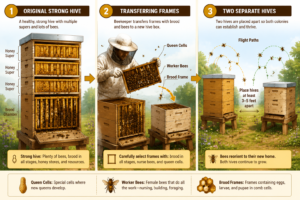
Making splits is the most common method to grow from one hive to a small apiary. This involves dividing a strong colony into two or more separate hives.
Step-by-step splitting process:
- Choose the right day: Warm, sunny weather when field bees are out foraging.
- Prepare new equipment: Set up empty hive bodies with frames and foundation.
- Find the queen: Locate and temporarily contain her in the original hive.
- Move brood frames: Transfer 3-4 frames with eggs, larvae, and emerging bees to the new hive.
- Add nurse bees: Shake additional young bees from 2-3 more frames into the split.
- Provide food: Include 1 frame of honey and pollen stores.
- Fill the remaining space: Add frames with foundation to both hives.
- Position hives: Place the new hive at least 3 feet away from the original.
Queen options for splits:
- Let them raise their own: Split gets queen cells or young larvae to raise new queens.
- Buy a mated queen: Install the purchased queen in the cage after 24-48 hours.
- Use queen cells: Transfer mature queen cells from the parent hive.
The queenless split will take 3-4 weeks to get a laying queen if raising their own, or 3-5 days with a purchased queen.
What’s the Best Timeline to Grow From One Hive to a Small Apiary?
Most successful beekeepers follow a conservative 2-3 year expansion plan when growing from one hive to a small apiary.
Year 1: Focus on learning and keeping your first hive alive
- Install the package or nuc in the spring.
- Learn inspection techniques and bee behavior.
- Help the colony build up and store winter food.
- Goal: 1 strong hive going into winter.
Year 2: Make your first splits if the colony survived winter
- Make 1-2 splits in late spring (May-June).
- Purchase queens or let splits raise their own.
- Goal: 2-3 hives by the end of the season.
Year 3: Expand to full small apiary size
- Make additional splits from the strongest hives.
- Replace any colonies that died over winter.
- Goal: 4-6 hives total.
Seasonal timing for splits:
- Best: Late April through June in most climates.
- Good: Early July if strong nectar flow continues.
- Avoid: Late summer, fall, or winter splits.
This timeline allows you to build experience gradually while maintaining healthy, productive colonies.
How Many Hives Should Your Small Apiary Have?
A small apiary typically contains 3-8 hives, which provides enough colonies to compare performance while remaining manageable for hobbyist beekeepers.
Recommended hive numbers by experience:
- Beginner (Year 1): 1-2 hives maximum.
- Intermediate (Year 2-3): 3-5 hives.
- Experienced hobbyist: 5-10 hives.
- Sideline beekeeper: 10-50 hives.
Benefits of 3-5 hive apiaries:
- Compare colony performance and identify problems faster.
- Have resources to combine weak hives or share frames.
- Produce enough honey for family use, plus some to sell.
- Manageable inspection time (2-3 hours per session).
- Lower equipment and maintenance costs
Factors that limit hive numbers:
- Local zoning laws and HOA restrictions.
- Available space and forage in your area.
- Time commitment (1 hour per hive per inspection).
- Equipment and ongoing costs ($100-200 per hive annually).
Choose fewer hives if: You have limited time, small property, or restrictive neighbors. Choose more hives if you have rural property, strong local nectar sources, and want to sell honey commercially.
What Challenges Should You Expect When Expanding?
Growing from one hive to a small apiary introduces new management challenges that single-hive beekeepers don’t face.
Common expansion challenges:
Time management: Multiple hives take significantly longer to inspect properly
- Solution: Schedule dedicated inspection days and keep detailed records
Equipment costs: Initial investment can reach $1,000+ for a 4-hive apiary
- Solution: Build equipment during the winter months or buy used gear
Queen problems: Managing multiple queens and identifying laying issues
- Solution: Mark queens with colored paint and maintain spare queens
Disease spread: Problems can quickly move between nearby hives
- Solution: Maintain proper hive spacing and avoid sharing equipment between sick colonies
Neighbor relations: More hives mean more bee traffic and potential complaints
- Solution: Install privacy screens and maintain gentle bee strains
Record keeping: Tracking multiple colony conditions becomes complex
- Solution: Use hive record apps or simple notebook system
Seasonal bottlenecks: All hives need attention during the same peak periods
- Solution: Stagger some management tasks and prepare equipment in advance
The key to successful expansion is growing slowly enough to master each new challenge before adding more complexity.
FAQ
How long should I wait before making my first split?
Wait until your original hive has survived one full winter and shows strong population growth in spring. This typically takes 12-18 months from when you started.
Can I make multiple splits from one strong hive?
Yes, a very strong colony with 10+ frames of brood can often support 2-3 splits in one season, but this requires excellent conditions and experienced management.
What happens if my split doesn’t get a queen?
A queenless split will die within 6-8 weeks. Signs include no new eggs after 3 weeks, declining population, and eventual laying workers.
How far apart should I space my hives?
Place hives at least 3 feet apart to minimize bee drift between colonies. Some beekeepers prefer 6+ feet spacing in small apiaries.
Do I need to register my expanded apiary?
Many states require registration once you exceed 1-2 hives. Check with your state department of agriculture for specific requirements.
Conclusion
Growing from one hive to a small apiary is an exciting milestone that most beekeepers can achieve within 2-3 years of starting. Success depends on patience, proper timing, and conservative expansion that prioritizes colony strength over numbers.
Start by ensuring your original hive survives its first winter and builds up to 8+ frames of bees and brood. Make your first splits in late spring when conditions favor rapid colony growth. Budget for additional equipment costs and expect to invest 2-3 times more time in hive management.