With work deadlines, family responsibilities, and nonstop notifications, home should be a place where things quiet down. But for many, it just adds more clutter, visual mess, and a bit of daily stress.
You don’t need a big budget or a full renovation to create a calm, peaceful home. Zen decor is about simplifying, and anyone can do that.
What Does Zen Decor Really Mean?
Zen decor draws on Japanese Buddhist philosophy, which emphasises living in harmony with nature, clearing the mind, and valuing simplicity. Instead of adding more, Zen design encourages you to choose what you keep carefully.
At its heart, Zen design is based on a few main ideas: simplicity, openness, stillness, and a strong connection to nature. In a Zen space, every item should have a reason to be there. If something doesn’t have a purpose or bring calm, it’s best to let it go. Minimalism and budgets go hand in hand.
Why Zen Decor Is Budget-Friendly?
Most design trends want you to buy new furniture, eye-catching pieces, and fancy lighting. Zen decor is different. It’s about keeping only what’s needed, so your first step isn’t shopping—it’s making the most of what you already own.
Moving your current furniture, clearing out extras, and rearranging your space doesn’t cost anything. Many people are surprised at how a tidy, reorganised room can feel new.
Step 1: Declutter Without Mercy
Clutter gets in the way of feeling calm. A 2019 study found that noise pollution is linked to higher stress and increased cortisol levels, making it harder for your brain to relax.
Look around your space and ask yourself about each item: Does it have a use, or is it just taking up space? If it’s just sitting there, it’s time to let it go.
Donate, store, or throw away what you don’t need. In both Zen philosophy and Feng Shui, broken or unused things are believed to block the flow of energy in a room.
After you declutter, keep your space tidy. Walking into a clean room every day removes a small but important source of stress.
Step 2: Work With Your Color Palette
Colour has a big impact on how we feel. Bright, bold colours can be energising, which works in a gym but not in a relaxing space. Zen rooms use soft, calming colours that help quiet your mind. Try warm whites, sandy beiges, soft sage greens, and gentle blues.
Blue is especially calming; it’s known to slow breathing and relax the nervous system, making it perfect for bedrooms and living rooms.
You don’t have to repaint. You don’t have to repaint to use these colours. Start with textiles, switch bright pillows for ones in natural linen or stone-gray cotton. Add a jute or wool rug in a natural shade.
One piece of abstract art in neutral browns or beiges to serve as a focal point in the room.
These small changes don’t cost much but can really change how a room feels. Are you working with concrete floors or walls? Acid- or water-based stains in earthy tones are an affordable way to add warmth and dimension without the expense of tiling or flooring installation.
Step 3: Furnish with Purpose, Not Volume
Zen spaces aren’t empty; they’re thoughtful. Choose furniture that’s simple, useful, and made from natural materials like wood or bamboo. Low-profile pieces help rooms feel grounded, make ceilings seem higher, and keep things open and uncluttered.
Before you buy anything new, check what you already have. Many modern furniture pieces are already simple and low to the ground. Try moving furniture between rooms or using fewer pieces than usual; you might find the space feels better.
If you have a small space or a tight budget, floor cushions and poufs are a great option. They’re affordable, easy to store, perfect for meditation or reading, and help ground the room. Even a simple cotton or linen floor cushion can turn a corner into a retreat.
The aim isn’t to have an empty room, but to make sure everything in it has a purpose.
Step 4: Let Natural Light Lead
Light is one of the most powerful but often overlooked parts of interior design. Natural light opens up a space, boosts your mood, and connects the indoors with the outdoors, which is important in Zen philosophy.
Begin by taking down heavy curtains. Use light linen or sheer cotton panels to let daylight gently fill the room. Keep furniture away from windows, and if you have a mirror, place it so it reflects light further into the space.
At night, skip harsh overhead lights. Use several softer lights from floor lamps, table lamps, or wall sconces with warm bulbs (about 2700–3000 Kelvin). This mimics the gentle dimming of sunset and helps your body wind down.
Dimmable lights give you extra control.
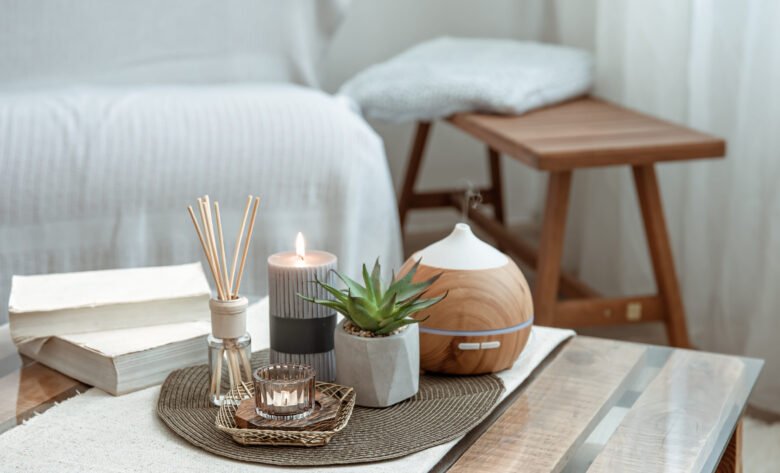
Candles are a classic Zen detail, but in bedrooms, you can use an essential oil diffuser instead. It’s safer, and scents like lavender, cedarwood, or chamomile can help you relax and sleep better.
Step 5: Bring Nature Indoors
Needs a connection to nature. Plants are the easiest and most affordable way to add that. They clean the air, bring in natural colour and texture, and add a sense of life that artificial items can’t match.
You don’t need rare plants or a greenhouse. Just a few potted plants from your local store will do. Easy options like snake plants, peace lilies, bamboo, and succulents are great for beginners and work well indoors.
Besides plants, try adding other natural touches, such as a bowl of smooth stones, a piece of driftwood, or a dried branch in a vase. These simple details cost little but make a room feel softer and more natural.
Making your own concrete planters is a cheap, satisfying DIY project that lets you customize color and shape to match your decor.
Step 6: Minimise Electronics
This step doesn’t cost anything and can make the biggest difference in how your space feels. Electronics (wires, devices, blinking lights) emit low-level noise and keep the brain in a state of readiness rather than rest. In a Zen-inspired space, the goal is to unplug literally and figuratively.
Take TVs, chargers, and devices out of your calm spaces if you can. If you need to keep electronics, hide them in storage ottomans, cable boxes, or furniture with built-in storage.
Room-by-Room Quick Guide
1. Living Room
Pick a neutral linen sofa, add a low wooden coffee table, and put a wool rug underneath. Place one or two plants by the window. Keep surfaces clear, except for a couple of chosen items, such as a vase, a candle, or a book.
2. Bedroom
Use soft, natural-fiber bedding in calming colors. Place the bed so you can see the door, but not directly in line with it. This follows Feng Shui and feels more comfortable. Keep your nightstand tidy. Use warm, dimmable lights and try an essential oil diffuser instead of a candle.
3. Bathroom
Bamboo or wooden elements add warmth. A humidity-loving plant, like a small fern, elevates the space. Dim, warm lighting and a diffuser with eucalyptus or lavender oil can turn even a modest bathroom into a daily reset ritual.
4. Home Office
Mix relaxing touches like soft lighting and a comfy chair with active ones like a clear desk and good task lighting. To keep things calm and balanced, only keep what you’re using in sight and organise cables neatly, as Zen design experts suggest.
| Action | Cost |
|---|---|
| Declutter and reorganize | Free |
| Rearrange existing furniture | Free |
| Swap in lighter curtains you already own | Free |
| Add floor cushions | $10–$40 |
| A few potted plants | $5–$25 |
| Warm-toned light bulbs | $10–$20 |
| Natural fiber throw or rug | $20–$60 |
| Essential oil diffuser | $15–$30 |