
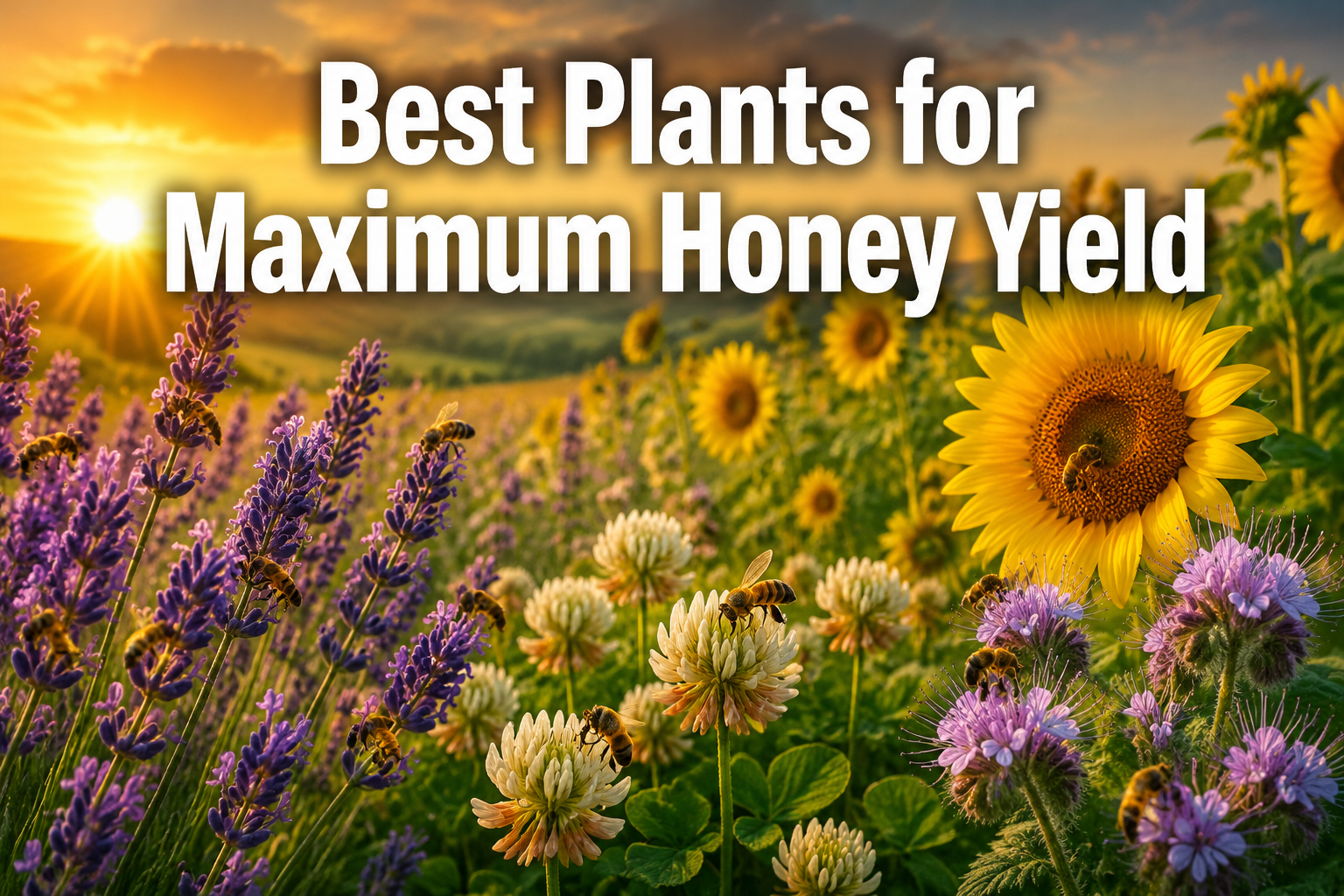
The best plants for maximum honey yield include lavender, basswood trees, clover, sunflowers, and wildflower mixes. These plants produce large amounts of nectar and bloom for extended periods, giving bees consistent food sources throughout the growing season. Plant a mix of early, mid, and late-season bloomers to support your hives year-round.
Key Takeaways
- Top honey producers: Lavender, basswood, clover, and sunflowers yield the most nectar per plant.
- Plant variety matters: Mix early, mid-season, and late-blooming varieties for continuous nectar flow.
- Location affects yield: Select plants that are suited to your climate zone and soil type.
- Timing is crucial: Plant in spring or fall for best establishment.
- Space requirements: Allow 3-5 feet between large flowering plants.
- Maintenance needs: Most high-yield plants need minimal care once established.
- Bloom duration: Look for plants that flower for 4-6 weeks or longer.
- Native plants work best: Local species adapt better and support native bee populations.
What Makes Plants Ideal for Maximum Honey Production?
The best plants for maximum honey yield share three key traits: high nectar production, long bloom periods, and easy bee access to flowers.
High nectar producers make more sugar-rich liquid per flower than average plants. Bees prefer flowers with at least 25% sugar content in their nectar. Plants like basswood trees can produce up to 1,000 pounds of honey per acre when conditions are right.
Extended bloom times keep bees fed for weeks instead of days. Single plants that flower for 6-8 weeks provide much more value than those blooming for just 1-2 weeks. Lavender blooms for up to 10 weeks in ideal conditions.
Flower shape matters because bees need easy access to nectar. Flat, open flowers work better than deep, narrow tubes. Composite flowers like sunflowers offer hundreds of tiny flowers in one head, making collection efficient for bees.
Choose plants that bloom at different times to create a nectar flow calendar from early spring through late fall.
Top 10 Best Plants for Maximum Honey Yield
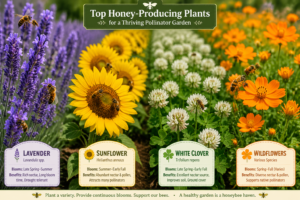
These plants consistently produce the highest honey yields for beekeepers across different climate zones.
Trees and Large Shrubs
Basswood (American Linden) produces more honey per tree than any other North American species. One mature basswood can support an entire hive during its 2-3 week bloom period in early summer.
Black Locust blooms heavily in late spring with fragrant white flowers. The honey has a light color and mild flavor that sells well at farmers’ markets.
Tulip Poplar creates excellent honey yields in eastern regions. The orange and yellow flowers bloom for 3-4 weeks in late spring.
Perennial Flowers
Lavender ranks as the top perennial for honey production. English lavender varieties bloom longest, while Spanish lavender handles heat better. Plant 50-100 plants for noticeable hive impact.
Sunflowers provide both nectar and pollen. Giant varieties produce the most nectar, while smaller branching types bloom longer. Plant successive crops every 2 weeks for an extended harvest.
Bee Balm attracts bees like a magnet with its bright red, pink, or purple flowers. Native varieties perform better than garden hybrids.
Ground Covers and Low Plants
White Clover produces honey with excellent flavor and a light color. It blooms repeatedly if mowed after each flowering cycle.
Wildflower Mixes work well for large areas. Choose mixes designed for your region that include native species.
Borage self-seeds readily and blooms continuously from summer through frost. The blue flowers produce nectar even in hot weather.
Phacelia (bee’s friend) lives up to its name with prolific purple flower spikes that bees visit constantly.
When to Plant for Optimal Honey Production?
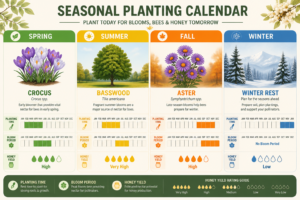
Spring planting works best for most honey plants, giving them a full growing season to establish before winter.
Plant perennials 6-8 weeks before your average last frost date. This timing allows root development while the soil stays cool and moist.
Annual flowers like sunflowers and borage should go in after all frost danger passes. Soil temperature should reach 60°F for good germination.
Fall planting works for trees, shrubs, and hardy perennials in zones 6-9. Plant 8-10 weeks before hard frost to allow root establishment.
Seasonal Bloom Schedule
- Early Spring (March-April): Crocuses, pussy willows, maple trees.
- Late Spring (May-June): Black locust, tulip poplar, clover.
- Summer (July-August): Basswood, lavender, sunflowers.
- Fall (September-October): Asters, goldenrod, sedum.
Avoid gaps longer than 2-3 weeks between major bloom periods. Plant backup species that bloom during typical “dearth periods” in your area.
How Much Space Do You Need for Maximum Yields?
Small yards (under 1/4 acre) can still support honey production with careful plant selection. Focus on high-yield perennials like lavender and bee balm.
Medium properties (1/4 to 1 acre) allow for diverse plantings, including small trees like crabapples and larger flower beds.
Large areas (over 1 acre) can include honey-producing trees and extensive wildflower meadows for maximum impact.
Spacing Guidelines
- Trees: 20-30 feet apart for full canopy development.
- Large perennials: 3-5 feet between plants.
- Medium flowers: 18-24 inches apart.
- Ground covers: 12-15 inches spacing.
Plant in clusters rather than single specimens. Groups of 10-20 identical plants create stronger nectar flows that attract more bees than scattered individual plants.
Common Mistakes That Reduce Honey Yields
Planting too late in the season prevents proper root establishment. Late-planted perennials often fail to bloom well their first year.
Choosing ornamental hybrids over species plants reduces nectar production. Many garden varieties have been bred for appearance rather than nectar content.
Ignoring bloom timing creates feast-or-famine conditions for bees. Plan for continuous blooms rather than everything flowering at once.
Overcrowded plants reduce air circulation and increase disease problems. Follow spacing recommendations even if beds look sparse initially.
Forgetting about water during establishment kills many new plantings. Most honey plants need consistent moisture in their first year.
Using pesticides defeats the purpose of planting for bees. Choose organic pest control methods or accept some plant damage.
FAQ
How many plants do I need to impact honey production?
Plant at least 50-100 individual flowers or 5-10 large shrubs to create noticeable increases in honey yields. Smaller numbers help bees but won’t significantly boost harvest amounts.
Do native plants produce more honey than non-natives?
Native plants often produce more nectar because they evolved with local pollinators. However, some non-native species, like lavender, can be excellent honey producers in suitable climates.
When do newly planted honey plants start producing?
Annual flowers bloom the same year planted. Perennials usually bloom the first year lightly and reach full production by year two. Trees may take 3-5 years to bloom significantly.
Can I plant honey plants in partial shade?
Most high-nectar plants need full sun (6+ hours daily) for maximum flower production. Shade reduces both bloom quantity and nectar content in most species.
How long do honey plants live?
Annuals complete their cycle in one year. Perennials typically live 5-15 years, depending on species. Trees can produce for decades once established.
Conclusion
The best plants for maximum honey yield combine high nectar production, extended bloom periods, and reliable performance in your local climate. Start with proven performers like lavender, clover, and sunflowers while adding trees and shrubs for long-term production.
Take action now by planning your honey plant garden for next season. Choose 3-5 species that bloom at different times, prepare planting areas this fall, and order seeds or plants for spring installation. Focus on native species adapted to your region for the best results with minimal maintenance.