Your entryway is the initial area guests encounter and the final space you observe before leaving. However, it is often one of the most neglected parts of the house. Although extensive renovations such as tiling, paneling, or complete repainting can change the look of a hallway, a quicker and more adaptable option is readily available: wall stickers and decals.
Modern wall stickers have evolved significantly from the peel-and-stick floral designs of the early 2000s.
Currently, they include geometric patterns, large-scale botanical prints, typographic quotes, faux architectural accents, and high-resolution murals, all removable, suitable for renters, and often quite affordable.
Why do Wall Stickers work so effectively in entryways?
The entryway is a space you move through rather than inhabit, making it an ideal place to try out bold design choices that you might be hesitant to implement in other areas.
As Philippe Desart of Arte notes, because these are spaces you move through rather than dwell in, you can afford to go bolder with color, scale, and pattern on the walls.
Wall stickers directly engage with this concept. They enable you to produce striking visual effects, such as a complete tree silhouette, a large floral mural, or a repeated geometric border, all without the permanence or expense of wallpaper or paint. If the appearance no longer suits your taste, they can be easily peeled off (on most surfaces) and swapped out in a single afternoon.
1. Go Big with a Statement Botanical or Tree Mural
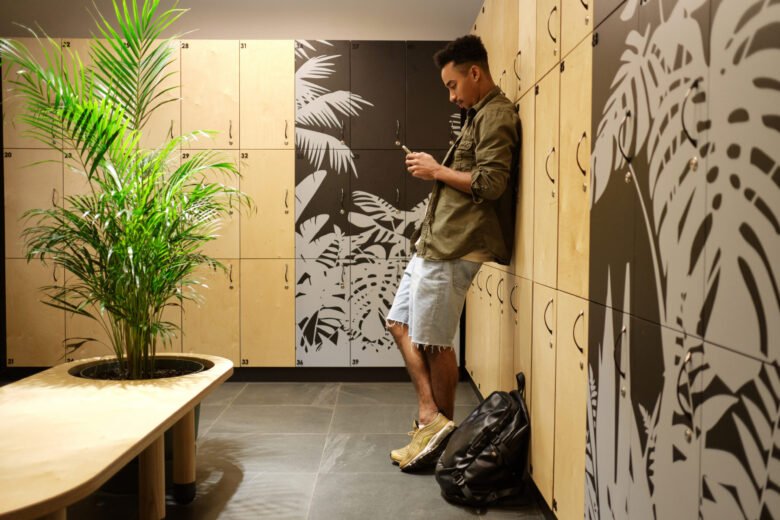
One of the most effective ways to use wall stickers in a hallway is to consider an entire wall as a canvas. A large-scale tree with spreading branches, a tropical leaf arrangement, or a cascading floral design can dramatically fill vertical space and make even a narrow corridor appear thoughtful and purposeful.
The main idea here is scale. Using scale in interior design by selecting artwork or decor that covers the entire height of a wall produces striking, powerful effects.
Wall sticker murals function similarly: a decal that is only half the wall’s height appears subtle, whereas one that extends from floor to ceiling draws focus.
Tip: In a narrow hallway, stay on one wall. Placing stickers on two facing walls can make the area seem cluttered. Allow one statement wall to stand out, and keep the other side simple.
2. Create a curated gallery wall effect
A gallery wall doesn’t need to involve a hammer, nails, and several visits to the frame shop. Wall sticker collections, particularly those that blend botanical prints, abstract shapes, or illustrative art in matching styles, can create the same layered, personalized gallery look without the need for permanence.
Combine stickers of various sizes, shapes, and orientations to enhance visual appeal. Base the layout on your console table or a prominent piece of furniture to stabilize the display. This method reflects the design tip for small entryways: experiment with a variety of art pieces in different sizes, colors, and styles to establish a personalized gallery area.
What works well here: sets of framed-look decals, botanical illustration clusters, mixed geometric shapes, and typographic prints in the same color family.
3. Use Faux Architectural Details to Add Depth
One of the cleverest uses of wall stickers is mimicking architectural features that your home may not actually have. Panel molding decals, wainscoting borders, and chair rail designs can replicate the look of traditional craftsmanship at a fraction of the cost and effort.
This method is particularly effective in older apartments or rental homes with plain walls, yet you desire that traditional, intricate appearance.
When arranged in a symmetrical grid pattern, panel molding stickers enhance elegance and organization. Combine them with a contrasting paint shade on top or allow them to pop against a white wall.
Molding and wainscoting in their authentic form can change a simple entryway into a space that appears thoughtfully crafted. The sticker version allows you to achieve this look without hiring a contractor.
4. Use geometric patterns to introduce color strategically
If your hallway is currently painted in a safe neutral and you want to add color without repainting, geometric wall stickers are your best friend. Polka dots, hexagonal tiles, diagonal stripes, and chevron arrangements all introduce color in a controlled, repeatable way that feels modern and intentional rather than chaotic.
For dark or small entryways, soft pastels or warm whites in lighter geometric patterns can reflect light and give the illusion of a bigger space.
In wider hallways with more wall area, high-contrast bold patterns, deep navy triangles on a white wall, or metallic geometric shapes on a dark background make the most striking impression.
Color and pattern can be incorporated into entryway walls without taking up valuable floor space, making wall stickers a particularly clever choice for small homes.
5. Combine Stickers with Mirrors to Enhance Light Reflection
Mirrors are among the oldest methods for illuminating dark entryways. They bounce both natural and artificial light, creating a sense of greater space and openness. When you pair a strategically positioned mirror with nearby wall stickers, you enhance both effects.
Attempt to frame a basic round or rectangular mirror using radiating line stickers to create a sunburst effect, botanical branches that extend outward from the edges of the mirror, or a cluster of small stars that appear to orbit the frame.
This method transforms a functional mirror into a focal point and makes the whole wall appear intentionally designed instead of simply assembled.
Sculptural and decorative mirrors are already effective in entryways because they illuminate dim hallways. Incorporating sticker details enhances the effect even more with no extra effort.
6. Simulate Wallpaper with Repeating Pattern Decals
Installing full wallpaper is a major undertaking that involves preparation, applying paste, trimming, and waiting for it to dry completely. Wall stickers with repeating patterns provide many of the same visual advantages but with much less hassle.
Modular tile-style stickers that tessellate across a wall can mimic encaustic tile patterns, damask prints, or botanical wallpaper designs. You can cover an entire accent wall or use them in a specific area behind a console table, between two doorframes, or as a border at chair-rail height.
This is a significant advantage, especially for renters. Modern vinyl decals stick securely to painted walls without causing damage, and when applied properly to a clean, fully cured surface, they can be removed without leaving any residue.
7. Add Personalized Typography for an Immediate Welcome
A carefully selected word or phrase near the front door instantly establishes a tone. “Welcome,” “Home,” “Come as you are,” coordinates of a significant location, or a family name, typographic wall stickers express these messages in various scripts, fonts, and sizes that can complement your home’s style.
This is especially effective in entryways because the area naturally invites a greeting. Unlike artwork that needs interpretation, text conveys messages directly.
Ensure the font style matches your overall interior design: sleek sans-serif fonts for contemporary minimalist spaces, elegant script for more classic or romantic themes, and heavy block letters for industrial or graphic interiors.
Design note: Carefully measure your wall before placing an order. Typographic stickers tend to appear bold when scaled up, so aim for lettering that is at least 18–24 inches wide to make a strong statement.
8. Use Decals to Define a Zone in an Open Layout
Not every home features a dedicated foyer. Many open-plan homes lead directly from the front door into a living space, making it difficult to establish a sense of arrival or transition. Wall stickers can assist in defining an entry area even when there are no walls to work with.
A vertical sticker installation, a tall tree, a column of botanical elements, or a bold pattern panel applied to a feature wall can visually anchor a “entry zone” separate from the rest of the room.
When paired with a rug near the door and a narrow console, the sticker acts as a design anchor that indicates where the entryway starts and where the living area concludes.
Simple touches like rugs, furniture placement, and visual markers on the walls can carve out a dedicated entry space even in open-concept homes.
9. Layer Stickers with Other Decor for a Cohesive Look
Wall stickers don’t have to stand alone
Some of the most effective uses involve integrating decals into a larger decorating scheme, combined with wall-mounted hooks, shelves, mirrors, or lighting to create a layered, styled look.
For example, botanical branch stickers extend out from either side of a floating shelf, framing the objects displayed on it.
Geometric line decals form a structured backdrop behind a row of vintage coat hooks. Or a repeated wave pattern runs behind a gallery of framed family photos, offering a unified base that connects the collection.
This layered approach, which combines function, decoration, and personal items, reflects a broader design principle: interesting entryways arise from blending practical and decorative elements, stacking various textures and heights to create a space that feels engaging and cozy.
10. Update Seasonally Without Redecorating
One of the lesser-known benefits of wall stickers is that they are temporary. Unlike paint or wallpaper, they can be replaced to match the seasons, holidays, or just a new preference. This feature makes wall stickers particularly ideal for the entryway, which is the area most likely to need occasional updates.
Maintain a rotating approach: warm botanical prints in spring, sun and floral designs in summer, foliage and harvest tones in autumn, minimal geometric or frost-inspired patterns in winter.
This seasonal flexibility ensures your entryway feels purposeful and vibrant all year round, which is precisely what a strong first impression needs.
How to Apply Wall Stickers for Best Results?
Getting the look right is as much about application as selection.
Follow these steps for professional results:
- Surface prep is crucial: Wipe the wall with a damp cloth and let it dry completely. Stickers placed over dust, grease, or freshly painted walls (which need at least 30 days to fully cure) may peel off early.
- Before peeling, plan your layout: Use painter’s tape to outline where larger stickers will go and step back to evaluate the placement. For repeating patterns, use a level and pencil marks as references.
- Start applying from the center and work outward: To prevent air bubbles from becoming trapped, especially with large decals, do so. As you apply, use a squeegee or credit card to press the sticker down smoothly.
- Allow sufficient time for the sticker to bond: Refrain from touching or repositioning the stickers for at least 24 hours after applying, particularly in humid environments.
- Remove carefully: When it’s time for a change, use a hairdryer on low heat to gently warm the adhesive, then peel slowly from a corner. This dramatically reduces the risk of wall damage.
Final Thoughts
A well-decorated entryway doesn’t require a full renovation. It requires intention, knowing what mood you want to create, which design elements carry the most visual weight, and how to layer them effectively.
Wall stickers give you a flexible, low-risk toolkit to experiment with pattern, color, scale, and personality in a space that directly shapes the impression your home makes on everyone who enters it.