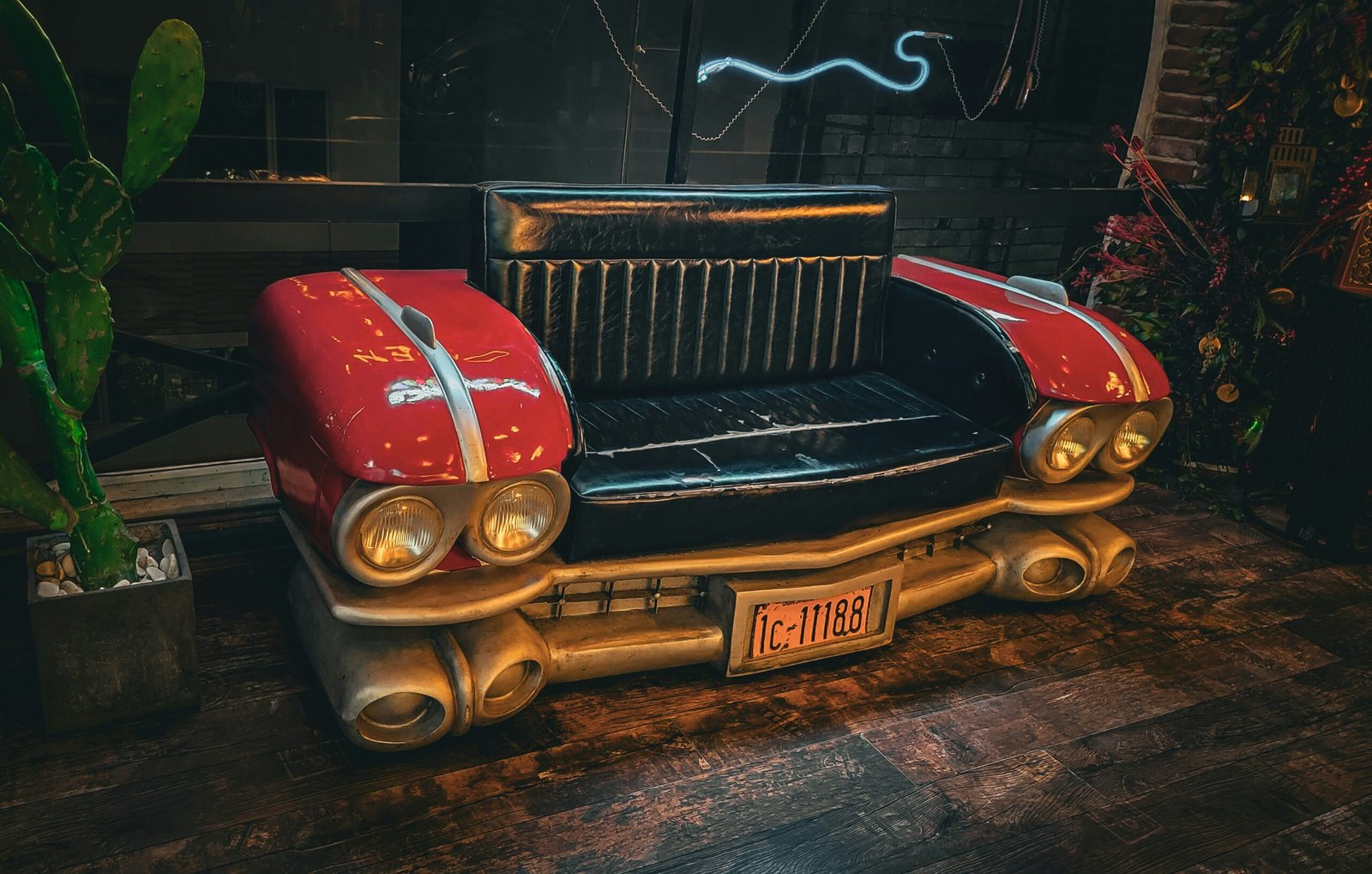
You don’t have to spend a lot to turn that space into a real man cave, whether you’ve claimed the basement, converted the garage, or set up a spare room. The key is knowing which pieces to buy new, which to buy used, and how to layer them so the room looks planned instead of thrown together.
Before You Buy: Measure First, Shop Second
One of the biggest mistakes men make when building a budget man cave is buying furniture before understanding the space. Even a compact room can work as a personal retreat, but only if you choose pieces that fit and leave enough room for movement and activity.
Measure your floor plan, note where doors and windows open, and sketch a rough layout before spending a single dollar.
Once you know what you’re working with, you can prioritise function. A gaming setup needs open floor space and monitor placement. A movie-watching room demands comfortable seating with clear sightlines to the screen.
A card setup requires a solid table with good overhead lighting. Build around the activity first, then fill in with the secondary pieces.
1. A Secondhand Sectional or Oversized Sofa
The sofa is the anchor of any man cave. It needs to be comfortable enough for long game nights or movie marathons, durable enough to handle years of use, and forgiving enough to handle the occasional spilt drink.
Facebook Marketplace, Craigslist, and local estate sales often have well-made sectionals and leather sofas at a fraction of retail. Look for frames built from hardwood (not particle board) and cushions with good density. Sit in it before you commit.
Darker upholstery fabrics in charcoal, navy, or brown hide wear and stains far better than light colours, which matters in a room built for relaxation and snacking.
If you do buy new, look for air-leather or faux-leather materials with micro-perforations, which stay cool during long sessions and clean up easily with a damp cloth.
According to Asherware, choosing a sectional sofa that can also serve as a sleeper is a smart option if you plan to use your man cave as a guest space.
2. A Solid Bar Cart or Mini Bar Setup
You don’t need to install a full wet bar to enjoy a cold drink in your own space. A well-chosen bar cart does the job at a fraction of the cost and is mobile, so you can rearrange your layout without committing to anything permanent.
Look for a cart with at least two or three tiers, sturdy casters that lock, and a frame that doesn’t wobble. Steel and iron frames hold up well over time. Avoid the cheap chrome finishes that scratch and oxidise within a year.
If you find a solid cart at a thrift store, a coat of matte black or brushed bronze spray paint can give it an entirely different look.
If budget allows, a freestanding kegerator is a serious upgrade, especially for men who host friends regularly. Countertop models start around $400–$700 and eliminate the need for bottles and cans.
Pair it with a few barstools, and even a modest corner feels like a proper home bar.
Budget range: $80–$300 for a cart; $400–$700 for a kegerator.
3. A Durable Game Table (Pool or Foosball)
A game table is often the statement piece of a man cave, the thing guests immediately gravitate toward. Quality tables can be expensive new, but the used market is full of opportunities because they’re large and people sell them when they move.
For pool tables, look for solid slate surfaces (not honeycomb or synthetic), which hold their level over time and provide the truest play.
Entry-level new tables with slate start around $1,000–$1,500; used ones in good condition often sell for $300–$600. According to LatestCost.com, you should budget for re-felting costs if your pool table’s cloth is worn, as refelting is a normal part of maintaining play quality.
Foosball tables, on the other hand, tend to be much more budget-friendly and can be a durable option for casual spaces. Look for solid rods (not hollow) and counterbalanced men for a more realistic play experience. A solid foosball table can be found for $150–$400 new, or less used.
4. Functional Shelving and Storage Cabinets
Storage is the backbone of a well-functioning man cave. Without it, the space fills with clutter: cables behind the TV, controllers on the floor, snacks stacked on every flat surface.
Good shelving solves all of this and gives you a place to display the things that make the room yours: sports memorabilia, collectibles, books, and equipment.
Open industrial shelving (metal, wood, or MDF frames) is affordable and durable. A four-to-five-shelf unit runs $80–$200 at most home improvement stores and can be anchored to the wall for stability.
These work well for media storage, books, and display items.
While closed cabinets can help create a tidier look by concealing clutter, Garage Living advises against using repurposed kitchen cabinets in garages, as wooden kitchen cabinets are not designed to withstand the harsh conditions.
Pair them with simple pulls and a coat of paint, and they look entirely intentional.
For gaming setups specifically, a dedicated media console with built-in cable management is worth the investment. A tangle of cables behind a TV setup makes the whole room feel chaotic.
Budget range: $80–$250 for shelving units.
5. A Comfortable Recliner or Armchair
Every man’s cave needs at least one chair that’s yours alone, the kind you sink into after a long week. An oversized recliner or leather armchair anchors a corner and provides a secondary seating option that feels distinct from the main sofa.
Recliners are one of the best secondhand furniture purchases you can make. According to a current listing from Walker’s Furniture, a new La-Z-Boy recliner can cost around $1,199.
Because these chairs are heavy and bulky, people often choose to sell them locally rather than ship them, which helps keep used prices lower.
As a result, you can often find quality, name-brand recliners in good condition for $100 to $300, instead of paying $1,200 for a new one.
For style, tufted leather or faux leather is the most classic choice for a man cave and ages well. Overstuffed fabric chairs in dark tones (charcoal, hunter green, rust) add warmth to the room while hiding everyday wear and tear.
If you’re buying new on a tight budget, look at overstock retailers and end-of-line sales at furniture chains. You can often find floor models with minor cosmetic flaws at significant discounts.
According to The Game Room Plus, building a man cave generally costs between $4,000 and $20,000, depending on factors such as insulation, décor, and upgrades to the electrical system or layout.
6. Smart, Durable Flooring Solutions
Flooring is often overlooked in man cave planning, but it significantly affects the look and function of the space. Basement floors especially need something that handles moisture, is easy to clean, and deadens sound, all without the cost of a full renovation.
Rubber flooring tiles are one of the most practical options available. They interlock without adhesive, absorb impact and sound, resist spills, and can be removed if you move.
They’re commonly used in home gyms but work equally well under game tables and bar areas.
A set of interlocking rubber tiles covering 100 square feet runs $100–$200 and takes an afternoon to install.
For a warmer look, luxury vinyl plank (LVP) flooring is water- and scratch-resistant, with wood-look finishes that elevate the room. It floats over existing flooring without glue or nails and costs $1.50–$4 per square foot for the material alone.
Area rugs on top of hard flooring help define zones. A rug under the sofa and coffee table creates the lounge area; a separate rug under the game table defines the game zone. Look for low-pile, stain-resistant options in dark tones or patterns that hide wear.
Budget range: $100–$300 for rubber tiles; $200–$600 for LVP in a typical basement room.
7. A Coffee Table or Multi-Use Center Table
A coffee table might seem like an afterthought, but in a man cave, it does serious work: it holds drinks, snacks, remotes, game controllers, and sometimes serves as overflow seating for smaller rooms. Choosing one that’s durable and the right size is worth a few minutes of consideration.
For a casual setup, a sturdy wooden coffee table with a lower shelf for storage is ideal. Solid wood construction holds up to daily use and resists denting and scratching better than MDF or hollow-core alternatives.
Lift-top coffee tables are a particularly useful option, as they convert to a raised surface for eating, working, or gaming, then fold back down when not in use.
Industrial metal-and-wood tables are another strong choice: they’re nearly indestructible, look at home in a garage or basement man cave, and tend to be affordable at discount furniture stores or on Marketplace.
A hairpin-leg style offers a clean, modern look that works across a range of man-cave aesthetics.
Avoid glass tops in areas where drinks are regularly set down; they show every fingerprint and ring, and they crack if something heavy lands the wrong way.
Budget range: $60–$250 new; $30–$100 used.
Pulling It Together: Colours, Lighting, and Finishing Touches
The furniture choices above will do most of the heavy lifting, but a few finishing decisions tie the whole room together.
Colour
Dark, warm tones, such as deep charcoal, navy, forest green, and dark walnut, are the most practical choices for a man cave. They reduce screen glare, hide wear over time, and create the moody, immersive atmosphere that makes the space feel like its own world rather than an extension of the rest of the house.
Monochromatic colour schemes work particularly well because they let your entertainment setup and personal items take centre stage.
Lighting
Recessed lighting gives you clean, even illumination without taking up wall or floor space. Layer it with dimmable LED strips behind the TV or along shelves for ambience control, bright when you need it, low when you’re watching a film.
Avoid harsh overhead fluorescents, which flatten the room and kill the vibe instantly.
Personal touches
Artwork, memorabilia, and personal items set a man cave apart from a generic rec room. Sports collectables, framed jerseys, vintage posters, guitar displays, or career mementoes on the walls make the space genuinely yours.
These don’t have to be expensive; a few well-chosen items displayed thoughtfully have more impact than a wall covered in random merchandise.
Final Thoughts
Building your man cave on a budget is less about cutting corners and more about investing where it counts (seating, game tables, flooring) and saving where it doesn’t (décor, accessories, finishing touches you can upgrade over time).
Frequently Asked Questions
What’s the most important piece of furniture to get right in a man cave?
The seating. You and your guests will spend the most time on it, so comfort and durability matter most here. Get this right first, then build everything else around it.
Is rubber flooring actually durable enough for a man cave?
Absolutely. Commercial-grade rubber flooring handles heavy foot traffic, dropped weights, spilled drinks, and years of use without showing significant wear. It’s one of the most underrated flooring choices for an informal space.
How do I stop my man cave from looking like a dumping ground?
Dedicated storage is the answer: shelving for display items, cabinets for gear and cables, and a clear “home” for everything. The other key is choosing furniture that fits the room. Overcrowding a small space with too many pieces makes it feel chaotic even when it’s tidy.
Do I need to soundproof my man cave?
You don’t need a full soundproofing project, but a few practical steps help. Area rugs, upholstered furniture, and rubber flooring all absorb sound. Heavy curtains on windows reduce both sound bleed and outside noise.
According to Berlin Homes, while materials like mineral wool are especially effective at soundproofing, using your basement as a room can also help reduce noise, as its structure naturally dampens sound.