
Starting an apiary is a thrilling venture that connects you with the rhythm of nature. However, many beginners find their first year ends in empty boxes and disappointment. These losses usually stem from a few predictable errors that are easily avoided with the right knowledge.
Why Do New Beekeepers Struggle Early On?
Most new keepers treat honey bees like pets rather than a complex biological system. They often wait for problems to become visible before acting. In beekeeping, if you see a problem on the outside of the hive, it is often too late to fix it on the inside.
Success requires proactive management and a willingness to get your hands sticky. You must balance intervention with observation. Understanding the biology of the Apis mellifera is your first step toward success.
1. Choosing the Wrong Location for Your Apiary
One of the most common beekeeping mistakes happens before the bees even arrive. Placing a hive in a spot that is too shady, damp, or windy can stress the colony. Bees need warmth to fly and a dry environment to prevent fungal diseases like chalkbrood.
Sunlight and Orientation
Bees are solar-powered creatures. They need the morning sun to warm the hive entrance, which encourages them to start foraging early. A hive tucked away in a deep, dark corner of a yard will lag behind those in the sun.
Water Access
Bees require a massive amount of water to cool the hive and dilute honey. If you don’t provide a reliable water source nearby, they will find one. Often, this means your neighbor’s swimming pool or birdbath, which leads to unnecessary conflict.
2. Neglecting Varroa Mite Management
The Varroa destructor mite is the single greatest threat to honey bees globally. Ignoring these parasites is perhaps the deadliest of all common beekeeping mistakes. These mites feed on bees’ fat bodies and transmit deadly viruses, such as Deformed Wing Virus (DWV).
The Myth of “Treatment-Free”
Many beginners want to keep bees “naturally,” without using treatments. While noble, this often results in a “mite bomb,” where your dying colony spreads parasites to every other hive in the area. You must monitor mite levels using an alcohol wash or powdered sugar shake.
Timing Your Interventions
Treating too late in the season is a recipe for winter loss. You need healthy “winter bees” to survive the cold months. If your mite counts are high in August or September, those winter bees will be born weak and won’t live long enough to see spring. Refer to the Honey Bee Health Coalition for verified treatment schedules.
3. Opening the Hive Too Frequently (or Not Enough)
Finding the “Goldilocks zone” for inspections is tough. New keepers often want to look at their bees every day. This disrupts the hive’s internal temperature and pheromone balance, causing the bees to spend hours “re-organizing” rather than working.
The Problem with Over-Inspection
Every time you crack the propolis seal on a hive, the bees become stressed. It takes them nearly a full day to return to peak productivity. Constant intrusion can also lead to the accidental killing of the queen if you are clumsy with the frames.
The Danger of Neglect
On the flip side, some keepers leave their bees alone for months. This leads to missed signs of disease, swelling, or starvation. Aim for a thorough inspection every 7 to 10 days during the peak growing season.
4. Failing to Provide Supplemental Feed
Assuming that “nature will provide” is a risky gamble. Nectar dearths—periods where nothing is blooming—can happen in the middle of summer. A growing colony can starve to death in a matter of weeks if it doesn’t have enough stored honey.
When to Feed Sugar Syrup
You should feed your bees when you first install a package or a nuc. They need a 1:1 sugar-to-water ratio to build new wax combs. In the autumn, if the hive feels light, switch to a 2:1 heavy syrup to help them bulk up their winter stores.
Monitoring Food Stores
Don’t just look at the bees; look at their cupboards. A frame full of capped honey is the best insurance policy. If you see bees crawling head-first into empty cells, they are likely starving.
5. Harvesting Too Much Honey
It is tempting to pull every frame of liquid gold from the hive in your first year. However, taking too much is one of the most common beekeeping mistakes that leads to winter mortality. The honey you see is the bees’ fuel for survival.
Calculating Winter Needs
In colder climates, a colony may need 60 to 90 pounds of honey to survive until spring. Always prioritize the bees’ needs over your own jars. If it is your first year, it is often best to leave all the honey for the bees to ensure they establish a strong foundation.
6. Buying Used Equipment Without Caution
Bargain-hunting for used hive boxes can bring more than just savings. It can bring American Foulbrood (AFB). AFB is a highly contagious bacterial disease that can survive on woodenware for decades.
The Risks of Contamination
If you buy used gear, you must know the history of the apiary it came from. In many regions, the only way to get rid of AFB is to burn the equipment and the bees. Starting with new, sterilized equipment is almost always safer for a novice.
7. Skipping Protective Gear
Experienced beekeepers sometimes work without veils, but beginners should not. Getting stung in the face or eyes can trigger panic. When you panic, you drop frames, kill bees, and make the situation worse.
The Importance of Confidence
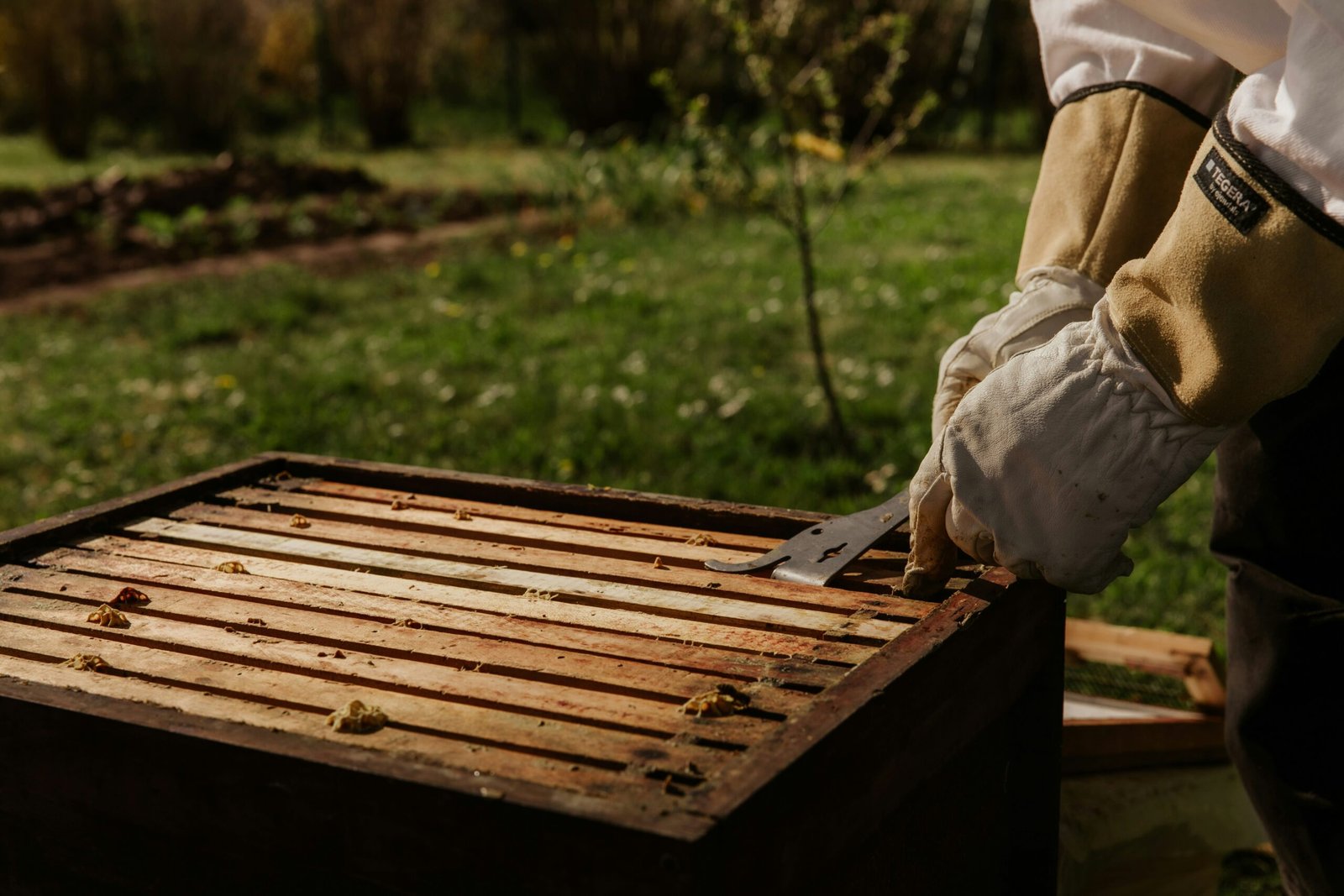
Wearing a full suit or at least a veil and gloves allows you to move calmly. Slow, deliberate movements are key to keeping the bees relaxed. As you learn their behavior, you can slowly transition to lighter gear.
8. Not Learning to Spot the Queen
You don’t always need to see the queen, but you must see evidence of her. Many beginners spend an hour looking for her majesty while the hive loses its internal heat.
Looking for Eggs
Instead of hunting for one specific bee, look for “eggs and brood.” If you see tiny white specks that look like grains of rice at the bottom of the cells, you know your queen was there within the last three days. This is enough evidence to know the hive is “queen right.”
9. Ignoring Local Beekeeping Laws and Neighbors
Beekeeping doesn’t happen in a vacuum. Your bees will forage up to three miles away. If your hive is right against a neighbor’s fence, you are asking for trouble.
Flight Path Management
Position your hive entrance so the bees fly toward a wall or a tall hedge. This forces them to fly upward and over people’s heads. Always check your local ordinances regarding hive density and setbacks from property lines.
10. Lack of Swarm Management
Healthy hives want to reproduce. Swarming is the natural way a colony splits in two. For a beekeeper, however, a swarm means half your bees and your best queen just flew away.
Creating Space
Bees swarm when they feel crowded. Adding a second deep box or a honey super before they run out of room can signal to the bees that they have plenty of space to grow. Keep an eye out for “queen cells” on the bottom of the frames, which indicate a swarm is imminent.
Feeding Ratios and Seasons
| Season | Purpose | Ratio (Sugar:Water) |
|---|---|---|
| Spring | Stimulate Brood Rearing | 1:1 (Thin) |
| Summer | Dearth Supplement | 1:1 (Thin) |
| Autumn | Winter Storage | 2:1 (Heavy) |
| Winter | Emergency Feeding | Fondant or Dry Sugar |
The Path Forward for New Keepers
Avoiding these common beekeeping mistakes doesn’t require a degree in biology, but it does require discipline. Beekeeping is a craft that is mastered over years, not weeks. Every mistake is a lesson, provided you take the time to understand why it happened.
Join a local beekeeping club. Having a mentor who understands your local climate and flora is invaluable. They can tell you exactly when the nectar flow starts and when the mites are peaking in your specific area.
Common Beekeeping Questions Answered
How many hives should a beginner start with?
It is widely recommended to start with two hives. This allows you to compare them. If one hive is struggling and the other is thriving, you have a baseline to understand what “healthy” looks like. You can also move frames of brood or food from the strong hive to save the weak one.
What is the best time of year to start beekeeping?
Spring is the ideal time. This gives the colony a full season of blooms to build up their stores before the first frost. Most keepers order their bees in January or February for a light delivery in April or May.
Do I need to wear a suit every time?
While not strictly required, a veil is the bare minimum for safety. Even “gentle” bees can become defensive due to weather changes, nearby predators (like skunks), or a lack of nectar.
How do I know if my bees are healthy?
A healthy hive has a steady flight pattern at the entrance, bees returning with colorful pollen on their legs, and a solid, “shotgun” pattern of capped brood inside. Use resources like Scientific Beekeeping to study colony health in depth.