
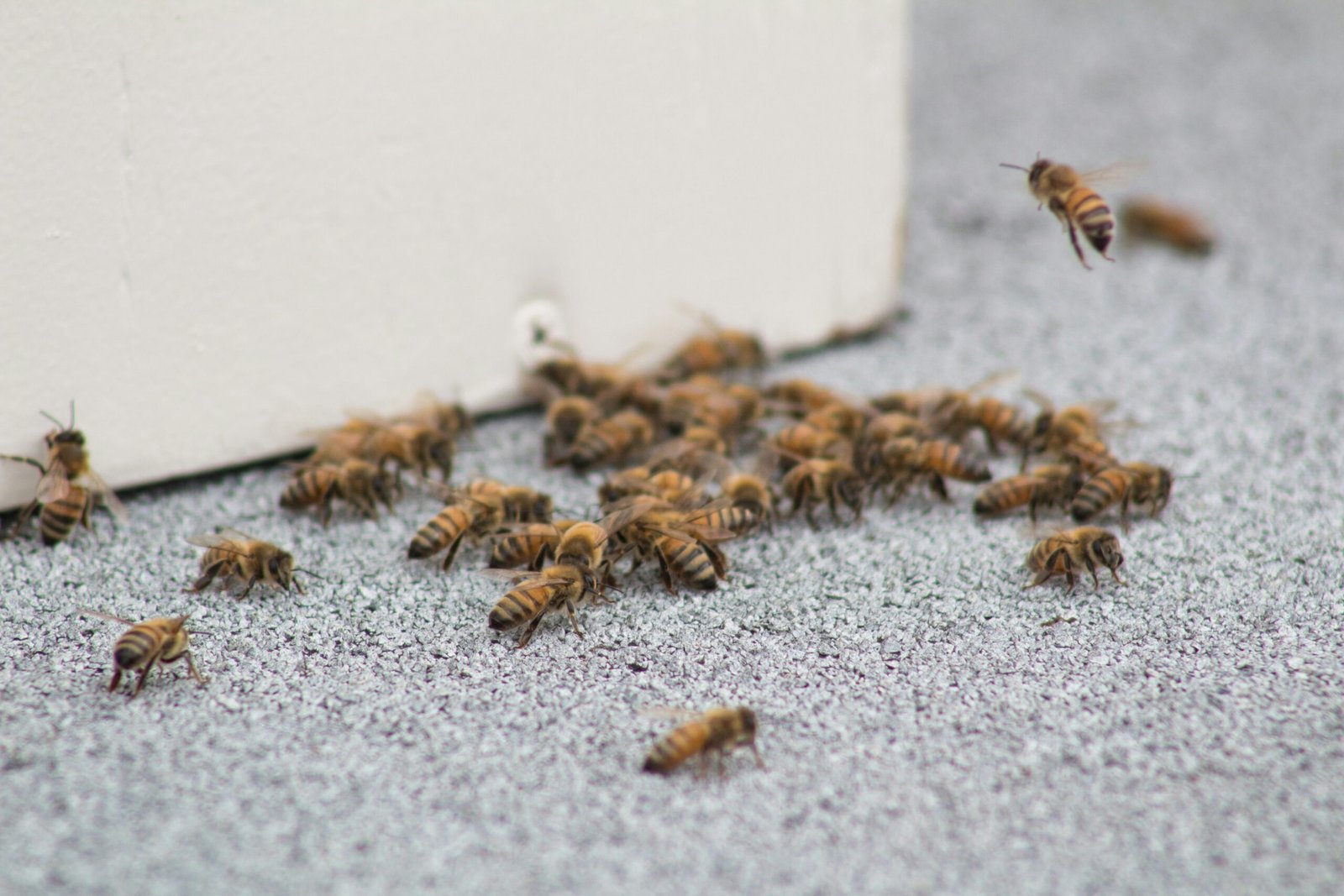
Seeing a sudden pile of dead insects outside your apiary immediately triggers alarm. Understanding dead bees in front of the hive causes and underlying issues helps you save the remaining colony quickly. You must act fast to identify the exact problem before the entire population collapses.
Many factors trigger entrance fatalities, ranging from natural seasonal lifecycles to severe chemical exposure. A careful inspection of the bodies and the surrounding environment reveals the exact source of the problem.
Why Are There Dead Bees in Front of the Hive?
If you want a direct answer regarding dead bees in front of the hive, the causes typically fall into five main categories. The most frequent reasons include starvation, pesticide poisoning, Varroa mite infestations, Nosema disease, and natural winter die-off.
A small pile of 100 to 200 bodies during the cold season represents normal undertaker behavior. Healthy worker bees continuously remove dead members to maintain sanitation within the enclosure. However, a sudden carpet of thousands of dead insects during the spring or summer indicates a severe, immediate threat requiring intervention.
1. Pesticide Poisoning and Chemical Exposure
Chemical exposure acts fast and devastates entire apiaries within hours. Foraging workers collect toxic substances from blooming crops or from nearby residential yards. They bring these chemicals back, rapidly spreading the poison through the population.
Even urban container gardens and terrace planters can harbor systemic insecticides. Always audit the flora in your immediate neighborhood and speak with neighbors about their pest control practices. You can learn more about protecting pollinators from agricultural chemicals through the EPA Pollinator Protection guidelines.
Common Symptoms of Pesticide Poisoning:
- Hundreds or thousands of bodies appear simultaneously at the entrance.
- Insects are spinning in circles or twitching uncontrollably on the ground.
- Tongues (proboscises) are fully extended and sticking out of the mouth.
- Aggressive behavior from the surviving guards at the entrance.
Immediate Solutions:
- Move the apiary to a new, safe location at least three miles away immediately.
- Provide unmedicated sugar syrup to dilute any contaminated nectar stored inside.
- Remove and safely discard frames containing fresh, uncapped pollen or nectar.
2. Colony Starvation and Nectar Dearth
Starvation ranks among the leading causes of death, especially during late winter or unexpected spring freezes. The colony consumes its honey stores faster than expected to generate heat. Once the food runs out, the entire group perishes rapidly, starting with the outer edges of the cluster.
Common Symptoms of Starvation:
- Bodies found head-first inside the honeycomb cells.
- A surprisingly lightweight box when you lift the back of the bottom board.
- Zero-capped honey is visible on the frames during an internal inspection.
- Dead bodies on the landing board look smaller or shriveled.
Immediate Solutions:
- Do not feed liquid syrup if the temperature sits below 50°F (10°C).
- Place dry winter patties, fondant, or dry granulated sugar directly above the cluster.
- In warmer months, provide a 1:1 sugar-water mixture using an internal feeder.
3. Tracheal and Varroa Mite Infestations
Varroa destructor mites represent the most dangerous biological threat to modern apiaries. These external parasites feed on the fat bodies of developing pupae and adult insects. They weaken the host’s immune system and transmit deadly viruses across the population. Organizations like the Honey Bee Health Coalition offer extensive tracking and treatment manuals.
Common Symptoms of Mite Damage:
- Insects crawling in the grass are unable to fly.
- Visible red or brown oval-shaped specks attached to the abdomens or thoraxes.
- Newly emerged adults displaying shriveled, useless wings (Deformed Wing Virus).
- A patchy, irregular brood pattern with sunken or pierced cell cappings.
Immediate Solutions:
- Perform an alcohol wash or powdered sugar roll to determine the exact infestation rate.
- Apply organic treatments like Formic Acid or Oxalic Acid if temperatures permit.
- Insert sticky boards beneath the screened bottom board to monitor parasite drops.
4. Disease Outbreaks: Nosema and Foulbrood
Pathogens spread rapidly in the tight, humid confines of a wooden box. Nosema is a microsporidian fungal parasite that attacks the insect’s digestive tract. American Foulbrood (AFB) and European Foulbrood (EFB) are bacterial infections that target the developing larvae.
Common Symptoms of Disease:
- Brown, sticky fecal streaks covering the front of the wooden box (Nosema).
- Lethargic workers are crawling aimlessly near the entrance.
- A foul, rotting meat odor coming from the ventilation holes (Foulbrood).
- Larvae melt into a brown, sticky goo that ropes out when poked with a twig.
Immediate Solutions:
- For Nosema, ensure proper ventilation to reduce internal moisture buildup.
- Feed Fumagillin-medicated syrup if local regulations allow treating Nosema.
- For AFB, you must contact your local agricultural inspector immediately; burning the infected equipment is usually legally required.
5. Robber Bees and Colony Defense
During a nectar dearth, strong colonies will attack weaker ones to steal their stored honey. This triggers massive, violent battles at the landing board. The aftermath leaves a carpet of casualties directly beneath the entrance.
Common Symptoms of Robbing Battles:
- Intense, loud buzzing and wrestling matches on the landing board.
- Torn pieces of wax cappings are scattered across the bottom board and ground.
- Insects are flying nervously in a zigzag pattern before attempting to land.
- Dead bodies showing missing legs, torn wings, or physical trauma.
Immediate Solutions:
- Install an entrance reducer immediately to give the guards a smaller area to defend.
- Drape a wet bedsheet completely over the victimized box for 24 hours to confuse attackers.
- Remove all external entrance feeders to avoid attracting unwanted attention from neighboring yards.
6. Chilled Brood and Sudden Temperature Drops
Spring weather often brings sudden, unexpected freezes after a period of warm days. If the colony expanded its brood nest during the warm spell, it might lack the population to keep the new larvae warm. When the temperature plummets, the outer edges of the brood nest freeze and die.
Common Symptoms of Chilled Brood:
- Undertakers dragging white, dead pupae out of the entrance the morning after a freeze.
- Dead adults were found huddled tightly together on the bottom board.
- No signs of disease, mites, or starvation upon internal inspection.
Immediate Solutions:
- Do not intervene aggressively; healthy undertakers will clean up the mess within days.
- Ensure the lid is tightly sealed and push the boxes tightly together to stop drafts.
- Avoid pulling frames or opening the lid on days when the temperature is below 60°F (15°C).
7. Old Age and Natural Attrition
Worker lifespans vary dramatically by season and workload. During the intense summer foraging, a worker lives for only 4 to 6 weeks. Their wings physically wear out from flying hundreds of miles, and they die of exhaustion.
Common Symptoms of Natural Death:
- A consistent, low number of bodies (10-30) appears daily in the summer.
- Bodies exhibiting frayed, heavily worn wings and shiny, hairless thoraxes.
- No visible signs of mites, disease streaks, or physical trauma.
Immediate Solutions:
- No action is required for natural attrition.
- Maintain a healthy environment so the queen continues laying eggs to replace the losses.
- Keep weeds trimmed below the entrance so you can accurately monitor the daily drop rate.
How to Investigate Dead Bees at the Hive Entrance?
Proper diagnosis requires a systematic approach. Do not guess what killed your insects; look for specific physical clues. Follow this exact inspection routine whenever you spot unusual fatalities.
Step 1: Examine the Physical Bodies
Pick up a handful of the dead insects and inspect them under good lighting. Look for extended tongues, which strongly point to chemical poisoning. Check for deformed wings or attached red mites to rule out parasitic overloads.
Step 2: Check the Surrounding Ground
Look closely at the dirt and grass directly beneath the landing board. Scattered wax pieces suggest a recent robbery. Brown spotting on the white-painted wood indicates severe dysentery and a probable Nosema infection.
Step 3: Perform an Internal Inspection
Put on your protective gear and open the lid on a warm, sunny day. Check the boxes’ weight to rule out starvation immediately. Look closely at the brood pattern; it should be tight, solid, and free of melted or discolored larvae.
Step 4: Monitor the Live Traffic
Observe the behavior of the surviving workers returning from the field. Returning foragers should carry bright pollen on their hind legs and fly directly into the entrance. Stumbling, twitching, or fighting at the door signals an active, ongoing crisis.
Types of Dead Bees Found Outside
Identifying the specific caste of the dead insects provides massive clues about the colony’s internal status. Workers, drones, and queens die for very different reasons.
Dead Drones (Males): Finding hundreds of dead males in the late fall is entirely normal. As winter approaches, the workers drag the males out and refuse to feed them to conserve winter resources. This seasonal eviction is a sign of a healthy, resource-conscious group.
Dead Workers (Females): Workers make up 99% of the population, so most casualties will be female. If you see mature workers dead, refer to the seven causes listed above. If you see bright white, unformed pupae being dragged out, the group is suffering from chilled brood, wax moths, or extreme stress.
Dead Queens: Finding a dead queen outside the entrance requires immediate investigation. This usually means the group recently swarmed, or they successfully raised a new leader and killed the failing one. You must check inside for emergency queen cells or fresh eggs to confirm they are not hopelessly queenless.
When to Call a Professional Apiarist?
Some situations demand intervention beyond basic backyard management. If you suspect American Foulbrood, the law often requires you to report the outbreak to state agricultural authorities. AFB spores survive for decades and will decimate every apiary within a three-mile radius if left unchecked.
You should also seek veteran help if you experience a total population collapse with plenty of honey left behind. This phenomenon, often associated with heavy mite loads or chemical exposure, is difficult to diagnose on its own. Local university extension programs often test dead samples for pesticide residues and pathogen counts.
Final Thoughts on Entrance Fatalities
Spotting a pile of dead insects is always stressful, but it serves as a critical diagnostic tool. By understanding dead bees in front of the hive you become a highly effective manager of your apiary. Reacting strictly to physical evidence prevents panic and ensures your protective measures actually work.
Always prioritize mite management and secure food stores before winter arrives. Keep detailed notes of your local blooming seasons and weather patterns. Proactive monitoring stops small problems before they turn into a massive pile of casualties at your landing board.