
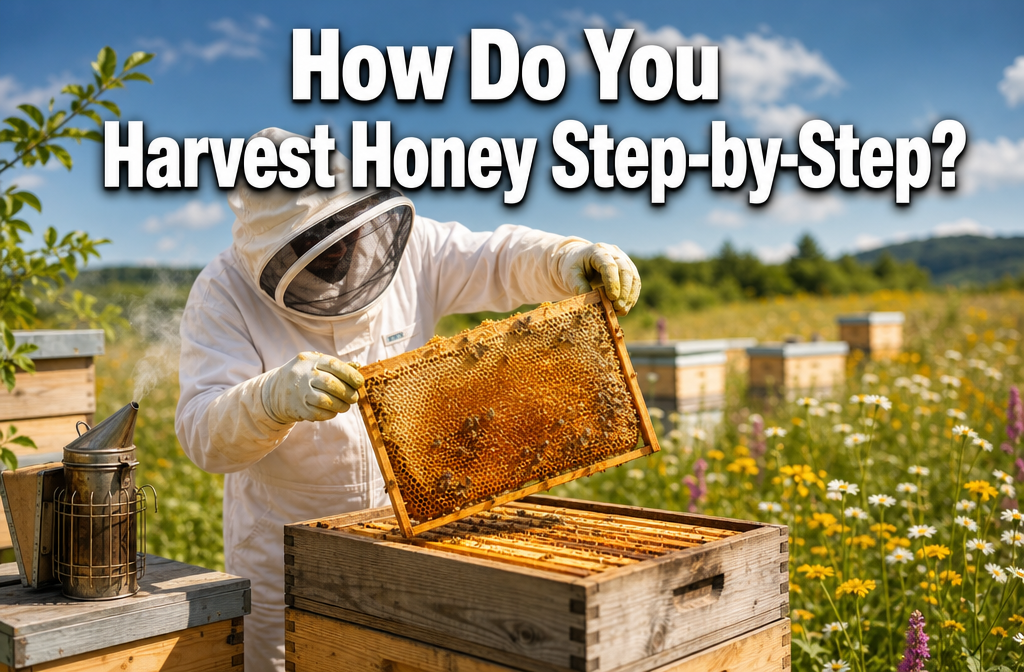
A single beehive can produce 30-60 pounds of surplus honey per year when properly managed. To harvest honey, beekeepers remove frames filled with capped honeycomb, extract the honey using specialized equipment, and filter it before storage. The process requires timing, proper tools, and careful handling to preserve honey quality while keeping bees healthy.
Key Takeaways
- Best timing: Harvest honey when frames are 80% capped with wax and nectar flow has ended.
- Essential tools: Smoker, hive tool, uncapping knife, extractor, and strainer are required.
- Frame selection: Only take frames from honey supers, never from brood chambers where bees raise young.
- Bee removal: Use bee escape boards or gentle brushing to clear bees from frames before extraction.
- Processing steps: Uncap cells, extract honey, strain debris, and store in clean containers.
- Leave reserves: Always leave 40-60 pounds of honey for bees to survive the winter months.
- Quality control: Harvest only fully ripened honey with a moisture content below 18.5%.
- Timing matters: Late summer harvest typically yields the highest quality, honey.
When Should You Harvest Honey from Your Hives?
Harvest honey when at least 80% of the honeycomb cells are capped with thin white wax and the main nectar flow has ended. This typically occurs in late summer, between July and September, in most regions.
Signs your honey is ready for harvest:
- White wax caps cover most honeycomb cells.
- Frames feel heavy when lifted (8-10 pounds when full).
- Honey doesn’t drip when frames are turned upside down.
- Moisture content measures below 18.5% with a refractometer.
Choose the right weather conditions for harvesting. Pick a warm, sunny day when most field bees are out foraging. This reduces the number of bees in the hive and makes frame removal easier.
Common mistake: New beekeepers often harvest too early when the honey isn’t fully ripened. Uncapped honey contains too much moisture and can ferment during storage. Wait until the bees have properly dehydrated and capped the honey.
What Tools Do You Need to Harvest Honey?
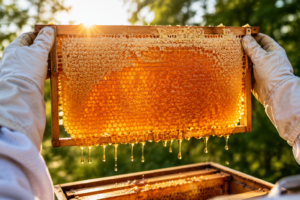
Essential beekeeping equipment includes a smoker, hive tool, protective gear, uncapping knife, extractor, and strainer. Each tool serves a specific purpose in the honey harvesting process.
Basic harvesting toolkit:
- Smoker and fuel – Calms bees during hive inspection.
- Protective suit with veil – Prevents bee stings.
- Hive tool – Pries apart frames and hive boxes.
- Empty supers or boxes – Holds harvested frames.
- Bee brush – Gently removes bees from frames.
Honey extraction equipment:
- Uncapping knife (heated or cold) – Removes wax cappings.
- Honey extractor (manual or electric) – Spins honey from frames.
- Double strainer – Filters wax particles and debris.
- Food-grade containers – Stores finished honey.
- Refractometer – Measures honey moisture content.
Budget considerations: Manual extractors cost $200-400, while electric models range from $800-2000. Small-scale beekeepers can rent extraction equipment or share costs with local beekeeping associations.
How Do You Remove Bees from Honey Frames?
Use bee escape boards placed 24-48 hours before harvest, or gently brush bees off frames during collection. Bee escapes allow bees to leave honey supers but prevent them from returning.
Bee escape method (recommended):
- Place escape boards between brood boxes and honey supers.
- Wait 1-2 days for bees to move down into the lower hive boxes.
- Remove nearly empty honey supers with minimal bee disturbance.
- Check that the queen remains in the brood chamber below the escape board.
Frame brushing technique:
- Use a soft-bristled bee brush with gentle downward strokes.
- Brush bees back toward the hive entrance, not onto the ground.
- Work quickly but calmly to avoid agitating bees.
- Shake frames gently to encourage bees to fly back to the hive.
Avoid these mistakes: Never use harsh chemicals, leaf blowers, or aggressive shaking to remove bees. These methods stress the colony and can contaminate honey. Don’t harvest frames containing brood (developing bees) or pollen stores the colony needs.
Step-by-Step Honey Extraction Process
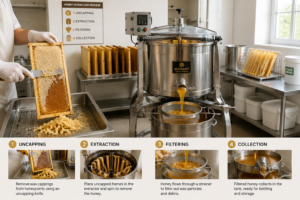
The extraction process involves uncapping honeycomb cells, spinning frames in an extractor, and straining the honey before storage. This mechanical process separates honey from wax without destroying the comb structure.
Detailed extraction steps:
- Set up extraction area – Use a clean, enclosed space away from bees.
- Uncap honeycomb – Slice off a thin wax layer with a heated knife.
- Load extractor – Place uncapped frames in the extractor basket.
- Spin frames – Start slowly, then increase speed gradually.
- Drain honey – Open the extractor gate to release honey into the tank.
- Strain honey – Pour through a double strainer to remove wax particles.
- Test moisture – Verify honey measures below 18.5% moisture.
- Package honey – Fill clean jars or containers for storage.
Processing timeline: Plan 2-4 hours for extracting honey from 10-20 frames. Work efficiently to prevent honey from crystallizing during processing.
Quality control tip: Taste honey throughout extraction to identify any off-flavors that might indicate fermentation or contamination. Good honey should taste clean and sweet without sour or alcoholic notes.
How Much Honey Should You Leave for the Bees?
Leave 40-60 pounds of honey in the hive for bees to survive winter, depending on your climate zone. Northern regions require more honey stores than southern areas with shorter winters.
Honey reserves by region:
- Northern climates (zones 3-5): 60-90 pounds minimum.
- Moderate climates (zones 6-7): 40-60 pounds minimum.
- Southern climates (zones 8-10): 30-40 pounds minimum.
Calculate honey weight: A deep frame holds about 8 pounds of honey when full, while medium frames contain roughly 6 pounds. Count capped frames in brood boxes to estimate total stores.
Winter survival factors: Bees consume more honey during long, cold winters and when clustering to maintain hive temperature. Colonies also need honey for early spring brood rearing before flowers bloom.
Emergency feeding: If you accidentally harvest too much honey, feed bees sugar syrup (2:1 sugar to water ratio) in fall to help them build adequate winter stores.
What Are Common Honey Harvesting Mistakes?
The most frequent errors include harvesting unripe honey, taking too much from the colony, and contaminating honey during extraction. These mistakes can harm both honey quality and bee health.
Critical mistakes to avoid:
- Harvesting uncapped honey – Contains excess moisture and will ferment.
- Taking brood comb – Destroys developing bees and weakens the colony.
- Poor sanitation – Dirty equipment contaminates honey and reduces shelf life.
- Wrong timing – Harvesting during nectar flow confuses returning forager bees.
- Inadequate reserves – Leaving insufficient honey stores threatens colony survival.
Quality issues: Honey with moisture above 18.5% will ferment and develop off-flavors. Always test moisture content before storage, especially in humid climates where honey absorbs atmospheric moisture.
Equipment problems: Dull uncapping knives leave wax in honey, while dirty extractors introduce bacteria. Clean and sanitize all equipment before use.
Summary
Harvesting honey successfully requires proper timing, the right equipment, and careful attention to both honey quality and bee welfare. The key steps include waiting for fully capped honey, using appropriate extraction tools, leaving adequate winter stores for the colony, and maintaining sanitation throughout the process.
Take action on your honey harvest: Start by investing in basic extraction equipment or connecting with local beekeepers who might share resources. Monitor your hives regularly in late summer to identify the optimal harvest timing for your region. Most importantly, prioritize your bees’ health over maximum honey production – a strong colony will provide consistent harvests for many years.
Frequently Asked Questions
How often can you harvest honey from a hive?
Most beekeepers harvest honey once per year in late summer, though strong colonies in good locations may produce surplus honey for a second harvest in fall.
Can you harvest honey in the first year?
New colonies typically need their entire first-year honey production to establish the hive and survive winter. Wait until the second year to harvest surplus honey.
How do you know if honey has too much moisture?
Use a refractometer to measure moisture content. Honey above 18.5% moisture will ferment. Visual signs include bubbling, foam, or sour smell.
What happens if you harvest honey too early?
Unripe honey contains excess water and will ferment during storage, developing alcoholic or sour flavors that make it unsuitable for consumption.
How long does extracted honey last?
Properly harvested and stored honey never spoils due to its low moisture content and acidic pH. Store in sealed containers away from moisture.
Can you put the extracted frames back in the hive?
Yes, bees will clean and refill extracted frames. Wet frames (with honey residue) help stimulate wax production and comb building.