

Most beekeeping experts recommend beginners start with two hives rather than one. Starting with two colonies allows new beekeepers to compare hive health, share resources between weak and strong colonies, and reduce the risk of total loss if one hive fails during the critical first year.
Key Takeaways
- Two hives provide the best learning experience for beginners while remaining manageable.
- Starting with one hive increases the risk of total loss and limits learning opportunities.
- Three or more hives can overwhelm new beekeepers and strain budgets significantly.
- Budget $600-800 for two complete hive setups, including equipment and protective gear.
- Spring installation (April-May) offers the best success rates for new colonies.
- Local beekeeping associations provide crucial mentorship for first-year beekeepers.
- Hive placement should be 3-6 feet apart with morning sun and wind protection.
- Emergency backup plans become essential when managing multiple colonies.
Why Two Hives Should a Beginner Start With Instead of One?
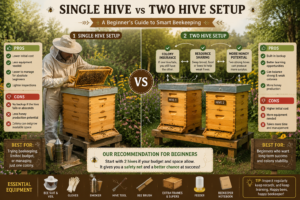
Two hives create a natural comparison system that accelerates learning and improves success rates. When beginners manage only one hive, they cannot distinguish between normal variations and potential problems.
With two colonies, new beekeepers can immediately spot differences in:
- Population growth rates between healthy and struggling hives.
- Brood patterns that indicate queen performance issues.
- Honey production levels during peak foraging seasons.
- Behavioral changes that signal disease or pest problems.
Resource sharing becomes possible with multiple hives. Strong colonies can donate frames of brood to boost weak neighbors, and excess honey stores can supplement struggling hives during shortages.
Common beginner mistake: Assuming one hive means half the work. In reality, single-hive management often creates more stress because problems cannot be easily diagnosed or corrected.
Choose two hives if: Budget allows $600-800 initial investment, local mentorship is available, and commitment extends beyond casual hobby interest.
What’s the Maximum Number of Hives Should a Beginner Start With?
Three hives represent the upper limit for most beginners, though two remains the sweet spot for learning. Managing more than three colonies simultaneously can overwhelm new beekeepers during critical inspection periods.
Time requirements scale exponentially:
- One hive: 2-3 hours per month during active season.
- Two hives: 4-6 hours per month with comparison benefits.
- Three hives: 7-10 hours per month with increased complexity.
- Four+ hives: 12+ hours monthly, approaching commercial management.
Financial considerations multiply quickly. Each additional hive requires:
- Complete equipment set ($250-350 per hive).
- Separate medication and feeding supplies.
- Individual record-keeping systems.
- Backup equipment for emergencies.
Experience factors that change the equation: Previous livestock management, available mentorship quality, local climate challenges, and personal time flexibility all influence optimal hive numbers.
Edge case consideration: Beekeepers in harsh climates (USDA zones 3-4) might benefit from three hives due to higher winter loss rates, but should start with two and expand in year two.
Essential Equipment Costs for Multiple Beginner Hives
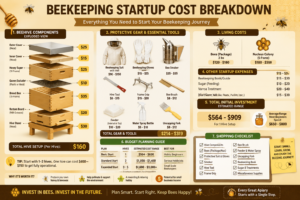
Complete two-hive startup costs typically range from $600-800, not including the bees themselves. This investment covers basic equipment that will last multiple seasons with proper maintenance.
Per-hive equipment requirements:
- Hive bodies and frames: $120-180 (deep hive body, medium super, frames, foundation).
- Bottom board and top cover: $40-60 (screened bottom board recommended).
- Hive tool and smoker: $25-35 (one set serves multiple hives).
Shared equipment for multiple hives:
- Protective suit and gloves: $80-120 (essential safety investment).
- Feeding equipment: $30-50 (boardman feeders or entrance feeders).
- Medication supplies: $40-60 (Varroa mite treatments, emergency antibiotics).
Money-saving strategies include: Joining local beekeeping associations for group purchases, buying used equipment from experienced beekeepers, and building simple wooden components during the winter months.
Budget planning tip: Reserve an additional $200-300 for unexpected first-year expenses like emergency feeding, replacement queens, or supplemental equipment.
Seasonal Timing: When Beginners Should Install Multiple Hives?
April through May represents the optimal installation window for most North American regions. Installing multiple hives simultaneously ensures parallel development and simplifies management schedules throughout the season.
Spring installation advantages:
- Full growing season available for colony establishment.
- Peak nectar flows support rapid population growth.
- Consistent inspection timing across all hives.
- Synchronized seasonal management tasks.
Staggered installation risks: Installing hives weeks apart creates management complexity as colonies develop at different rates, requiring separate feeding schedules and varying inspection needs.
Regional timing variations:
- Southern states (zones 8-9): March-April installation.
- Northern regions (zones 3-5): May-June for harsh climate areas.
- Western mountain areas: Altitude and local weather patterns override zone recommendations.
Package bees versus nucleus colonies: Most beginners succeed better with nucleus colonies (nucs) that include established queens and brood patterns, though package bees cost less initially.
Common Mistakes When Deciding How Many Hives a Beginner Should Start With
Underestimating time commitments ranks as the most frequent beginner error. New beekeepers often assume hive inspections can be rushed or postponed, leading to missed disease symptoms or swarming preparations.
Critical timing mistakes include:
- Skipping weekly inspections during peak swarm season (April-June).
- Delaying Varroa mite treatments until visible damage appears.
- Inconsistent feeding schedules during nectar shortage periods.
- Postponing winter preparations until temperatures drop.
Overconfidence in equipment needs causes expensive corrections mid-season. Beginners frequently purchase minimal equipment, then scramble to buy additional supers during unexpected honey flows.
Location planning oversights:
- Placing hives too close together (less than 3 feet spacing).
- Ignoring neighbor relationships and local regulations.
- Choosing sites with inadequate morning sun exposure.
- Overlooking water source accessibility within 1-2 miles.
Financial planning gaps emerge when beginners focus only on initial costs while ignoring ongoing expenses like annual treatments, replacement equipment, and emergency interventions.
Recovery strategy: Join local beekeeping associations before purchasing equipment to learn from experienced mentors and avoid predictable beginner mistakes.
Final Thoughts
Starting with two hives provides beginner beekeepers with the optimal balance between manageable complexity and meaningful learning opportunities. This approach allows for crucial colony comparisons, resource sharing capabilities, and reduced risk of total loss while keeping time commitments and costs within reasonable bounds for newcomers to the craft.
The key to success lies not just in choosing the right number of hives but in proper preparation through education, mentorship, and realistic budget planning. Take time to connect with local beekeeping associations, complete beginner courses, and establish relationships with experienced mentors before installing your first colonies.
FAQ
How much space do I need for two beginner hives?
A 10×10 foot area provides adequate space for two hives with proper spacing, equipment storage, and safe inspection zones around each colony.
Can I start with one hive and add a second later?
Yes, but installing both hives within 2-3 weeks of each other maintains similar development timelines and simplifies management throughout the season.
What happens if one of my two hives dies?
The surviving hive can provide brood frames and resources to help establish a replacement colony, making recovery much easier than starting completely over.
Do two hives require twice the time commitment?
Not exactly. Two hives require about 60-70% more time than one hive because inspections become more efficient, and equipment setup serves both colonies.
Should I buy different bee breeds for my two hives?
Beginners should start with the same breed (typically Italian or Carniolan) to eliminate variables while learning basic management skills.
How far apart should I place my two hives?
Space hives 3-6 feet apart to prevent bees from drifting between colonies while allowing efficient inspection workflows.
What’s the minimum budget for starting with two hives?
Expect $600-800 for complete equipment plus $300-400 for two nucleus colonies or package bees, totaling roughly $900-1200 initial investment.
Can I manage two hives without prior experience?
Yes, with proper preparation, including beekeeping courses, mentor relationships, and quality reference materials, but avoid starting during stressful life periods.