

The best way to place a beehive is in a sunny spot that gets morning sun but afternoon shade, faces southeast, stays protected from strong winds, and sits at least 25 feet from property lines. Your hive needs easy access to water within 300 feet and should be positioned where bees won’t bother neighbors or pets.
What’s the Best Direction to Place a Beehive?
Face your beehive entrance toward the southeast for the best results. This direction gives bees morning sunlight to warm up quickly while providing some afternoon shade during hot weather.
Southeast placement works well because:
- Morning activation – Early sun warms the hive and gets bees moving sooner.
- Natural wind protection – Most strong winds come from the west and north.
- Temperature control – Prevents overheating during peak afternoon heat.
- Consistent light – Steady sun exposure throughout the growing season.
- Avoid facing north since this creates a cold, damp environment that bees struggle with.
- East-facing works too, but may get too much afternoon sun in hot climates.
- South-facing windows can cause overheating problems in the summer months.
Choose Southeast if you live in a moderate climate. Pick east-facing for very hot regions where afternoon shade is more important than extra morning sun.
How Much Sun Should a Beehive Get?
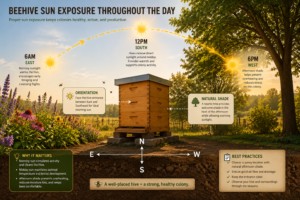
Beehives need 6-8 hours of sunlight daily, with morning sun being most important. The ideal setup provides full morning sun from sunrise until noon, then partial shade during the hottest afternoon hours.
Here’s the perfect sun schedule for your hive:
6 AM – 10 AM: Full, direct sunlight.
10 AM – 2 PM: Bright light with some shade starting.
2 PM – 6 PM: Partial shade or filtered sunlight.
Evening: Protected from harsh late-day sun.
Too much sun (over 10 hours of direct exposure) forces bees to spend energy cooling the hive instead of making honey.
Too little sun (under 4 hours) keeps the hive cold and slows bee activity.
Plant a tree 15-20 feet west of your hive to create natural afternoon shade.
Deciduous trees work best since they provide summer shade but allow winter sun through bare branches.
Common mistake: Placing hives in full shade, thinking it keeps bees cooler. Shaded hives stay damp, develop mold problems, and produce weak colonies.
Where Should You Place a Beehive for Safety?
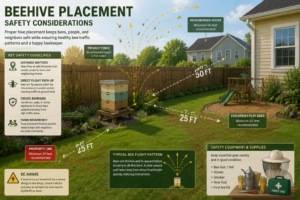
Place your beehive at least 25 feet from property lines and 50 feet from high-traffic areas like playgrounds or patios. This distance keeps bee flight paths away from people and prevents neighbor complaints.
Essential safety distances:
- Property lines: 25+ feet minimum (check local laws) • Children’s play areas: 50+ feet.
- Outdoor dining spaces: 40+ feet.
- Swimming pools: 100+ feet (bees are attracted to water)
- Sidewalks and paths: 30+ feet from main bee flight routes.
Install a 6-foot privacy fence between your hive and neighbors if space is limited. This forces bees to fly higher and reduces human-bee encounters.
Position the hive entrance away from foot traffic. Bees fly in straight lines from their entrance, so avoid placing the opening toward walkways or gathering spots.
Keep emergency equipment nearby: A smoker, protective gear, and a phone should be within 100 feet of your hive location. Never place hives where you can’t reach them quickly during swarming or aggressive behavior.
How Do You Protect a Beehive from Wind?
Strong winds stress bees and can knock over hives, so place your beehive behind natural windbreaks or install barriers. Wind protection is especially important during the winter months and in open areas.
Effective wind protection methods:
- Natural barriers: Existing trees, shrubs, or buildings on the north and west sides.
- Fence installation: 6-8 foot solid fence positioned 10-15 feet from the hive.
- Hedge planting: Dense evergreen shrubs create year-round protection.
- Hive weights: Concrete blocks or metal straps secure the hive structure.
Avoid completely enclosed areas that block all air movement. Bees need gentle airflow for ventilation, just not strong gusts that disrupt their flight patterns.
Position windbreaks 2-3 times their height away from your hive. A 6-foot fence should sit 12-18 feet from the hive to create effective wind reduction without blocking sunlight.
Test wind patterns in your yard during different seasons. Winter winds often come from different directions than summer breezes, so plan protection accordingly.
What Ground Conditions Work Best When You Place a Beehive?
Level, well-draining ground with a slight slope works best for beehive placement. The hive should sit stable and dry year-round without water pooling underneath.
Ideal ground conditions include:
- Slight slope: A 1-2 degree angle helps water drain away from the hive.
- Firm soil: Prevents the hive from sinking or tilting over time.
- Good drainage: No standing water after rain or snow melt.
- Weed-free area: A 3-foot radius around the hive stays clear.
- Level base: Use concrete blocks or wooden platforms for stability.
Avoid low-lying areas where cold air and moisture collect. Skip steep slopes that make hive inspections difficult and dangerous.
Create a gravel pad 4 feet by 4 feet if your soil stays wet. Lay landscape fabric first, then add 2-3 inches of gravel for drainage and weed control.
Raise hives 12-18 inches off the ground using hive stands or concrete blocks. This improves air circulation, reduces moisture problems, and makes inspections easier on your back.
How Close Should Water Be to Your Beehive?
Bees need a reliable water source within 300 feet of their hive. Closer water sources reduce energy waste and prevent bees from visiting swimming pools or pet water dishes.
Water source options that work well:
- Shallow pond or birdbath: 1-2 inches deep with landing spots.
- Dripping faucet: Constant, gentle water flow.
- Chicken waterer: Automatic refill with bee-safe access.
- Rain collection barrel: With a floating cork or wood pieces for landing.
Provide landing platforms like cork pieces, sticks, or shallow stones. Bees can’t swim and will drown in deep water without something to stand on.
Change water regularly to prevent mosquito breeding. Stagnant water attracts pests and can spread diseases to your bee colony.
Start water sources before installing bees. Once bees find a water source, they’re very hard to redirect to a new location, even if it’s better positioned.
Summary
Successful beehive placement combines the right sun exposure, wind protection, and safe distances from neighbors. The best spot gets morning sun, afternoon shade, stays protected from strong winds, and provides easy access to water within 300 feet.
Start by checking local laws and measuring distances from property lines. Choose a southeast-facing location with good drainage and firm, level ground. Install wind barriers if needed and establish water sources before bringing in your bees.
FAQ
How far should a beehive be from my house?
Keep beehives at least 30-50 feet from your house entrance and windows. This prevents bees from clustering near human activity while still allowing easy access for hive maintenance.
Can I place a beehive in partial shade?
Partial shade works if the hive gets 4-6 hours of morning sun. Avoid full shade, which creates moisture problems and weak colonies. Some afternoon shade actually helps in hot climates.
What happens if I place my beehive in the wrong spot?
You can move a beehive, but it’s stressful for the colony. Move it less than 3 feet or more than 2 miles to prevent bees from returning to the old location and getting lost.
Do I need permission to place a beehive in my yard?
Check local zoning laws and HOA rules before installing a beehive. Many areas require permits, minimum lot sizes, or neighbor notifications for backyard beekeeping.
How level does the ground need to be for a beehive?
The hive should sit level from side to side but can have a slight forward tilt (1-2 degrees) to help rainwater drain out of the entrance. Use shims or adjust the stand as needed.
Should beehives face away from prevailing winds?
Yes, position the hive entrance perpendicular to or away from strong prevailing winds. This reduces stress on the colony and makes it easier to open the hive during inspections.