You picked up a bookshelf from a flat-pack store or found a dresser at a thrift shop, and now it sits in your room looking exactly like budget furniture. The laminate edges, plastic handles, and wobbly feel make it obvious.
The difference between furniture that looks cheap and furniture that looks high-end is rarely about price. It’s about finishing, detail, and styling. Designers know this. Now you will too.
How Do You Make Cheap Furniture Look Expensive?
The quickest way to upgrade cheap furniture is to prep and paint it with a matte or satin finish, swap the hardware for solid metal pulls, and style it with bold, well-chosen accessories.
These three changes, costing as little as $30 to $60, can turn a $40 IKEA dresser into something that looks like it cost $400.
Step 1: Assess What You’re Working With
Before you buy any paint, spend five minutes analyzing the piece.
Ask yourself:
- Is the surface laminate, MDF, solid wood, or veneer?
According to JINHAN, flat-pack furniture uses various connectors like screws, cams, dowels, and brackets, all of which are crucial for stability. The right hardware choices are necessary for a firm, solid structure, while poor selections can result in loose or wobbly furniture.
This matters because laminate and MDF need different preparation from raw wood. Skipping this step is the main reason DIY furniture upgrades can end up looking worse than before.
Fixing Structure First
A great paint job won’t help if the table is still wobbly.
Before making it look better, fix the structure first:
- Tighten all screws and bolts.
- Add L-brackets inside corners if the piece rocks.
- Fill stripped screw holes with toothpicks and wood glue, let dry, then re-screw.
Step 2: The Paint Transformation
The right paint, applied properly, is the fastest way to upgrade cheap furniture. This step is where most people get it right or make mistakes.
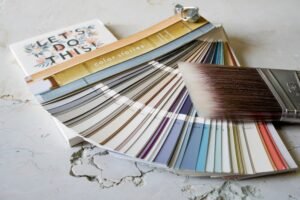
Choosing the Right Paint
Forget regular wall paint. For furniture, you need:
- Chalk paint (e.g., Annie Sloan, Rust-Oleum Chalked) adheres to almost any surface with minimal prep, dries matte, and is forgiving.
- Cabinet and furniture paint (like Behr Cabinet & Trim or Benjamin Moore Advance) is more durable, comes in semi-gloss or satin, and gives a polished look.
- Spray paint works best for smaller pieces and hardware. It gives a smooth finish without brush strokes.
Color choices that read as expensive:
- Warm white (not stark white, think linen or cream).
- Deep forest green.
- Navy or ink blue.
- Warm charcoal or off-black.
- Terracotta or dusty clay.
Avoid bright primary colors, cool white, or anything too trendy that might look outdated soon.
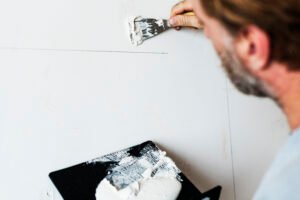
The Prep Process (Don’t Skip This)
- Clean the surface with a degreaser or TSP substitute. Grease and dust prevent paint from sticking well.
- Sand lightly with 120-grit for wood and 220-grit for laminate to scuff the surface.
- Prime if needed: shellac-based primer (Zinsser BIN) is essential for laminate, MDF edges, and any previously varnished surfaces.
- Apply thin coats: two to three thin coats always beat one thick coat.
- Sand between coats: lightly with 220-grit, wipe clean before the next coat.
- Seal the finish: a water-based polycrylic in matte or satin locks in the color and adds durability.
Estimated cost: $25–$55 for paint, primer, and sealer.
Step 3: Hardware Upgrades
Swap the hardware, and you’ve changed the entire character of the piece. This is the secret designers use constantly.
What to Look For?
- Solid brass or matte black pulls: these two finishes photograph as expensive and feel substantial in hand.
- Ceramic or stone knobs: add texture and uniqueness, especially on dressers
- Oversized bar pulls: make small drawer fronts look architectural.
Where to Buy Affordable Hardware That Looks High-End?
- Amazon: search “solid brass drawer pulls” and filter by reviews; $1.50–$4 per pull.
- Etsy: handmade ceramic knobs, $3–$8 each, look truly bespoke..
- IKEA ENKÖPING / BESTÅ hardware: already looks elevated, cheap from the source.
- Anthropologie sale section: seasonal markdowns make $8 knobs available for $2–$3.
Tip: Measure your existing hole spacing before ordering. Standard sizes are 96mm and 128mm. If the holes don’t match, use wood filler to plug old holes and drill new ones.
According to LatestCost.com, refinishing a single piece of furniture generally costs between a few hundred and several thousand dollars, depending on the size, type of wood, and the complexity of the finish.
Step 4: Add Texture, Trim, and Visual Weight
This is the step that separates amateur DIY from professional-looking results.
Furniture Molding and Trim
Adding trim to flat drawer fronts instantly makes flat-pack furniture look custom-built.
- Beadboard strips: glue onto flat cabinet doors for a Shaker-style look.
- Half-round dowels: create a classic frame effect on drawer fronts.
- Rope or jute trim: glued along edges adds organic texture.
Use wood glue and pin nails (a pin nailer is $30 at Harbor Freight). Paint over everything once dry for a seamless finish.
Wallpaper or Contact Paper Inserts
Lining the inside of a bookshelf back panel with peel-and-stick wallpaper adds depth and intentionality, signaling design thought.
- Cost: $12–$20 for a sheet
- Effect: Transforms a basic BILLY bookcase into a styled, editorial piece.
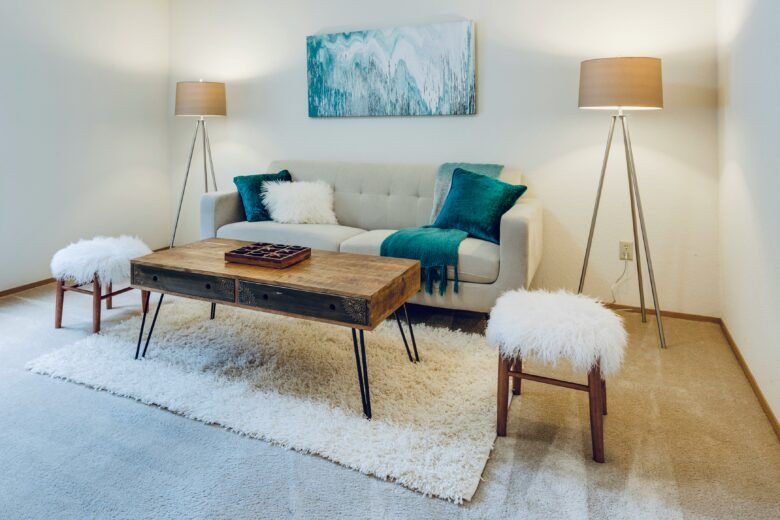
Step 5: Strategic Styling
Even perfectly painted furniture can look cheap if it’s styled poorly. Styling is a skill that follows specific rules.
The Rule of Three and Odd Numbers
Group objects in sets of three or five: one tall item, one medium, one low. Vary height, texture, and material.
Example shelf vignette:
- A stack of art books (horizontal base).
- A sculptural vase (tall, single material).
- A small plant or trailing vine (organic element).
What to Add?
- Real books with spines facing out: colored or leather-look spines, not bare white.
- Linen or cotton baskets: hide clutter while adding texture.
- A single tray: corrals small items and makes a surface look intentional.
- One piece of art or a framed print: leaned against a wall, not hung, feels current.
What to Remove?
Surfaces look expensive when they have negative space.
Remove:
- Anything plastic that isn’t decorative.
- Busy, mismatched collections.
- Items that don’t share a color story.
Common Mistakes to Avoid
1. Skipping Primer on Laminate
Chalk paint on bare laminate may look fine for a week, then peel off in sheets. Always prime laminate with a shellac-based primer first.
2. Using Too Much Paint at Once
Thick coats drip, sag, and dry with texture bumps. Two thin coats = smooth. One thick coat = visible brushwork and drip marks.
3. Buying Cheap Brushes
A $2 foam brush leaves streaks and bubbles. A quality synthetic brush ($8–$12) lays paint flat. It’s the most overlooked investment in any furniture project.
4. Ignoring the Edges
The edges of laminate MDF furniture are the most vulnerable. If you don’t prime and seal them carefully, they’ll chip and swell within months of normal use.
5. Over-Styling
More accessories ≠ are better. Overcrowded surfaces look chaotic regardless of how expensive each item is. Edit ruthlessly.
6. Using the Wrong Sheen
Glossy finishes on imperfect surfaces highlight every bump and grain. On budget furniture, matte and satin sheens are forgiving and read as sophisticated.
Tips from Interior Designers
Tip 1: Paint the inside of drawers a contrasting color. It creates a moment of surprise and signals careful thought, the hallmark of genuinely expensive furniture.
Tip 2: Use a furniture wax instead of polycrylic for a softer, more aged look. Apply with a lint-free cloth, buff gently. This works especially well with chalk paint on older thrift pieces.
Tip 3: Elevate furniture with legs. Replacing factory block legs with tapered mid-century hairpin legs ($25–$40 for a set of four) is one of the highest-impact changes possible. It lifts the piece visually and makes it look custom.
Tip 4: Use painter’s tape to create geometric detail. Tape off a two-tone pattern with a colored bottom half and a white top on a dresser. The result looks designed, not painted over.
Upgrade Methods by Cost and Impact
| Method | Estimated Cost | Visual Impact | Difficulty |
|---|---|---|---|
| Paint (chalk or furniture) | $25–$55 | ⭐⭐⭐⭐⭐ | Medium |
| Hardware replacement | $15–$40 | ⭐⭐⭐⭐ | Easy |
| Trim/molding addition | $10–$25 | ⭐⭐⭐⭐ | Medium |
| New legs | $25–$45 | ⭐⭐⭐⭐⭐ | Easy–Medium |
| Wallpaper back panel | $12–$20 | ⭐⭐⭐ | Easy |
| Styling/accessories | $0–$30 | ⭐⭐⭐⭐ | Easy |
Best bang for buck: Paint + hardware + legs = full transformation for under $100.
Real-Life Scenario: The $35 Dresser That Fooled Everyone
Sarah, a renter in a one-bedroom apartment, bought a particleboard dresser secondhand for $35. It had plastic handles, a fake wood-grain laminate finish, and water damage on one corner.
Here’s what she did over the weekend:
- Sanded lightly and applied Zinsser BIN shellac primer (two coats).
- Painted in Rust-Oleum Chalked “Linen White” (two coats, satin topcoat).
- Replaced handles with matte black bar pulls from Amazon, $22 for six.
- Filled the water-damaged corner with wood filler, sanded it smooth before painting.
After sanding, painting, and adding new knobs, the author gave the piece a fresh look. When she shared a photo of the finished dresser in a home décor group, several people thought it was a boutique item and asked about the brand, according to DIY Craftsy. Nobody guessed thrift store.
FAQs
Can I paint IKEA furniture without sanding?
Yes, if you use chalk paint and the surface is clean and degreased. However, a light scuff with 220-grit sandpaper dramatically improves adhesion and durability, especially on laminate surfaces.
How do I make particle board furniture look like real wood?
Use a wood-grain faux finish technique: apply a base coat of tan or warm beige, then drag a specialty graining tool (or a dry brush) through a slightly darker glaze while wet. Seal with a matte finish. From a distance, it reads convincingly as real wood.
What’s the best paint for furniture that gets heavy use?
For high-traffic pieces like dining chairs, coffee tables, or dressers, use a cabinet-grade enamel paint (Benjamin Moore Advance or Sherwin-Williams Emerald Urethane). These cure to a hard, washable surface significantly tougher than standard chalk paint.
How do I fix peeling paint on furniture I already painted?
Sand off all loose paint back to a stable surface, prime with shellac-based primer, and repaint. If the issue was painting over laminate without primer, this time prime properly — skipping it again will cause the same result.
Can styling alone make cheap furniture look expensive?
Styling adds polish, but it works best when the furniture has been elevated. A styled shelf on a beat-up laminate bookcase still looks budget. Combining one physical upgrade, even just new hardware, with intentional styling creates the most convincing results.
Is chalk paint or regular furniture paint better for beginners?
Chalk paint is more forgiving; it adheres to almost anything, dries quickly, and mistakes are easy to sand back. It’s the better starting point. Furniture enamel produces a more durable and professional finish, but requires more surface prep and patience between coats.
Conclusion
You don’t need a new home, a bigger budget, or an interior designer. The skills to make cheap furniture look expensive are learnable, affordable, and effective. A $35 dresser and $89 in materials can look better than a $400 store-bought piece if the work is done right.
Start with the biggest lever: paint. Then upgrade the hardware. Then lift the piece with new legs. Style it last. According to Handmade Hub, using the right tools and materials for your DIY furniture makeover can deliver impressive results that rival those achieved with much more expensive methods.