
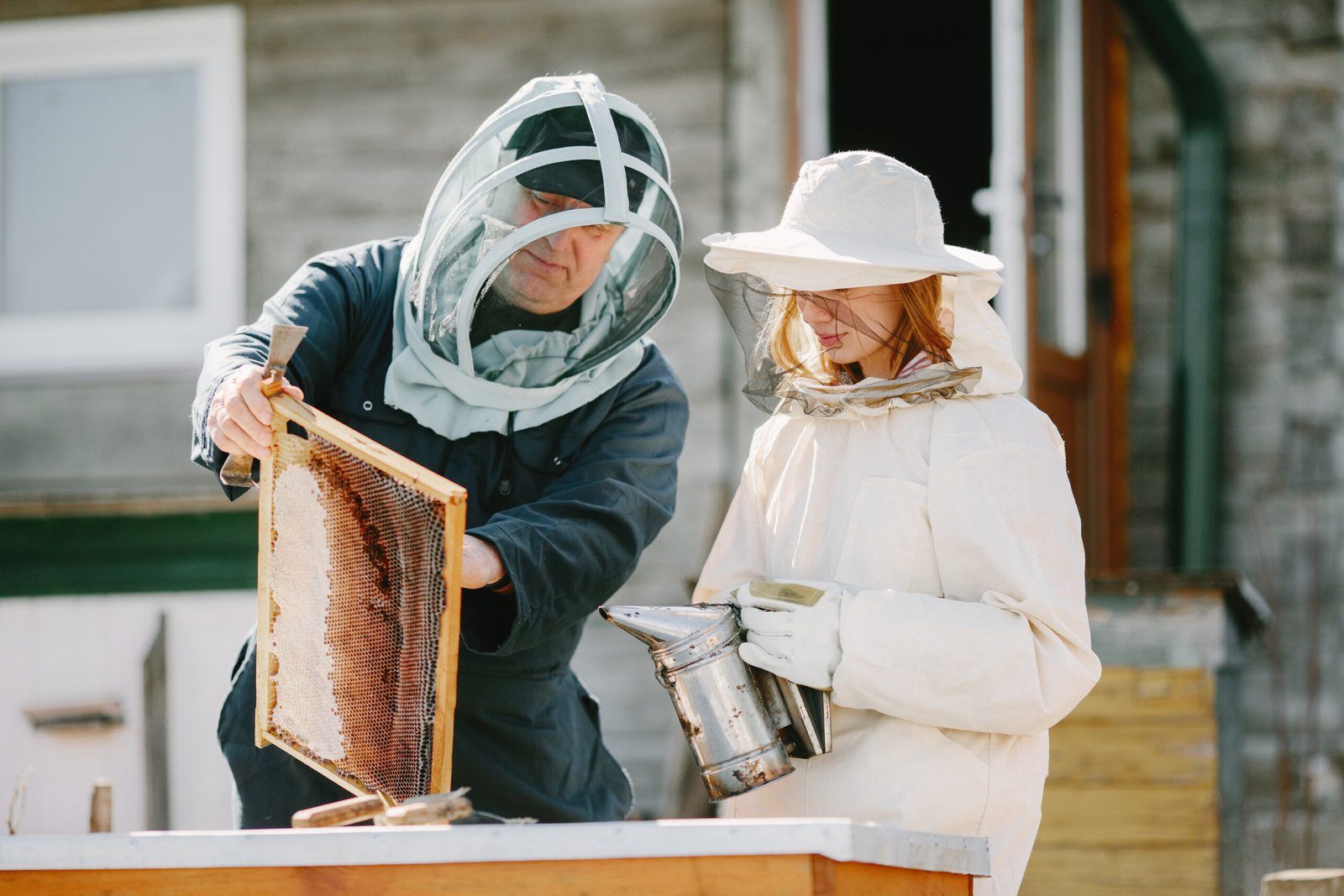
How do I start beekeeping at home? You need three basic things: proper protective gear, a sturdy hive setup, and a healthy colony of insects. Setting up a backyard apiary takes planning, but anyone can learn the ropes.
What Do You Need to Start Beekeeping at Home?
Before ordering live insects, gather your equipment. You cannot rush this step. Getting your gear ready early prevents panic when your shipment arrives.
Essential Protective Gear
Safety matters most when handling stinging insects. You must protect your face, neck, and hands at all times.
- Beekeeper Suit: Buy a full-body, ventilated suit with an attached veil. Ventilated mesh keeps you cool during hot summer inspections.
- Gloves: Thick leather gloves with long canvas sleeves prevent stings. Make sure the sleeves have elastic bands to grip your arms tightly.
- Sturdy Boots: Wear heavy boots that tuck under your suit legs. Ankle stings often happen when you leave gaps in your Clothing.
Choosing Your Hive Type
You must select a hive design before buying frames. Different styles require different management techniques.
- Langstroth Hives: The industry standard featuring stackable rectangular boxes. This is the easiest choice for beginners because the parts are universal.
- Top Bar Hives: A horizontal trough where bees build comb hanging from wooden bars. These require no heavy lifting, making them great for people with back problems.
- Warre Hives: A vertical top-bar style that mimics a hollow tree. They require less human interference, but make thorough inspections difficult.
Core Langstroth Hive Components
If you choose the standard Langstroth design, you need specific woodenware.
- Bottom Board: The base of your structure. Screened boards help with ventilation and pest control.
- Deep Hive Bodies: The main living quarters where the queen lays eggs and workers raise the young.
- Frames and Foundation: Wooden frames holding plastic or wax sheets. The insects build their honeycomb on these foundations.
- Honey Supers: Shallower boxes placed on top of the deep bodies. This is where workers store surplus nectar for you to harvest.
- Inner and Outer Covers: The two roof layers protect the colony from rain, snow, and wind.
Basic Apiary Tools
You need specific hand tools to safely open and inspect boxes.
- Hive Tool: A flat metal pry bar used to separate sticky boxes. The insects glue everything together with a resin called propolis.
- Bee Smoker: A metal canister that burns fuel to produce thick smoke. Smoke calms the colony by masking their chemical alarm signals.
- Bee Brush: A soft-bristled brush. You use this to push insects off frames during honey harvesting gently.
Steps to Set Up Your Backyard Apiary
Follow a strict timeline when establishing your apiary. Proper preparation ensures your colony survives its critical first year.
1. Check Local Beekeeping Regulations
Many cities restrict backyard hives. You must research local ordinances before buying anything. Contact your municipal clerk or check your city zoning laws online.
Check homeowners’ association rules, as they often ban agricultural activities completely. Some areas limit the number of hives you can own based on your lot size. Many states require registering your apiary location with the state department of agriculture.
2. Choose the Ideal Hive Location
Bees need specific environmental conditions to thrive. Placement affects their health, honey production, and your family’s safety.
- Sunlight: Morning sun warms the boxes and gets foragers working early. Full afternoon shade prevents overheating in hot climates.
- Wind Protection: Place boxes near a solid fence or thick hedge. This blocks freezing winter winds from blowing straight into the entrance.
- Water Source: Provide a shallow birdbath filled with pebbles nearby. The insects need water to cool the hive, and the pebbles stop them from drowning.
- Flight Path: Point the entrance away from sidewalks, driveways, or patios. Foragers fly out of the entrance in a straight line and will bump into people in their path.
3. Order Your Bees Early
Suppliers sell out of live inventory by January or February. Order them in winter for spring delivery. You have two main purchasing options.
- Package Bees: A screened box containing a caged queen and three pounds of worker bees. These are cheaper but take longer to build strength.
- Nucleus Colony (Nuc): A mini-hive with five frames of drawn comb, developing brood, and an active queen. Nucs establish much faster than packages because the comb is already built.
4. Install Your Colony Safely
Installing packages takes careful timing and steady hands. Wear your full suit for this process.
- Spray the screened shipping box with light sugar water upon arrival to calm them.
- Remove the wooden syrup can from the top hole.
- Extract the small queen cage and check if she is walking around inside.
- Remove the cork covering the candy plug on her cage.
- Wedge her cage firmly between two frames in your hive box.
- Shake the remaining thousands of workers directly into the box and put the lid on.
Installing a NUC is much simpler. You move the five active frames from the cardboard shipping box into your wooden box. Keep the frames in the same order they arrived in.
How Much Does It Cost to Start Beekeeping?
Budgeting accurately prevents surprise expenses later. Expect a large initial investment during your first year. Subsequent years cost much less because you reuse the equipment.
- Wooden Hardware (Boxes, frames, covers): $150-$250 per setup.
- Protective Clothing: $100-$200 for a quality suit and gloves.
- Hand Tools (Smoker, pry tool): $50 to $75.
- Live Insects: $130-$200, depending on whether you buy a package or a nuc.
Plan to spend roughly $500 to $800 to establish a single colony. Starting with two is better, as it allows you to compare colony strength and share resources. Two setups will cost between $800 and $1,200 total.
Understanding Bee Biology
Understanding your insects makes management much easier. A functioning colony contains three distinct insect types.
- The Queen: The single egg-layer in the colony. She lives for several years and can lay up to 2,000 eggs daily during peak season.
- Worker Bees: Sterile females who do all the chores. They gather nectar, build wax comb, feed the young, and defend the entrance.
- Drones: Large male bees whose only purpose is mating with virgin queens from other colonies. Drones do not have stingers and do not work inside the box.
Basic Hive Management for Beginners
Regular inspections keep your colony healthy and productive. You should check your boxes every 10 to 14 days during the spring and summer months.
Operating Your Smoker
Proper smoker use requires practice before you open the lid. A hot smoker burns wings; a cool smoker goes out immediately.
- Crumple a newspaper at the bottom of the canister and light it with a long lighter.
- Pump the bellows slowly until bright flames appear.
- Add handfuls of pine needles, wood chips, or cotton burlap.
- Pack the material down tightly with your hive tool while pumping continuously.
- Close the lid. The smoke should feel cool on your bare wrist and look thick and white.
Conducting Safe Inspections
Move slowly and deliberately during inspections. Fast, jerky movements agitate the workers and trigger defensive behavior.
- Puff cool smoke into the front entrance and wait two full minutes.
- Pry off the outer cover and blow smoke gently across the top wooden bars.
- Pry out an outside frame first to create working space inside the tight box.
- Pull frames straight up to avoid rolling and crushing insects against the adjacent comb.
- Look for white rice-like eggs, fat white larvae, capped brown brood, and wet nectar.
Seasonal Apiary Tasks
Management tasks change based on the weather and season.
Spring Tasks:
- Feed a 1:1 ratio of sugar syrup to stimulate wax production.
- Check the bottom of frames for peanut-shaped swarm cells.
- Add empty honey supers as the population explodes during the spring nectar flow.
Summer Tasks:
- Ensure the water source never dries out.
- Monitor parasite levels closely.
- Harvest surplus honey only if the deep living quarters are full of food.
Fall Tasks:
- Apply parasite medications to ensure the generation born now is totally healthy.
- Remove empty boxes to reduce the space they have to heat.
- Feed a thick 2:1 sugar syrup at a 2:1 ratio to build winter weight if they lack stored food.
Winter Tasks:
- Never open the lid. Opening the box breaks the propolis seal and lets freezing wind inside.
- Brush snow away from the bottom entrance to ensure proper airflow.
- Read apiary books and assemble new wooden boxes for next spring.
Managing Pests and Diseases
Parasites kill more colonies than cold weather or starvation combined. You must take pest control seriously.
Varroa Mites
Varroa destructor mites are external parasites that feed on the fat bodies of developing insects. They spread fatal viruses throughout the colony. You must continuously monitor and treat for these parasites.
Do monthly checks using an alcohol wash test. Scoop 300 nurse insects into a shaker jar with alcohol, shake for one minute, and count the dead mites. If you find three mites per 100 insects, apply medication. The Honey Bee Health Coalition offers free, science-based guides on safe medication strategies.
Other Common Pests
- Small Hive Beetles: These black beetles lay eggs in unprotected comb. Their larvae eat the food and leave slime that ruins the honey. Place oil traps between frames to catch adults.
- Wax Moths: Moths destroy unprotected wax in weak colonies or stored boxes in your garage. Freeze-harvested comb for 48 hours to kill hidden moth eggs.
- American Foulbrood: A highly contagious bacterial infection that turns healthy larvae into a brown, ropy liquid. You must burn infected boxes and frames to stop the spread to nearby apiaries.
How to Harvest Honey?
If your colony survives and thrives, you might get a harvest in year two. First-year colonies rarely produce extra food.
- Wait until the workers cap 80% of the honeycomb cells with white wax.
- Use a plastic escape board to clear insects out of the top box overnight.
- Take the frames inside and remove the wax cappings using a heated electric knife.
- Spin the frames in a metal centrifugal extractor to extract the liquid from the cells.
- Filter the liquid through a fine-mesh sieve into bottling buckets using a gate valve.
Common Beginner Beekeeping Mistakes
Newcomers often make predictable errors. Avoid these pitfalls to keep your apiary thriving.
- Harvesting Honey Too Soon: Taking food during year one often starves the colony in winter. Leave everything they make so they survive the cold months.
- Ignoring Mites: Failing to test for parasites guarantees colony collapse by November.
- Inspecting Too Often: Opening the lid every single day disrupts the internal temperature. It stresses the insects and slows down their work.
- Not Feeding Packages: Packaged insects lack drawn comb and food reserves. You must feed them sugar syrup constantly until they build enough wax to store their own food.
- Keeping Poor Records: Memory fails during the busy summer. Write down what you see during every inspection in a dedicated notebook.
Expanding Your Knowledge
Self-education never stops in this hobby. Read extensively before your wooden hardware arrives in the mail. Join a local association in your county or city.
Experienced mentors offer specific regional advice you cannot find online. Universities like Penn State Extension provide free, science-based courses on apiary management and disease prevention. Watching experienced handlers manipulate frames builds your confidence quickly before your live shipment arrives.
Summary
Figuring out how to start beekeeping at home is a hands-on, rewarding physical challenge. Success comes down to buying the right equipment, choosing safe locations, and practicing diligent parasite management. Focus strictly on colony health during your first twelve months rather than honey production.