You came into the store with a strategy and a set amount in mind. Everything in your cart looked wonderful at the store, but at home, you saw your credit card receipt and felt sick. If this sounds familiar, others can relate.
Spending less is only part of decorating on a tight budget. The real danger is not the pricey item you turned down, but the batch of ten inexpensive ones you mindlessly agreed to.
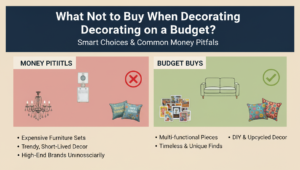
If you’re on a tight budget but want a nice home, avoid fast fashion, trend-driven statement pieces, flimsy furniture, single-use accent pieces, and delicate sets. These may not seem expensive at first, but after a year, you’ll spend more on repairs, replacements, and regret.
Why Budget Decorating Goes Wrong?
Most people think they blew their decorating budget on a single large item. Actually, the situation is reversed.
Buying a $15 throw cushion here, $8 candle holders there, and a set of ornamental bottles that seemed like a deal is the kiss of death.
According to Decor Home Ideas, the average American household spends about $1880.67 annually on home decor, which means that monthly purchases can quickly add up if you buy items that do not coordinate, lack durability, or fail to enhance your space.
What Not to Buy When Decorating on a Budget?
Trendy Statement Furniture
You may notice that bouclé sofas are now hard to find in stores, while the rustic white farmhouse look, which was once everywhere, is starting to fade in popularity.
According to FHL Design, the modern farmhouse trend has been seen everywhere from LA mansions to major retailers, but it may finally be on its way out. Buying furniture based on current trends is the worst move a frugal decorator can make, and not just because of the initial investment.
You end up having a statement piece of furniture that makes the whole area look dated when a trend passes (as it inevitably will).
Invest in pieces of traditional, neutral-colored furniture with strong frames. For toss pillows and blankets, which you can easily replace at a moderate cost, avoid chasing trends.
Ultra-Cheap Flat-Pack Furniture With No Support Structure
There are two types of inexpensive furniture: one that works and one that ends up costing more. Particle board dressers, weak storage units, and bed frames with plastic connectors are the ones to avoid.
According to Tallsen, well-designed drawer slides are made for user convenience and can be easily installed by most people, but the durability will depend on the quality of the slides used.
Also, according to research by Hoyer and Brown, consumers often rely on simple decision-making strategies, which can lead to repeated purchases of the same item and issues like shelving that sags under real weight.
Better strategy: Buy fewer pieces, but choose ones made with solid wood, metal frames, or at least plywood. Secondhand solid wood furniture almost always beats new flat-pack on quality and price.
Decorative Items Sold Only in Sets
“Set of 3 vases” or “5-piece wall art collection” sounds like value. In practice, you rarely use all five pieces. You use two, store the others, and eventually throw them away. You pay for items you do not need just to get the ones you do.
Buy individual pieces intentionally. One well-chosen vase beats three mediocre ones every time.
Rugs in the Wrong Size
A rug that is too small for a room is one of the most common and costly decorating mistakes. It makes the space feel disjointed and unfinished. Because rugs are not cheap, you may feel reluctant to replace them even though they hurt the room.
The rule: always go bigger than you think you need. In a living room, the front legs of all major furniture should sit on the rug. If your budget does not allow for the right size, skip the rug until you can afford it. A bare floor is better than an undersized rug.
Faux Plants That Look Obviously Fake
Not all faux plants are bad. High-quality artificial plants from specialist brands can fool the eye. Avoid the bright-green, glossy-leaved varieties sold at budget home stores for $9.99.
According to Realtor.com, if you are on a budget, choosing a real, low-maintenance plant like pothos or a snake plant is often more cost-effective and visually appealing than buying a low-quality faux plant.
Matching Bedroom Sets
Pre-matched bedroom furniture sets (bed frame, two nightstands, dresser, mirror) look convenient. In reality, they are a design trap. Matching sets make a bedroom feel like a furniture showroom: too coordinated, too corporate, no character.
Mix and match instead. A solid wood dresser from a thrift store, a bed frame in a complementary finish, and mismatched nightstands with a common element, like the same hardware or color, cost less and look more intentional.
Fast-Fashion Home Decor From Trend-Chasing Retailers
Some retailers use a fast-fashion model for home goods: high volume, low cost, constant new collections. The items look appealing on Instagram but tend to look thin, plasticky, and dated within months at home. These products are designed to be replaced, not kept.
They are not a value proposition; they are a subscription to redecorating. One well-made ceramic bowl from a local artisan or a secondhand market will outlast twelve mass-produced ones and tell a much better story.
5 Common Budget Decorating Mistakes (And How to Fix Them)
Mistake 1: Buying for Now, Not for the Long Term
Why it happens: The mindset of “I’ll upgrade later” feels practical in the moment, but it rarely works out. You adapt to the placeholder, keep it out of guilt, and your space stays mediocre.
How to fix it: Budget for fewer, better items. Wait longer if you need to. One good purchase beats three temporary ones every time.
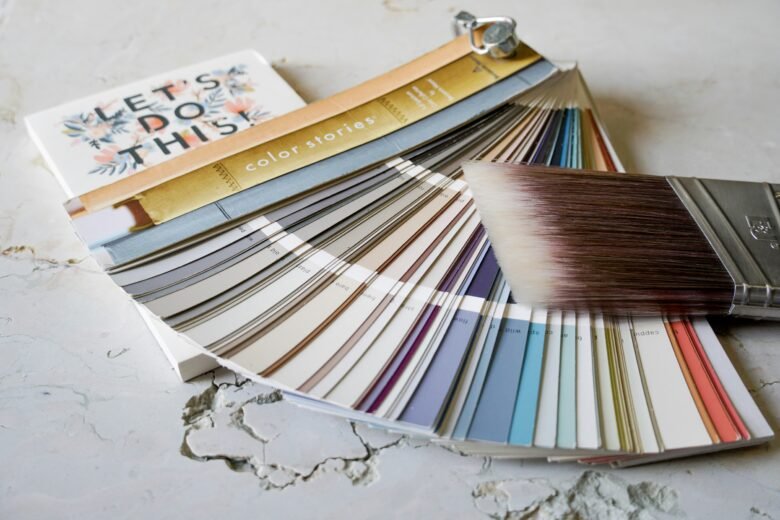
Mistake 2: Shopping Without a Colour Plan
Why it happens: Impulse buys add up to a room with six accent colors and no visual logic. Each item seemed fine in the store, but together they create chaos.
How to fix it: Decide on 2–3 colours before you buy anything. Hold items against that palette in natural light before committing.
Mistake 3: Ignoring Scale and Proportion
Why it happens: A lamp that is too small, artwork hung too high, or furniture that barely fills a wall are all issues of proportion. They make a well-budgeted room look amateur.
How to fix it: Measure everything. Tape out furniture dimensions on the floor before buying. When in doubt, go larger.
Mistake 4: Skimping on Lighting
Why it happens: Budget decorators often skip lamps because they do not feel essential. But they are. A room with only overhead lighting looks flat and institutional no matter how nice the furniture is.
How to fix it: Secondhand lamps with new shades are one of the highest-ROI budget decorating moves. A $15 thrifted lamp with a $20 new shade transforms a corner.
Mistake 5: Over-Accessorising to Fill Empty Space
Why it happens: Empty shelves and surfaces create anxiety. People fill them with whatever is available, which creates clutter, not character.
How to fix it: Edit ruthlessly. Negative space is a design tool, not a problem to solve. Fewer, better objects always win.
Tips That Most Budget Decorating Guides Won’t Tell You
The most expensive part of budget decorating is impatience. Almost every costly mistake comes from buying something before the right option appears or before your budget recovers from the last purchase.
Shop your own home first. Before buying anything new, rearrange what you have. Move a lamp from one room to another or swap art between spaces. You may be surprised how much “new” already lives in your home.
The 48-hour rule. For any non-essential purchase over $30, wait 48 hours. Most impulse buys lose their appeal by then.
Invest in textiles over objects. Quality curtains, a good throw blanket, or real linen pillowcases transform a room more than decorative objects and are often cheaper per unit of visual impact.
Paint is still the best return on investment in decorating. A $40 can of paint does more for a room than $200 in accessories. A single painted accent wall or furniture piece can anchor an entire space.
Buy hardware, not new furniture. Replacing cabinet pulls and drawer handles takes ten minutes and costs $30–$60. It makes budget furniture look like it costs three times what you paid.
Smart Swaps: What to Avoid vs. What to Buy Instead
| Category | Avoid | Buy Instead | Why |
|---|---|---|---|
| Sofas | Trend-driven shapes (bouclé, sculptural curves) | Neutral tone, classic silhouette | Trends fade; classic structure stays relevant for years |
| Storage | Particle board dressers, plastic-bin towers | Secondhand solid wood dresser | Real wood survives moves; particle board rarely does |
| Wall Art | Matching 5-piece sets, printed canvas quotes | One oversized print or personal gallery wall | Sets look generic; personal art has staying power |
| Rugs | Small accent rug as a cost-cutting measure | Correct-size rug, even if it means waiting | The wrong size visually shrinks the entire room |
| Plants | Cheap, glossy fake plants | Low-maintenance real plants (pothos, snake plant) | Real plants cost less and look far more authentic |
| Lighting | Skipping lamps to save money | Secondhand lamps + new lampshades | Layered lighting is essential; thrifted lamps are cheap |
| Decor Objects | Fast-fashion home goods | Secondhand ceramics, artisan market finds | Unique items tell a story; mass-produced items date fast |
How Lena Furnished Her Entire Living Room for $400?
Lena moved into a new apartment with a $400 budget for her living room. Her first instinct was to go to a mass-market home goods store and buy everything at once.
Instead, she spent two weekends at thrift stores and Facebook Marketplace. While specific prices for each item can vary, she managed to purchase a coffee table, a neutral-toned sofa in good condition, and a quality floor lamp with a new shade.
Then she spent the remaining budget on essentials like a large area rug, a couple of real plants, a piece of wall art from a local market, and a can of paint for an accent wall. According to The Residency Bureau, actual item costs can vary, but these purchases align with common strategies for furnishing a room affordably.
The result: a cohesive, intentional living room that looked like it cost much more because every item was deliberately chosen, not grabbed impulsively. She had money left over. In reference, she bought nothing in a set, nothing trend-driven, and nothing cheap just because it was cheap.
Frequently Asked Questions
Is it always better to buy secondhand when decorating on a budget?
Not always, but for furniture, especially wood pieces, lamps, and frames, secondhand is almost always the better value. For items like mattresses, pillow inserts, or anything upholstered that you cannot inspect thoroughly, buying new makes more sense.
What is the one thing worth spending more on, even on a tight budget?
Curtains. Curtains in the wrong length, the wrong fabric, or made from budget material that wrinkles badly make an entire room look cheap. Properly hung, floor-length curtains, even from affordable sources, dramatically elevate a space. This is one area where cutting corners is always visible.
How do I avoid buying too many decorative accessories?
Set a hard cap before you start shopping. Decide how many objects can live on each surface. A mantle might hold a maximum of three items. A bookshelf might have two decorative objects per shelf. Having a number in mind prevents impulse purchases from accumulating.
Are home decor trends worth following on a budget?
Follow trends only in low-cost, easily replaceable items: throw pillows, candles, small decorative objects, never in furniture, rugs, or lighting. According to Angi, most homeowners spend an average of $16,000 to furnish a house, though the cost can range from $10,000 to $40,000 depending on factors like home size and furniture choices.
How much should a budget decorator spend on a single room?
A useful framework: spend 60–70% of your room budget on 2–3 foundational pieces (sofa, rug, lighting), and 30–40% on everything else combined. Most budget decorating failures come from inverting this ratio, spreading money equally across too many small things.
What should I do with the decor I already bought and regret?
Before throwing it out, try recontextualising it: a different room, a different arrangement, paired with something new. If it still does not work, sell it on Facebook Marketplace or a resale app and put that money toward something better. Sunk cost guilt is how bad purchases stay in your home forever.
Conclusion
Although most people approach the task with the wrong mindset, decorating on a budget is doable. The goal is not to find the cheapest version of everything, but to spend less on what matters more.